

Nyali MP Mohamed Ali (Jicho Pevu) and President William Ruto. Photo/Handout
By Wanderi Kamau
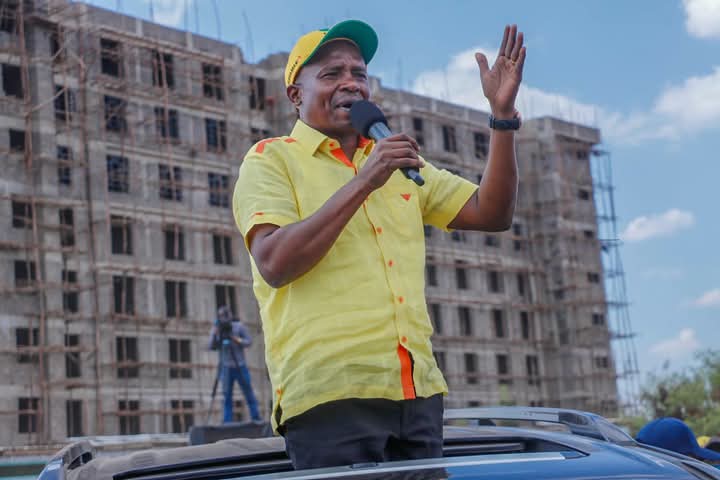
By all indications, Nyali MP Mohamed Ali—widely known as “Jicho Pevu” for his previous career in investigative journalism—is inching closer to severing ties with President William Ruto’s United Democratic Alliance (UDA).
The move comes amid growing internal party discontent, power struggles in Mombasa County, and Ali’s own ambitions to vie for the gubernatorial seat in 2027.
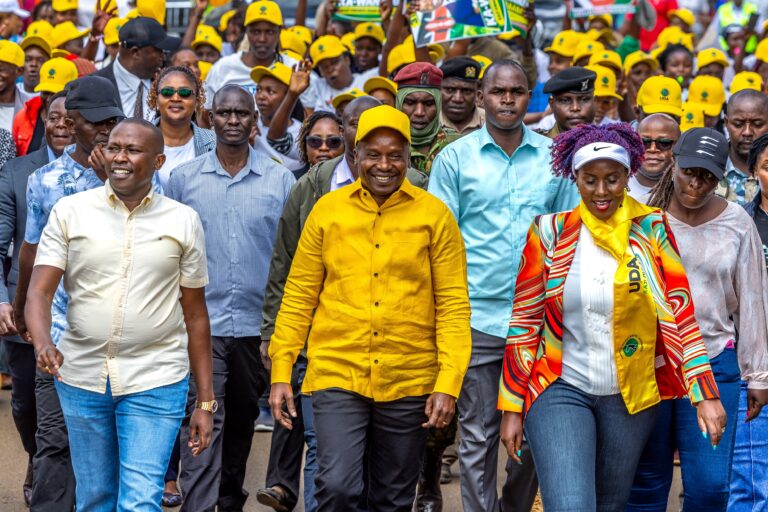
His recent announcement that his faction will not participate in the UDA grassroots elections in Mombasa speaks volumes about the internal cracks now surfacing in Ruto’s party.
“Team Mohamed Ali in Mombasa County will not participate in UDA elections in Mombasa County. UDA Secretary General [Hassan Omar] wants to strategically place his people in the elections so that they can easily win,” Ali declared in a charged statement. “The Secretary General already has his list of people and wants to use the election as just a formality. He doesn’t want to uphold democracy as it is required.”
The Hassan Omar factor
At the heart of this rift is the Hassan Omar factor. Though both Ali and Omar are former allies of ODM leader Raila Odinga, their political paths have taken divergent turns. Political analyst Philip Amollo observes, “There has always been a silent rivalry between Ali and Omar, dating back to their days in the ODM. Raila always seemed to favor Omar, even supporting him for the Senate seat in 2013.”

Ali’s political journey has been complex and tactical. In 2017, he vied for the Nyali MP seat as an independent candidate after ODM endorsed Saido Joho, the brother of then-Mombasa Governor Hassan Joho. Feeling betrayed, Ali shifted allegiances, joining the Uhuru-Ruto axis. He clinched re-election in 2022 on a UDA ticket, ahead of Omar, who ran unsuccessfully for the gubernatorial seat.
Yet, despite being among the first Coast leaders to align with UDA, Ali now finds himself sidelined. “Ali believes he has been shortchanged,” says political commentator Brenda Okello. “He expected to be the Coast face of UDA, but that role was gradually handed over to Hassan Omar, who is now not only the Secretary General but also an East African Legislative Assembly (EALA)MP courtesy of UDA.”
Read more: Raila’s massive harvest in Ruto’s PSs reshuffle
Ali did not mince his words on the matter: “I am the one who took Hassan Omar to President Ruto,” he lamented. His bitterness underscores the sense of betrayal that runs deep, especially since Omar’s rapid political elevation within UDA has significantly undermined Ali’s local authority in Mombasa.
The Joho factor
The return of Hassan Joho into political relevance adds another layer to Ali’s frustrations. Despite being a long-time rival, Ali now finds himself confronted by Joho’s strategic appointment as Mining Cabinet Secretary. Political observers view the move as an indication that Joho is being positioned as Ruto’s pointman in the Coast region for the 2027 general elections.

“Joho’s appointment was not just about Cabinet balance,” says political analyst Yusuf Mwinyi. “It was strategic. Ruto wants someone with grassroots influence and national clout to counter the opposition at the Coast.”
This development has further weakened Ali’s influence in UDA, making his gubernatorial ambition even harder to realize within the party structure.
The Rigathi Gachagua factor
Ali’s political alignment with former Deputy President Rigathi Gachagua has also contributed to his marginalization. He was among the UDA MPs who closely supported Gachagua, even accompanying him to Mt Kenya rallies and delivering speeches in Kikuyu.
“Ali’s alignment with Gachagua was a bold but risky move,” notes Dr Amollo. “He miscalculated the depth of Ruto’s disapproval of Gachagua’s political maneuvers. Now he finds himself on the wrong side of the president’s restructured inner circle.”
Sources suggest that Ali is preparing to join Gachagua’s new political party, set to be launched in May—a move that could reposition him as a central figure in a new opposition bloc.
UDA’s waning popularity
Ali’s dissatisfaction is also rooted in the diminishing appeal of UDA on the ground. The party that once energized a national base is now facing growing disillusionment. “UDA is not what it was in 2022,” said a close aide to Ali. “The excitement is gone, and many feel abandoned.”
This weakening of UDA’s grassroots grip in regions like the Coast further reduces the strategic advantage of remaining in the party—especially for a leader eyeing a high-stakes race like the Mombasa gubernatorial seat.
Internal rifts in UDA
Perhaps the most significant undercurrent in Ali’s decision is the silent but escalating tension between UDA’s founding members and newcomers who have quickly risen through the ranks. The appointment of former Kakamega Senator Cleophas Malala as Secretary General caused discontent among early UDA loyalists, who saw it as a betrayal.

Ali sees a similar scenario playing out with Hassan Omar. “This is no longer the party we helped build,” the aide lamented. “People who came in late are now calling the shots.”
Ali’s belief that he deserves greater say in UDA matters in Mombasa County is rooted in his early loyalty—a loyalty that he feels is now being punished rather than rewarded.
Read more:How Raila controls Ruto’s 2027 presidential bid
According to political analysts, Ali’s likely exit from UDA is not a rash decision—it is the culmination of years of political sidelining, shifting alliances, and internal party dynamics that have worked against him.
“Ali is playing the long game,” says Okello.
“He knows that his gubernatorial dreams won’t materialize under UDA as currently constituted. His best shot is to walk away now and build a base elsewhere.”


About the Author



1 thought on “Why ‘Jicho Pevu’ is dumping William Ruto”
Comments are closed.