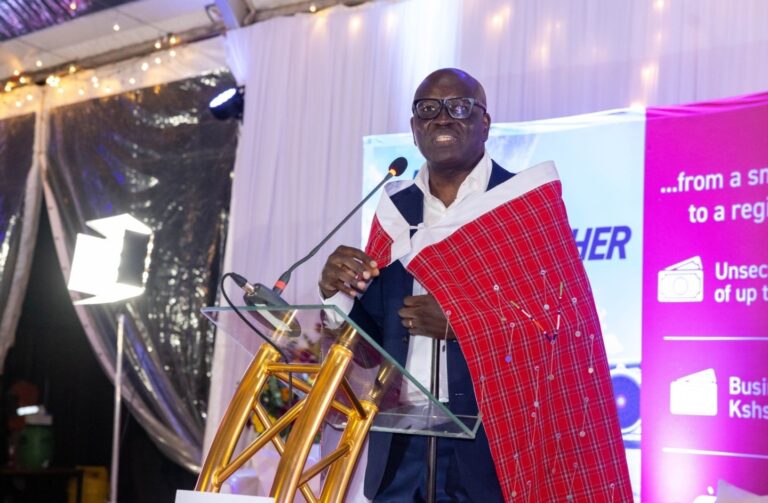
Mining Cabinet Secretary Hassan Joho. Photo/TV47
By Newsflash Reporter
The family of Mining Cabinet Secretary Hassan Joho has been dealt a twin setback after the High Court admitted a petition challenging their stronghold over South Sudan’s cargo handling operations through the Mombasa port.
Justice Peter Mulwa granted Compact Freight permission to pursue enforcement of a directive by the South Sudanese government, which seeks to have its cargo distributed among five firms—rather than just two, one being Autoport Freight Terminals, which is linked to the Joho family.
The Kenyan government has come under criticism for its silence on the directive by Juba, which would slash Autoport’s control of South Sudanese cargo from 80 percent to 20 percent—a move that could cost the Johos billions annually in revenue.
Pending further court guidance, Justice Mulwa directed the Kenya Ports Authority (KPA) to temporarily allocate cargo in line with South Sudan’s instructions.
This legal blow follows another ruling by the Supreme Court, which blocked the Johos’ company, Portside Freight Terminals, from building a Sh6.4 billion grain bulk handling facility at the Mombasa port.
The Portside venture had threatened the 25-year monopoly of business mogul Jaffer Mohamed in grain handling—a sector known for its high-profit margins.
String of legal defeats
The Supreme Court halted the project on June 30, citing irregularities in tendering and the hurried approval through a special procurement process. The proposed facility would have intensified a commercial showdown between Joho’s new business interests and Jaffer’s established logistics empire at the port.
Now, the High Court’s decision to admit Compact Freight’s case further erodes the Joho family’s influence, especially over lucrative South Sudan cargo operations.
It also gives interim approval for a revised cargo sharing arrangement proposed by South Sudan, drastically reducing Autoport’s share to 20 percent.
Read more: Why ‘Jicho Pevu’ is dumping William Ruto
“The grant of leave does operate as a stay of any allocations of cargo handling ratios by the Cabinet Secretary for Transport and KPA that is or are contrary to the request contained in the letter from the Government of South Sudan dated June 16, 2025 addressed to the Cabinet for Transport pending further directions on July 21, 2025,” ruled Justice Mulwa.
In the June 16 notice, South Sudan’s government requested that five firms—Compact Freight, Compact FTZ, Precision Container, LPC Global, and Autoport—be allowed to share its cargo handling business at Mombasa port.
According to Juba, the decision aims to streamline cargo flow and stabilize the prices of essential goods in South Sudan.
Reshaping Mombasa’s logistics landscape
Mombasa port—the region’s key gateway—handles fuel imports, consumer goods, and exports such as tea and coffee for landlocked countries like Uganda and South Sudan.
“We hereby formally notify your esteemed office of our decision to cancel the previous cargo allocation…which had assigned 80 percent of South Sudan seaborne cargo to Autoport and 20 percent to Compact Freight,” wrote South Sudan Transport Minister Akol Ajawin in the letter to his Kenyan counterpart Davis Chirchir.
Ajawin cited serious congestion and an incident involving auctioned cargo, including UN consignments, as the trigger for the review.
Under the revised formula, South Sudan wants Compact Freight to handle 30 percent, Autoport 20 percent, Compact FTZ 20 percent, LPC Global 20 percent, and Precision Container 10 percent of its cargo.
Compact Freight filed the petition after the Kenyan authorities allegedly failed to implement the new sharing directive, thereby denying it its rightful stake.
“The respondents (KPA and Transport ministry) have refused, neglected or otherwise failed to discharge their statutory duties about the lawful and proper implementation of the official wishes of the Government of South Sudan insofar as they affect the rights and interests of Compact Freight,” the firm told the court.
Autoport has enjoyed near-total control of South Sudan cargo operations and was previously under scrutiny over alleged tax evasion.
Read more: Political ‘victims’ who rose to national stardom
Its stronghold was reinforced by a contract with Kenya Railways, which offered it terminal space at the Nairobi Inland Container Depot—linked to the Standard Gauge Railway—ensuring seamless cargo movement from Mombasa.
Autoport is managed by Abu Joho, elder brother to the former Mombasa Governor. Their role in handling South Sudan cargo came into question following the 2022 presidential election, which saw William Ruto defeat Raila Odinga—whom the Johos strongly supported.
Their business interests became politically vulnerable amid speculation that Ruto’s administration would reexamine deals struck under the previous regime.
In a reconciliatory move last July, President Ruto appointed some Odinga allies to his Cabinet, including Joho, in a bid to ease political friction.
South Sudan ranks second after Uganda in cargo volumes handled through Mombasa, accounting for 12.7 percent of the total trade to and from landlocked countries. Uganda leads with a 65.6 percent share, equivalent to 8.72 million tonnes out of 13.28 million tonnes of cargo.


About the Author