

A skyline of ambition: Nairobi's towering structures mask a growing crisis of displacement and environmental degradation. Photo/Courtesy
By Daisy Okiring
Nairobi is growing—but at what cost?
Kenya’s capital has become a symbol of rapid urban expansion.
Shimmering towers pierce the skyline and real estate advertisements promise modern luxury and economic opportunity. But beneath this architectural ambition lies a story of broken communities, environmental degradation, and a mental health crisis. The true cost of Nairobi’s construction boom is not just financial—it is human, ecological, and deeply systemic.
Recent urban studies and lived experiences reveal a grim picture: air and noise pollution are reaching critical levels, green spaces are vanishing, and low-income families are being displaced with minimal oversight. The very foundations of these gleaming towers are shaking the city’s social and ecological stability.
Skyscrapers built on sand
According to a study by urban scholar Dr Constance Smith at the University of Manchester, Nairobi’s real estate explosion is being driven by “grey development”—a term referring to semi-formal, unregulated, and often corrupt construction practices. These projects frequently bypass zoning rules, ignore safety regulations, and use substandard materials.
“Many of these buildings look beautiful from the outside,” Dr. Smith writes, “but underneath, they are hollow—both structurally and ethically”.

Between 2010 and 2023, Nairobi recorded an average of three to four building collapses annually, often in low-income neighborhoods such as Zimmerman and Mathare North. These tragedies stem from poor-quality materials, lack of professional oversight, and uninspected foundations—often referred to as “iceberg buildings” for the problems that lie hidden beneath their surfaces.
Construction workers themselves speak of “fake sand,” a cheaper substitute for quality material. “They mix dust with sand to save money,” one fundi revealed. “If you rub it in your hand and it turns to mud, you know it’s fake.”
The sound of development or despair?
For many residents, the visual blight is only one part of the problem. The noise that accompanies Nairobi’s endless construction is affecting the psychological well-being of communities.
In a deeply emotive piece titled “From Birdsongs to Bulldozers”, therapist and social critic John Wills Njoroge captures the trauma Nairobians face daily. “The crane has become our constant howling noise that replaced the rooster that used to wake us,” he writes. “Even the chickens no longer want to come out of the house to pasture because stones and dust have replaced the insects and leaves”.
Read more:Breathing easy: Nairobi’s urgent battle against air pollution
This environmental noise is not just an inconvenience—it is a mental health hazard. In informal community surveys, parents report that children are developing symptoms of depression, anxiety, and insomnia due to chronic stress and overstimulation from noise. “The estate can now be officially renamed to Mental Health Crisis and Noise Pollution Estate,” one resident quipped during a local forum.
Hospitals and mental health clinics in Nairobi are seeing a rise in cases of pediatric depression, panic attacks, and even hearing loss among children. Psychotherapists attribute this to the combination of noise pollution, displacement, and the erasure of nature from urban living spaces.
Vanishing green spaces, growing inequality
Green spaces in Nairobi have historically provided a vital buffer against the stresses of urban life. They support biodiversity, filter air pollutants, and offer physical and psychological relief. But these spaces are quickly disappearing under the relentless march of cement and steel.
UN-Habitat estimates that 60% of Nairobi residents live on just 6% of the city’s land, while prime areas once reserved for parks and playgrounds are being sold or grabbed by private developers. In Mathare North, an open field that was once a playground and football pitch is now home to five separate construction sites. One caretaker lamented, “It was a playing ground, so who approved it? We are small people—we just ignore even if there is something fishy going on.”

This sense of powerlessness is widespread. Residents suspect city officials and politically connected developers are working hand-in-hand to undermine zoning laws and fast-track construction permits. Bribery and lack of enforcement are the norm rather than the exception.
A 2020 study found that over 70% of Nairobi’s buildings constructed in the last decade violated basic planning laws. Even Nairobi’s famous “Integrity Centre”—home to the Ethics and Anti-Corruption Commission—is built with mirrored glass that obscures its interior. “They call it Integrity Centre,” a student quipped, “but all you see is your own face looking back”.
Toxic air, fragile lives
Air pollution is another silent consequence of the building spree. Dust from construction sites, combined with emissions from heavy machinery and traffic congestion, has worsened Nairobi’s already precarious air quality.
The World Air Quality Report (2023) ranked Nairobi among Africa’s most polluted cities, with PM2.5 levels regularly exceeding WHO safe thresholds. Respiratory illnesses, especially among children and the elderly, are rising.

Meanwhile, flooding from El Niño rains in Nairobi’s poorly planned neighborhoods has intensified. Without proper drainage, the concrete jungle offers no absorption—only redirection. Floodwaters now carry away not just waste, but memories. “The heavenly tears of floodwaters carry away chronicles we once held dear,” Njoroge writes hauntingly.
Displaced and disregarded
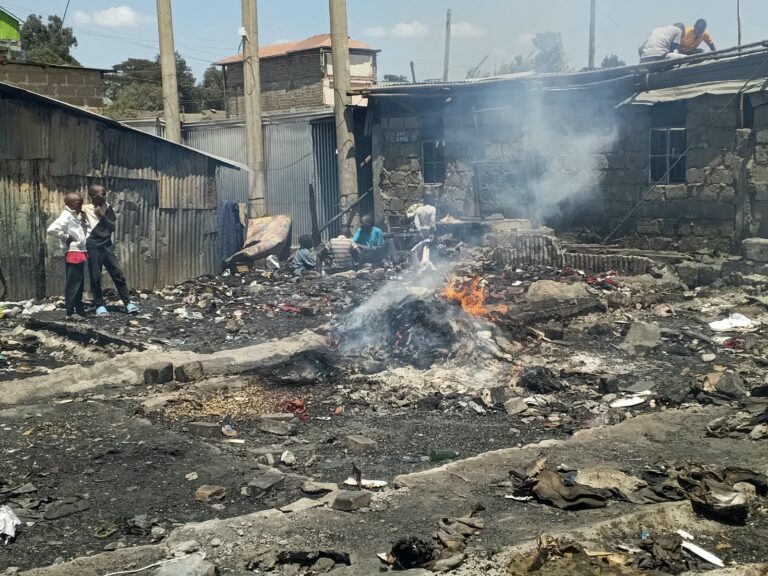
Perhaps the most harrowing impact of Nairobi’s vertical explosion is the displacement of vulnerable populations. Entire communities have been moved or erased to make way for development.
In Zimmerman, residents of collapsed buildings like Angela lost everything overnight—homes, belongings, and any sense of security. “This ghorofa looked so nice, but underneath they were taking shortcuts,” she said. “It is us wananchi [ordinary people] who are suffering”.

Displacement is often informal and unmonitored. Evictions are carried out with little legal recourse, and compensation—if offered—is meager. The pattern mirrors a broader trend in urban Africa, where formal planning is sidelined by speculative real estate markets that prize profit over people.
What can be done?
Experts argue that halting this environmental spiral requires urgent policy reform, stronger enforcement, and community participation. But reforms must go beyond words.
“We need a vertical sensibility,” says Dr. Smith. “To understand Nairobi today, we must look at what’s happening beneath the surface—both literally and politically.”
Urban planners, environmentalists, and human rights advocates are calling for:
- Mandatory Environmental Impact Assessments (EIAs) for all urban projects
- Protection and rehabilitation of urban green spaces
- Transparent public participation in zoning decisions
- A crackdown on fake construction materials through strengthened oversight of agencies like KEBS
In addition, psychologists urge the government to treat urban stress as a public health issue, integrating mental health services into community clinics, especially in construction-heavy zones.
Building beyond concrete
Nairobi’s skyline is rising, but for many, so is the psychological and ecological toll. The city’s future cannot rest solely on steel and cement, but on the health, dignity, and well-being of its people.
Read more: CGIAR launches landmark report to guide global food systems
As the cranes continue to roar and trees fall in silence, one must ask: Are we building a city for people—or a playground for profit?
The answer lies not in the clouds above, but in the dust below—where foundations are laid, stories are buried, and futures are either forged or forgotten.


About the Author





2 thoughts on “How construction projects are choking Nairobi’s environment”
Comments are closed.