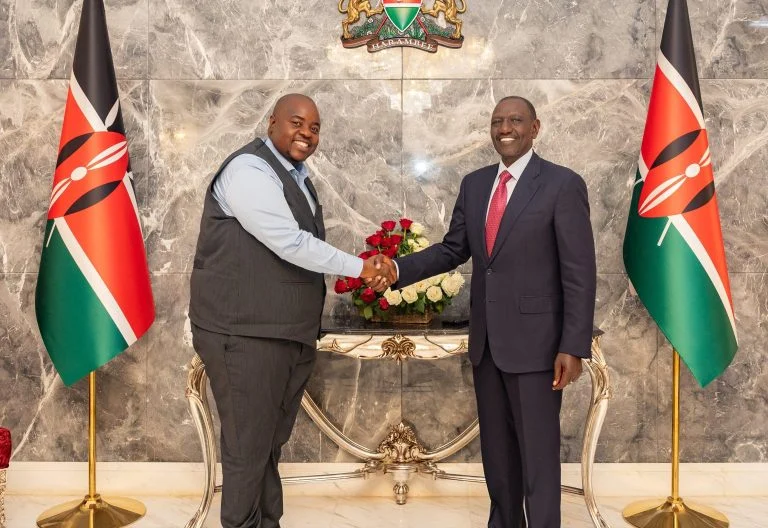
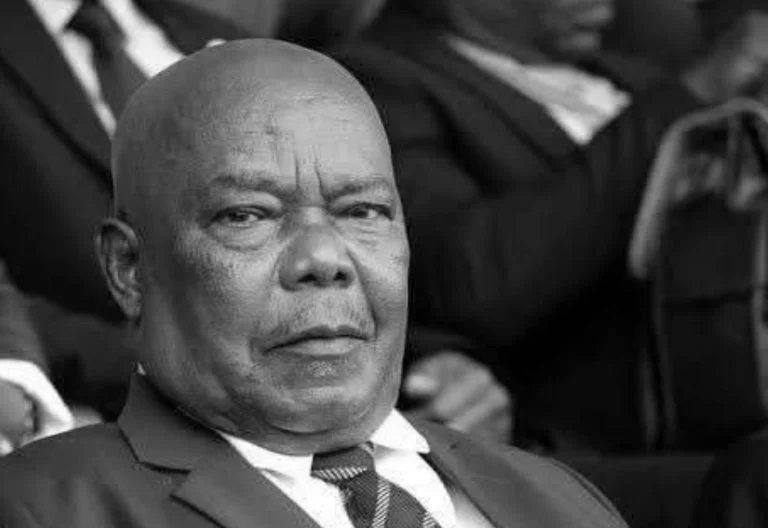
The Rapid Support Forces (RSF) leader, Mohamed Hamdan Dagalo. Photo/BBC
By Newsflash Writer
The African Union (AU) this week swiftly dismissed a move by Sudan’s Rapid Support Forces (RSF) to establish a rival government.
However, rejection from the continental body is just one of many challenges confronting the RSF, which has been vying for control and influence against the military-led government of Gen. Abdel Fattah al-Burhan.
In a meeting held on July 29, the AU Peace and Security Council — a 15-member body responsible for continental stability — urged member states and international partners to reject Sudan’s fragmentation and not to recognise the so-called parallel administration. The AU reaffirmed its support for Burhan’s military government, which recently appointed civilian Prime Minister Kamel Idriss to head a transitional cabinet.
Though Sudan remains suspended from the AU, the Council stated that Burhan’s administration should continue governing until a broadly acceptable arrangement is reached among Sudanese stakeholders. However, no significant steps have been made toward such consensus. The RSF now faces an uphill task in seeking international recognition for its newly declared government. Following its announcement, the RSF tried to bolster its image through a visit by a UN envoy. Alla Nogud, spokesperson for the new RSF-led coalition known as the Tasis Alliance, said their administration is based on public support. “The formation of Tasis was necessary to counter the Muslim Brotherhood and the Sudanese Armed Forces’ (SAF) aim of dividing the country,” said Nogud. He added that the alliance has opened humanitarian corridors and welcomed a visit by UN expert Radhouane Nouicer.
Power struggles and territorial limits
Nogud described SAF as a regime that denies Sudanese access to civil rights, healthcare, and education, accusing it of attempting to reinstate Muslim Brotherhood rule, a reference to the era of Omar al-Bashir, ousted in April 2019. Despite such declarations, the RSF’s new government — called the Government of Peace and Unity — lacks clear operational structures. It claims revenue will come from gold mining, agriculture, and trade. But RSF currently controls only parts of Darfur, is battling for Kordofan, and has lost its grip on most of eastern Sudan.
Read more: Sudan protests to Kenya over Ruto-RSF link
According to Magdi Elgizouli, a Sudan expert at the University of Zurich, the announcement of a parallel government doesn’t equate to actual governance. “Dagalo and his appointees are not even in Sudan. And unlike South Sudan, RSF lacks valuable resources like oil. There’s little incentive for any nation to invest in Darfur,” he noted. Though Nogud spoke from Nyala in Sudan, it remains unclear where this rival administration will be based or when it will begin operations. Elgizouli added, “RSF’s original plan to capture Sudan has failed. It might now resemble M23 in eastern DRC — surviving on local resources but achieving little else.”
The Arab League also dismissed the RSF-led alliance, warning it could plunge Sudan into factional chaos. Saudi Arabia’s foreign ministry advised Sudanese groups to avoid fragmentation. The ongoing conflict between SAF and RSF, which erupted in April 2023, has since reached a deadlock, with neither side able to secure decisive victory.
Civilian voices and a nation in crisis
In March, SAF regained key positions in Khartoum — including the Republican Palace — tipping the balance against RSF. While RSF retains parts of Darfur and southern Kordofan, SAF dominates the north and east with backing from Egypt. Diplomatic efforts — including the 2023 Jeddah Declaration brokered by the US and Saudi Arabia — have failed. Meanwhile, the Civil Democratic Alliance for Revolutionary Forces, also known as Samoud, warned that Sudan is nearing its most perilous chapter. In a July 30 statement, the group declared that no current governing force holds legitimacy, citing the October 2021 military coup as the death knell for constitutional transition.
Read more: Tensions rise as Kenya plans second RSF meeting
Both RSF and SAF are under US, UK, and EU sanctions for war crimes and crimes against humanity. Sudan remains suspended from AU activities due to the 2021 coup that toppled the civilian-led transitional government of Abdalla Hamdok, who now leads Samoud. Initially part of the broader Taqaddum civilian coalition launched in October 2023, Samoud split from the group in February 2025, opposing RSF’s influence in proposed civilian governance. On February 10, it formally exited, denouncing what it called a bid to legitimise fragmentation under the guise of civilian rule.
Meanwhile, the humanitarian toll worsens. The ongoing conflict has driven over 25.6 million people — 54 percent of the population — into hunger. Of these, 3.7 million are children under five, many sufferings from acute malnutrition and long-term damage, according to data from humanitarian agency CARE.


About the Author