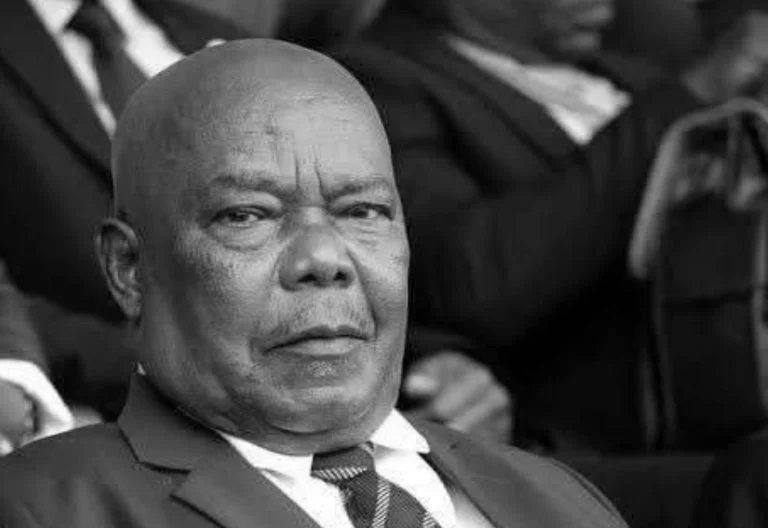
Somalia’s President Hassan Sheikh Mohamud. Photo/AP
By Newsflash Writer
Somalia’s President Hassan Sheikh Mohamud is embroiled in a growing political standoff with influential political figures and federal leaders over a raft of decisions, most notably controversial constitutional changes.
At the heart of the tensions is Mohamud’s push for a One-Person, One-Vote (1P1V) electoral system, a proposal many opponents interpret as an attempt to centralize and extend his authority. This perspective is echoed by senior politicians and regional leaders.
Abdirahman Abdishakur, a Member of Parliament, summed up the resistance by quoting a Somali proverb: “A stolen female camel cannot give birth to a legitimate calf.” He argued that the constitutional reforms were neither publicly debated nor institutionally agreed upon, but rather a self-serving move. Former Presidents Mohamed Abdullahi Farmaajo and Sharif Sheikh Ahmed, alongside ex-Prime Ministers Hassan Ali Khaire and Mohamed Hussein Roble, have emerged as vocal critics, dismissing the proposed 1P1V system as unfeasible.
Federal states resist top-down changes
Mohamud’s administration only consulted two of the five Federal Member States (FMS) when amending the Provisional Constitution, excluding Jubbaland and Puntland from the process. These states consider the move illegitimate, accusing the federal government of unilaterally rewriting the national charter. The rift widened with Mogadishu’s endorsement of a proposed sixth federal state in the Khatumo region, an area claimed by Puntland. Somalia’s five recognized FMS include Hirshabelle, Galmudug, South West, Jubbaland, and Puntland.
Read more: US places $8 million bounty on Al-Shabaab commander Abdikadir
The primary bone of contention, however, remains the constitutional overhaul, particularly Mohamud’s plan to shift Somalia from a parliamentary to a presidential system. He is also fast-tracking laws on elections, political parties, and the electoral commission—moves critics warn are designed to tighten his grip on power. The president, undeterred, has adopted the slogan “loo joogsan maa,” meaning “do not heed what others say,” signaling his refusal to back down.
Mohamud argues that Somalia needs to restore direct elections after over five decades of indirect voting, last conducted in 1969. His government claims the 1P1V model will return power to citizens. Yet, critics argue that without national consensus and foundational political reforms, the shift may destabilize an already fragile country. While Somalis widely resent the current clan-based 4.5 power-sharing formula, many warn that abandoning it prematurely could do more harm than good.
Fears of collapse and calls for political consensus
Despite its flaws, the 4.5 system brought a semblance of inclusivity and helped maintain balance in a country recovering from conflict. Under this system, all clans had representation in parliament through indirect elections conducted via appointed delegates. Critics, however, say it allowed a political elite to dominate and shielded them from scrutiny. The system also reportedly made elections costly and corruption-prone due to widespread bribery.
Read more:World Bank freezes Sh97bn loan to Kenya over delayed reforms
Dr. Afyare Abdi Elmi, a scholar from City University of Mogadishu, has cautioned that combining a new presidential system with restrictive party regulations undermines political inclusivity and could push Somalia toward authoritarianism. In his analysis, Dr. Elmi questioned whether the country’s fragile “Third Republic” can survive. He warned that if the ongoing power struggle continues unchecked, Somalia could fragment further, with competing factions crafting rival constitutions. He urged the government to revert to the 2012 Provisional Constitution and honour previously agreed political frameworks.
Mohamed Shire Ad’eed, a civil society advocate, echoed the concern, arguing Somalia’s challenge lies not in the lack of elections, but in the absence of a credible and inclusive political foundation. He noted that labeling an electoral process “universal” doesn’t inherently make it legitimate, especially when there’s no agreement on the basic rules of political participation.


About the Author