EU Ambassador Henriette Geiger speaks during the signing of Kenya’s Sh4.8 billion climate and environment deal. (Courtesy: William Kabogo/X)
By Daisy Okiring
NAIROBI, Kenya: Kenya is preparing for a major shift in its climate governance after signing a Sh4.8 billion environmental and climate protection deal with the European Union, a package that government insiders say could finally strengthen the country’s capacity to track emissions, restore degraded ecosystems and protect communities on the frontlines of climate change.
The agreement, unveiled in Nairobi and witnessed by EU Ambassador Henriette Geiger, comes at a time when climate-linked disasters—flooding, heatwaves, prolonged droughts and declining biodiversity—are intensifying, outpacing the country’s ability to respond. The EU called the partnership a renewed commitment to shared global responsibility, while Kenyan officials described it as a “timely rescue” for critical environmental programmes facing recent donor cuts.
A Sh600 million investment in climate accountability
At the centre of the deal is a Sh600 million plan to build a national measurement, reporting and verification (MRV) system—an instrument long considered the missing piece in Kenya’s climate architecture. A credible MRV system will track greenhouse gas emissions, audit climate projects, and verify whether Kenya is meeting its Nationally Determined Contribution (NDC) under the Paris Agreement.
For years, Kenya has struggled with fragmented data collection, inconsistent reporting and heavy reliance on manual submissions from counties. The Ministry of Environment warns that without accurate data, the country risks overestimating progress or underreporting emissions—undermining its credibility on the global stage.
Linda Kosgei, head of multilateral agreements at the ministry, welcomed the deal, noting that a strengthened MRV system will allow Kenya to “document, verify and defend” its climate interventions with precision.
“The successful implementation of our NDC hinges on a robust and comprehensive monitoring, reporting and verification system,” she said.
Read More: Microplastics in Kenya’s beaches — from cities to sea life
The framework will feed into Kenya’s national emissions registry and be implemented jointly by the national government and counties. Analysts say the county-level component is crucial, given that land-use change—driven by deforestation, agriculture and urban expansion—is among the country’s biggest contributors to emissions.

Why the EU says Kenya matters
EU Ambassador Geiger emphasised that Europe sees Kenya as a frontline partner in both climate adaptation and green economic transition. She cited recent cooperative projects, including the installation of solar panels at Kisumu Prison and youth engagement in green policy forums.
“We are committed to green transition because we are all in the same boat,” she said, adding that Europe’s efforts to limit global warming are inseparable from African partners’ climate resilience goals.
Geiger also highlighted Belgium’s embassy achieving net-zero emissions, a symbolic gesture meant to demonstrate the behavioural change EU states expect from themselves and partner countries.
According to the EU, the new deal will not only curb emissions but also stimulate green jobs, improve energy efficiency and restore essential ecosystems.
A lifeline for wildlife conservation
The agreement comes at a moment of quiet alarm within conservation circles. Wildlife PS Silvia Museiya revealed that several donor-funded programmes—particularly those supporting rangers and wildlife monitoring—have suffered budget cuts over the past two years.
“We have experienced dwindling financial resources that previously supported rangers and conservation work,” Museiya said.
She added that the EU support would help plug gaps and protect wildlife territories that are increasingly under pressure from climate change, human settlement and poaching.
Museiya urged full transparency as the project begins, saying information must flow freely between implementing partners to prevent duplication and ensure accountability.
Lake Baringo receives a Sh2.1 billion climate resilience boost
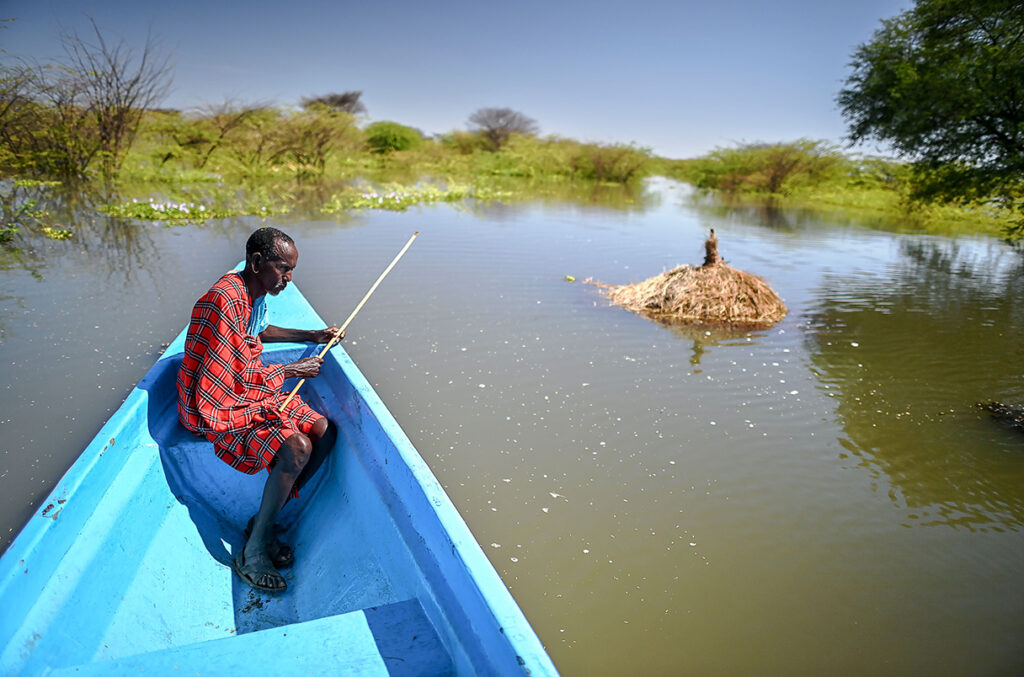
A separate Sh2.1 billion EU–Kenya contract will focus on strengthening climate resilience in the Lake Baringo watershed—one of the country’s most ecologically strained regions. Once a vibrant biodiversity hotspot, Lake Baringo now faces siltation, shrinking fish habitats, deforestation in surrounding hillsides and erratic water levels driven by climate change.
The watershed programme will apply a Team Europe approach, with Italy and Germany leading technical support alongside Kenya’s national government and Baringo County.
Baringo Deputy Governor Felix Maiyo said the lake is at a tipping point.
“This investment underscores the urgency of addressing environmental challenges facing the region’s vital ecosystem,” he said.
He warned that without intervention, the lake’s degradation could lead to irreversible biodiversity loss and collapse of local livelihoods reliant on fishing, tourism and pastoralism.
Where the money will go—and what remains unclear
A breakdown of the Sh4.8 billion climate package includes:
– Sh600 million for the MRV system
– Sh2.1 billion for the Lake Baringo and Rift Valley resilience project
– The remainder is expected to support forest restoration, degraded land rehabilitation and community-based adaptation projects.
Read More: Sudan is bleeding while the world watches
However, environmental analysts note that financing alone will not resolve the persistent institutional problems that have slowed Kenya’s climate progress. These include overlapping mandates between agencies, weak enforcement of land laws, limited public access to climate data, and inconsistent monitoring of donor-funded projects.
A senior environment ministry official, speaking anonymously, said Kenya must “move from project-based thinking to system-based reform.”
“We have excellent climate policies,” he said. “But implementation has been our biggest challenge.”
The new MRV system is expected to help close that gap by streamlining climate data management and reducing opportunities for misreporting or political interference.
A partnership with long-term political stakes
The EU–Kenya deal also carries diplomatic weight. With global scrutiny rising over countries’ climate commitments, Kenya’s ability to produce transparent emissions data could shape future access to green financing and carbon markets.
The EU hopes the partnership will deepen Kenya’s alignment with European climate strategies, especially on renewable energy, land restoration and nature-based solutions.
For Kenya, the deal signals renewed confidence from international partners at a time when donor fatigue and shifting geopolitical priorities have eroded some traditional funding streams.
As the programmes roll out, the key test will be whether the reforms—especially the MRV system—translate into measurable climate action or become another well-funded initiative constrained by bureaucracy.


About the Author