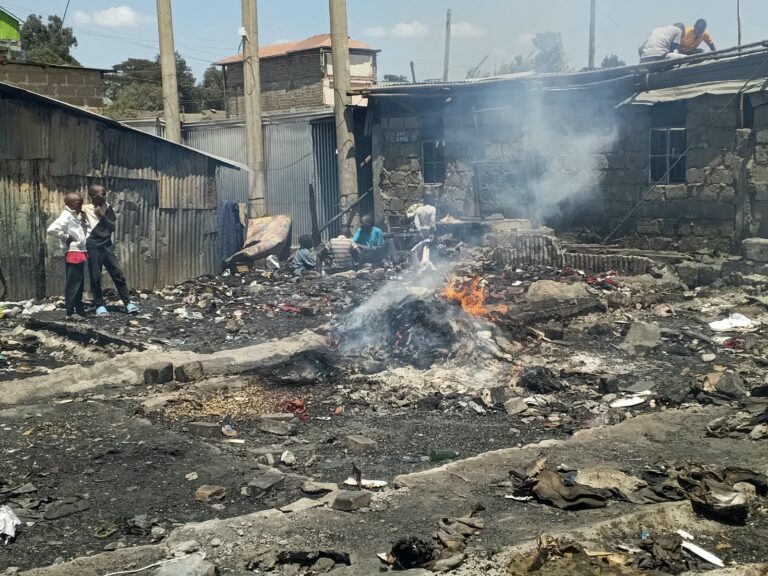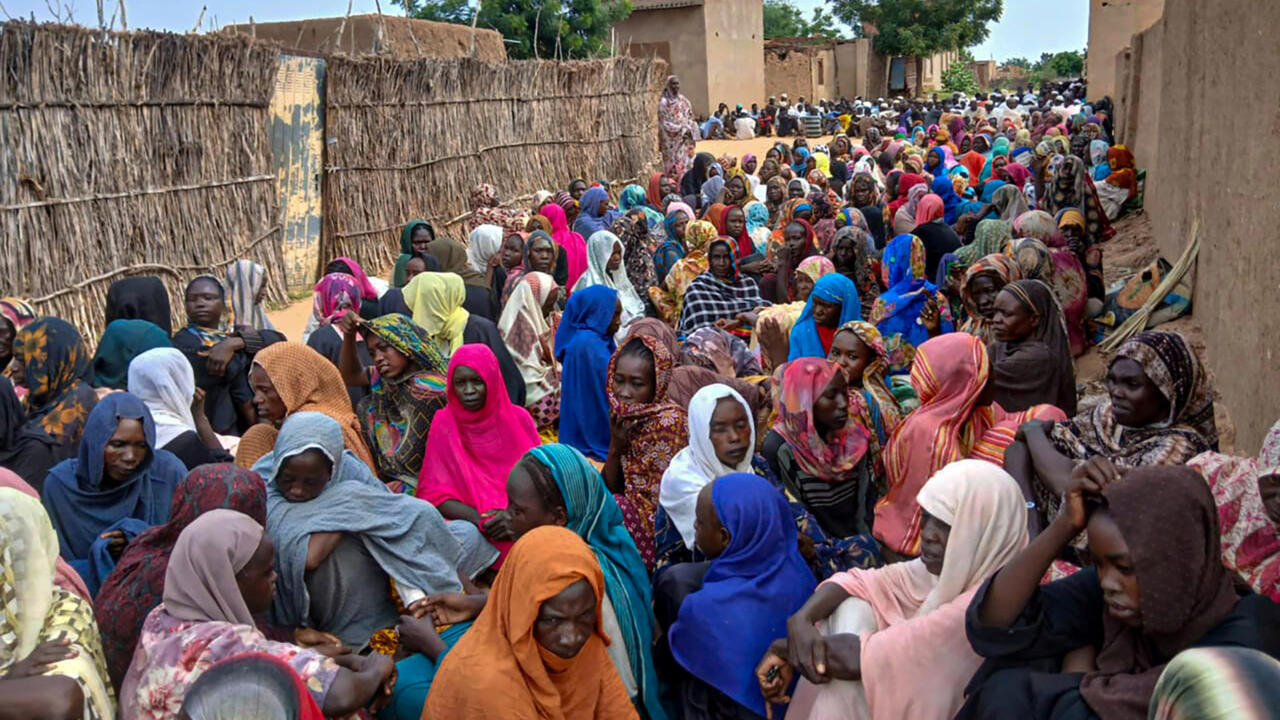
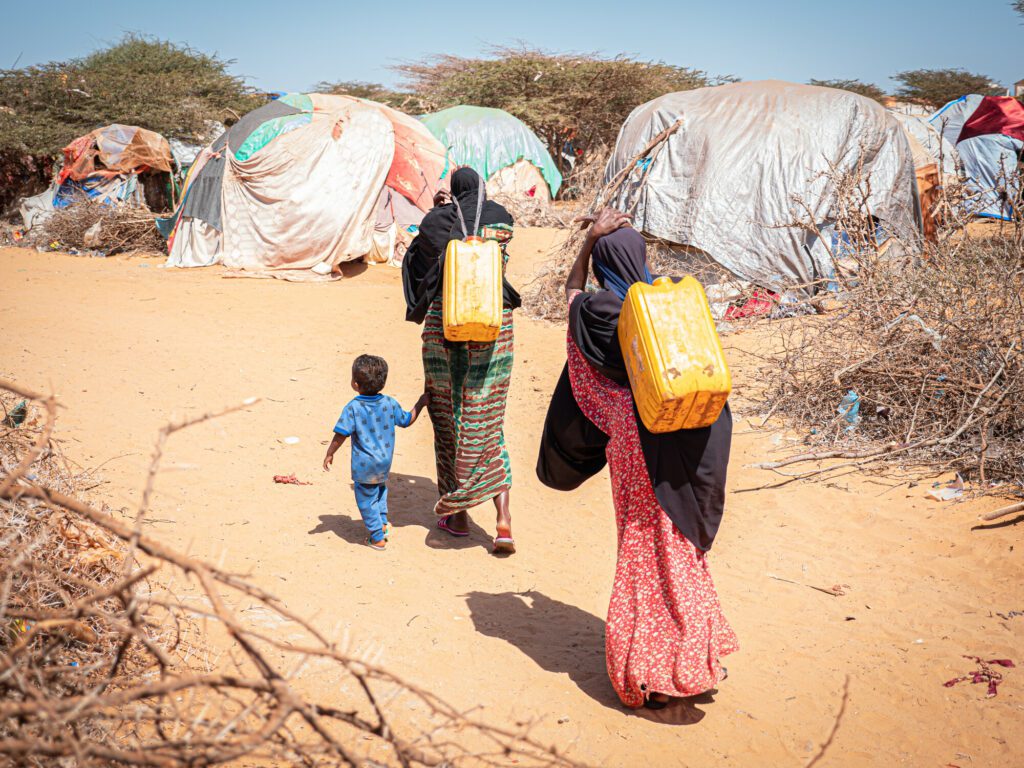
Displaced families huddle in a hastily erected camp outside El Fasher, North Darfur, after fleeing artillery and drone strikes that razed their homes. Photo/Courtesy
By Daisy Okiring
In the sprawling tents and makeshift shelters of Sudan’s north-west, the unanswered question echoes: Where are the global champions of humanity when children go without food, mothers bury their babies, and entire villages vanish?
Since the eruption of armed conflict between the Sudanese Armed Forces (SAF) and the Rapid Support Forces (RSF) on 15 April 2023, Sudan has slid ever deeper into what the International Organization for Migration (IOM) calls the “largest internal displacement crisis anywhere today.”
Death, Displacement and Despair
In one brutal episode in Darfur, up to 400,000 people were displaced when the RSF captured the Zamzam camp, and at least 300 civilians were killed.
Scale of hunger and malnutrition is staggering: more than 25 million people are facing acute hunger, and children are dying of malnutrition in camps where humanitarian access is blocked.
These are not statistics on paper. They are mothers who cannot feed their children, fathers who cannot bury their sons, and communities erased.
A Crisis Both Man-Made and Ignored
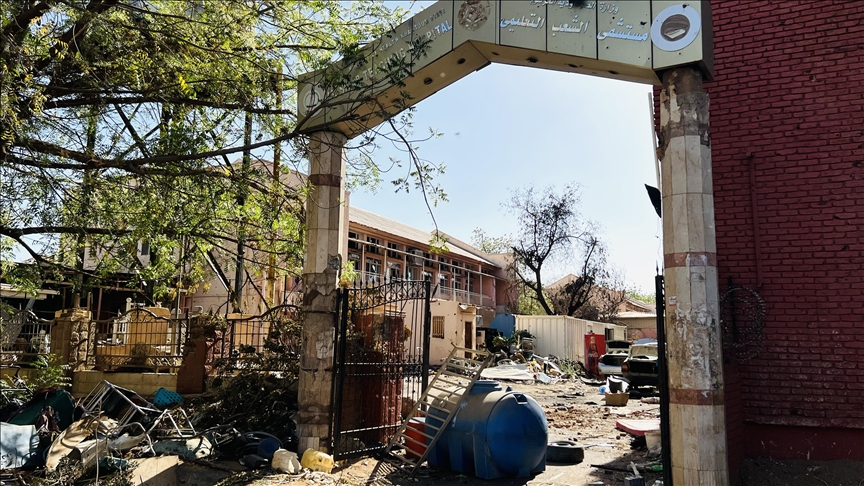
From hospitals shelled to camps burned, the pattern of violence in Sudan suggests systemic failures of protection and humanitarian access. In the Kordofan states, attacks on civilians and essential services have “caused hundreds of deaths and mass displacement” according to the International Committee of the Red Cross (ICRC). The UN has recorded dramatic rises in conflict-related sexual violence, targeted attacks on aid workers, and the collapse of medical infrastructure.
Yet the response of international organisations, donor governments and the global community has been widely criticised as inadequate and delayed. Amnesty International called the response “woefully inadequate” one year into the conflict. Funding appeals are chronically under-resourced: humanitarian agencies warn that access is blocked, and operations constrained by insecurity, bureaucratic delays and shrinking donor commitments.
In short: while Sudan bleeds, watchers stand by.
Where Are the Protectors?
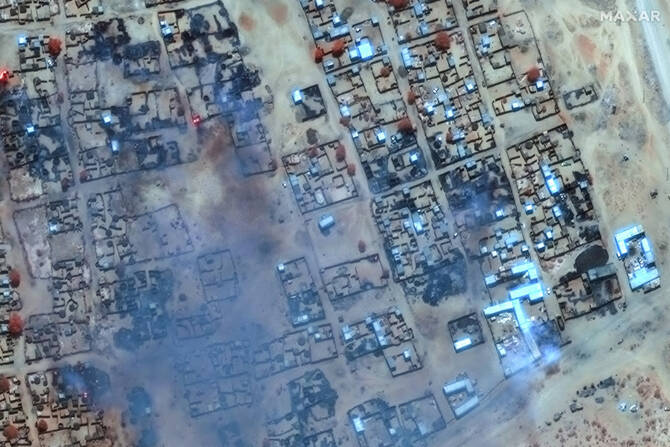
The world has mechanisms to respond. The UN system has repeatedly briefed the Security Council, relief agencies have issued warnings, yet the basic promise of safeguarding civilians remains unmet. The UN Office for the Coordination of Humanitarian Affairs (OCHA) has noted that shelling and bombing continue in densely populated areas such as El Fasher, causing “widespread and long-term harm to civilians.”
Read More: Kenya trapped in debt cycle as Ksh7 of every Ksh10 goes to repayment
Still, camps like Zamzam and Abu Shouk were taken over, emptied, burned, or starved without sufficient protective intervention. The IOM and other agencies consistently call for “unhindered access” for humanitarian actors.
And yet. Why are responses so limited? Some of the obstacles: ongoing fighting that undermines safe access; deliberate obstruction of aid; shrinking donor budgets; complex geopolitics. Others say the world’s attention has simply wandered.
Implications Beyond Sudan
The destruction of Sudan’s health system alone is catastrophic: up to 70 % of hospitals in Khartoum, Darfur and Kordofan have ceased functioning. Camp-by-camp, crisis by crisis, the combination of displacement, hunger, disease and violence is creating what some call a slow-motion genocide. The implication for regional stability is grave: refugee flows, armed spill-over, collapsed food systems, and fractured societies.
Read More: World Bank raises Sub-Saharan Africa growth forecast to 3.8% for 2025
For the international organisations, the question is stark: Are you merely observing the crisis, or actively preventing it?
A Call to Action
If the world is serious about “Never Again,” then Sudan should not be the place where the promise dies. International NGOs, UN agencies, regional bodies and donor states must mobilise:
- Fully fund appeal efforts so that humanitarian access becomes meaningful not symbolic.
- Secure corridors into besieged areas, protect civilians, and insist on adherence to international humanitarian law by all parties.
- Scale up protection for women and children, with specialised services for victims of sexual violence.
- Support local civil society and early-warning systems so that displacement and famine can be prevented, not simply managed.
- Place accountability on the agenda: war crimes, mass killings, rape and starvation as weapon—none escape the world’s eye and none should escape justice.
While the shields and logos of international organisations shine in boardrooms, their absence in the field matters even more. Sudan’s hundreds of thousands of displaced families don’t need statements of concern—they need protection, food, medicine and a future.
If we wait until after the children have died, the camps have burned, and the hospitals have collapsed, then we are complicit in failure. The world cannot afford to watch any longer.
A Bleeding Country, A Waiting World
In the dry heat of the Darfur plains, a mother watches her children sleep in a tent caked with dust and flies. They fled with nothing except what they carried. Their home destroyed. Their future uncertain. And outside the tent stakes—international logos flutter in the wind.
Are they watching? Yes. But are they acting? Not enough.
Every statistic above is not just a number—they are lives lost, families scattered, children missing. And while the world’s cameras rotate, Sudan continues to bleed.
If the international system fails here, where else will it fail?
It is time for organisations to do more than witness. It is time to intervene.


About the Author