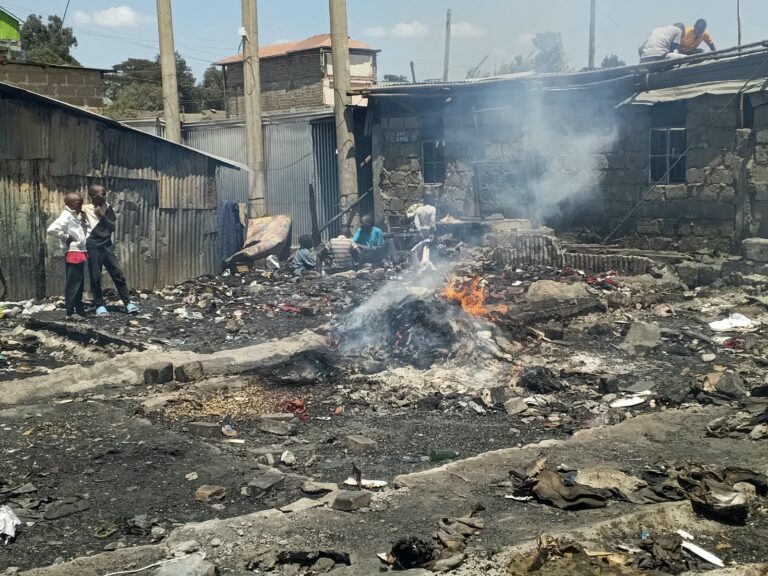
Villagers displaced from Embobut Forest say carbon offset projects have failed to deliver promised community benefits. (Photo: Tony Karumba/AFP)
By Daisy Okiring
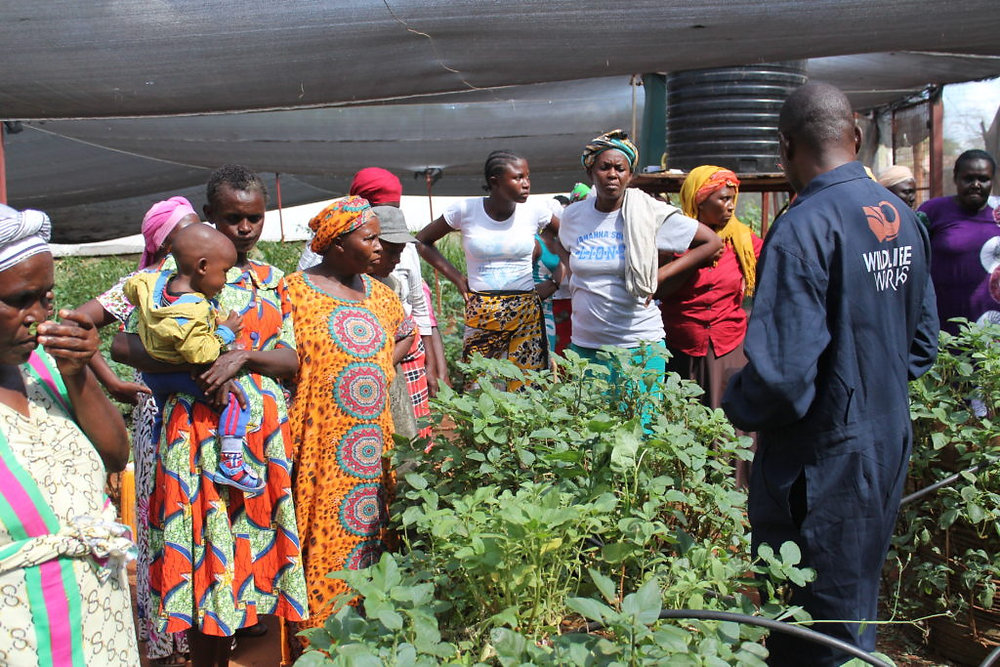
In the rolling hills of Elgeyo Marakwet, community elder Mary Chepkemoi gazes across reforested slopes and asks a blunt question: “They said these trees would bring us money. But I haven’t seen one shilling.”
For many Kenyans living where carbon-offset projects now proliferate, this is no abstract issue — it is their land, their livelihoods, and their rights at stake.
The promise of carbon finance
Globally, nature-based carbon offsets gained traction as a method to fight climate change. In Kenya, forests and rangelands have been designated as “carbon sinks” worthy of credit. Between 2022 and 2025, Africa was estimated to issue millions of voluntary carbon credits, with Kenya accounting for about a quarter of the continent’s market. According to government commentary, Kenya expected its carbon markets to benefit both climate and local communities. President William Ruto declared in November 2022 that “communities fighting the adverse effects of climate change should benefit from carbon credits.”
On paper, this seemed promising. A 2015 United Nations Environment Programme press release described one Kenyan forest project as helping “thousands of people” while conserving 500,000 acres of threatened forest land.
Realities on the ground
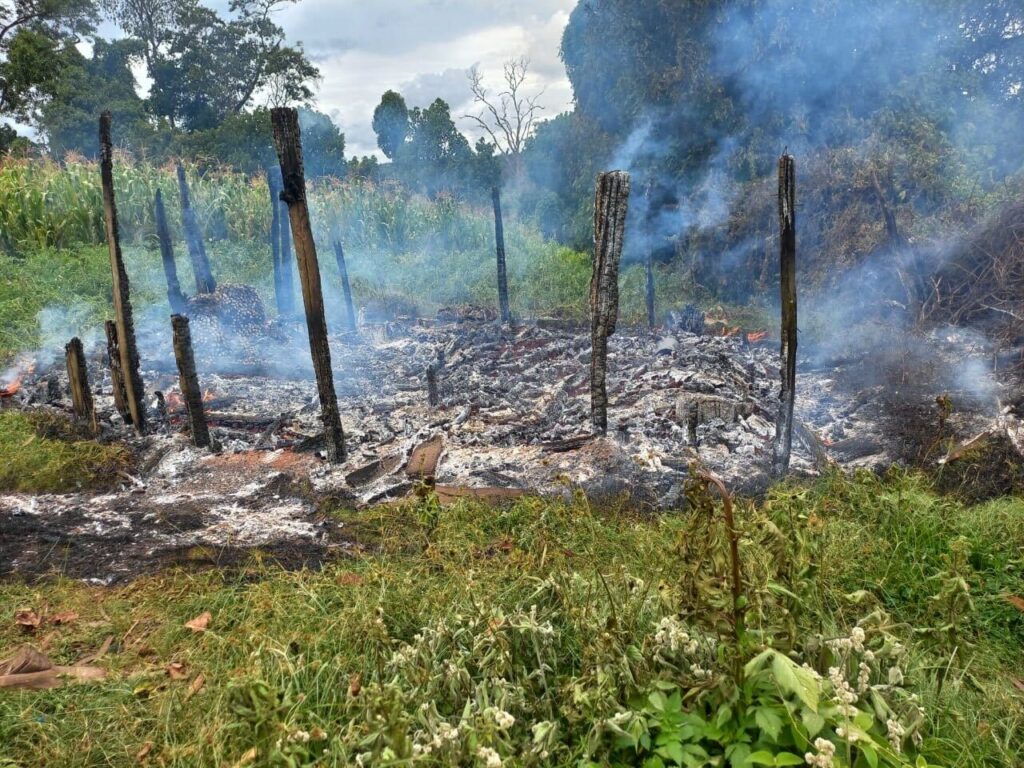
Yet for many communities, the experience has been far less ideal. Indigenous groups such as the Ogiek in the Mau Forest Complex and the Sengwer in Embobut Forest claim they were excluded from decision-making, suffered evictions, or saw only marginal benefits despite being frontline custodians of land. In a report from Earth Island Institute, one Ogiek member recounted a fatality: “My son died crossing the river after our eviction. If it was not for carbon credits they wouldn’t have evicted us.”
Read More: How failed conservation fueled the Sabwani River disaster
It is estimated that more than 5,000 people in forest-based carbon-offset schemes in Kenya were displaced or otherwise impacted without proper consultation. Meanwhile, a 2024 audit found data inconsistencies in at least 30 per cent of registered carbon projects, raising questions about whether claimed emissions reductions are credible.
Who wins, who loses?
The flagship Kasigau Corridor project was once hailed as a model of community-based forest conservation. According to historical records, it protected approximately 200,000 hectares and generated revenue that funded schools and water projects for local people. But by 2025 that narrative changed. A Guardian investigation reported that the voluntary carbon market had collapsed, halting major funding flows to local communities. One member remarked: “The rumour in the community is that the project is dying because there is no money coming in.”
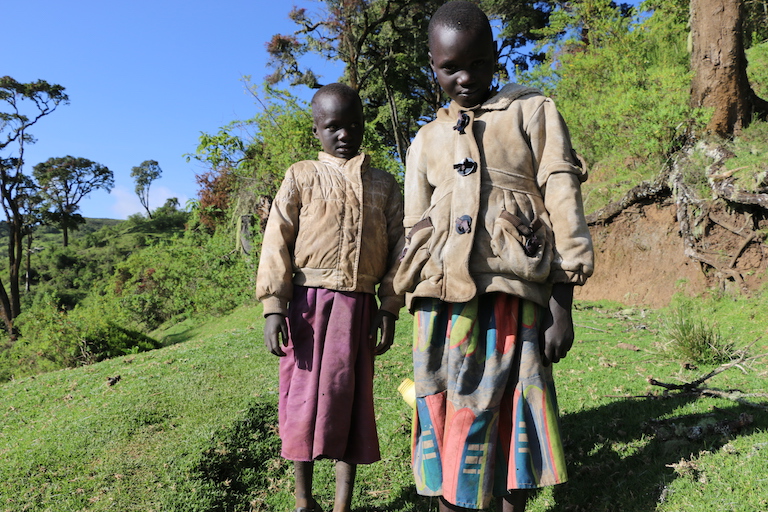
For community members the costs are real. Land access may have been restricted, grazing routes blocked, or benefits promised but delayed. Meanwhile, external companies often reap the major returns while locals get minor payments or indirect benefits at best.
Transparency and accountability
A major issue is lack of transparency. Many community members report they were not informed properly about the projects, did not give informed consent, or were not part of key negotiations. Article 6.4 of the Paris Agreement stipulates that no relocation should occur without free, prior and informed consent of affected peoples — yet implementation remains weak.
Read More: Microplastics in Kenya’s beaches — from cities to sea life
In August 2025, the Kenyan government published a notice titled “Kenyans deserve to know more about carbon credits,” acknowledging widespread public ignorance about how such markets operate. The resulting void has left communities unsure who controls the credits, who receives what, and how land rights are protected.
The scale and market risks
On the financing side, the voluntary carbon market has proven volatile. A recent Reuters analysis noted that while Africa’s ecosystems are vital, “few would argue that carbon markets alone can sustain biodiversity.” In Kenya, the collapse of major offset projects means not only conservation funding drying up, but also communities losing promised revenue streams.
To illustrate, analysts found that fewer than 16 % of credits may reflect actual emission reductions. This suggests that many projects may be ridden with “phantom” credits — where promised climate benefits either do not materialize or cannot be verified.
A bifurcated reality
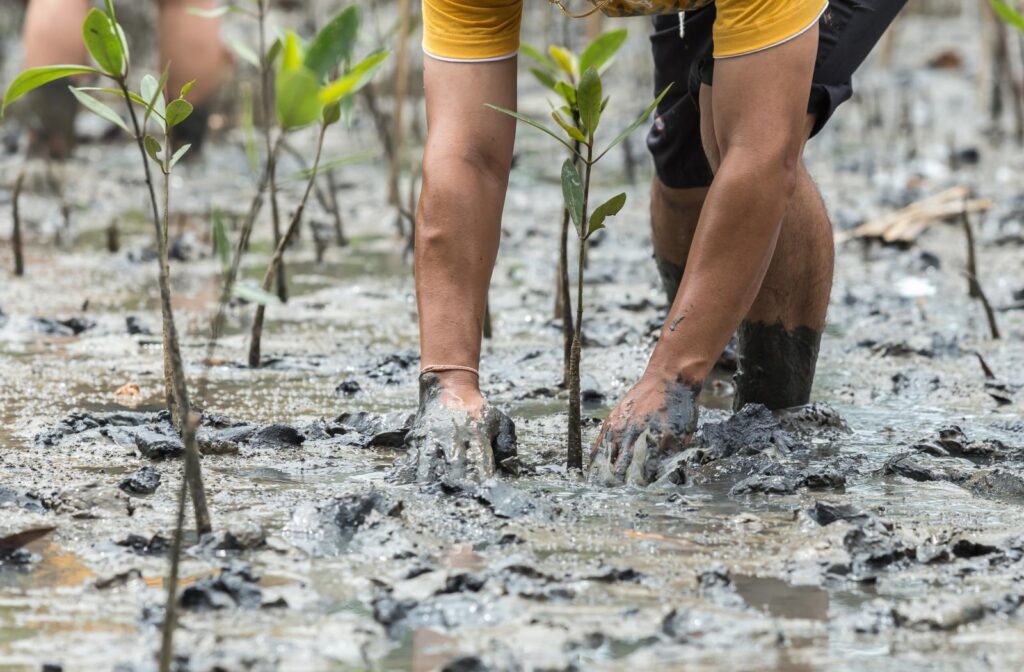
That said, not all projects are failures. The Mikoko Pamoja mangrove carbon initiative in Gazi Bay successfully delivered community benefits while protecting mangroves — providing lessons for future efforts. However, this remains the exception rather than the rule.
In contrast, countless inland forest projects continue to face protests, delayed payments, evictions or unclear benefit-sharing. For Mary Chepkemoi and her community, the question is not whether carbon credits are useful — but whether they serve people or just polluters.
Policy and reforms ahead
Kenya is now attempting to shore up its framework. The proposed Carbon Credit Trading Bill (2025) aims to regulate how credits are generated, sold and shared with communities. Environment Cabinet Secretary Soipan Tuya emphasised that the bill’s objective is to “make carbon trading fair and accountable.”
Beyond legislation, experts urge embedding strong safeguards: full disclosure to communities, benefit-sharing mechanisms guaranteeing minimum percentages for locals, and robust verification of climate outcomes. Dr Felix Odhiambo, an environmental economist, notes: “We cannot allow communities to lose access to their land and receive pennies while corporations profit.”
Balancing conservation, justice and climate
Kenya stands at a crossroads. Its forests are essential for global climate stability and serve as water towers for millions. As President Ruto put it, “Communities fighting climate change must benefit.” Yet unless carbon-offset schemes shift from extractive to equitable, they risk becoming another chapter in Kenya’s history of land dispossession.
The country’s future depends on ensuring that conservation is not just about trees and carbon, but also about people and rights. For forest communities the tests remain clear: Did the project restore the forest? Did it improve livelihoods? Did they own their land and receive fair returns?
Mary Chepkemoi still stands on the slopes of her forest home and waits for those answers. For many others, the question is the same: Who truly pays the price for “green” solutions?


About the Author