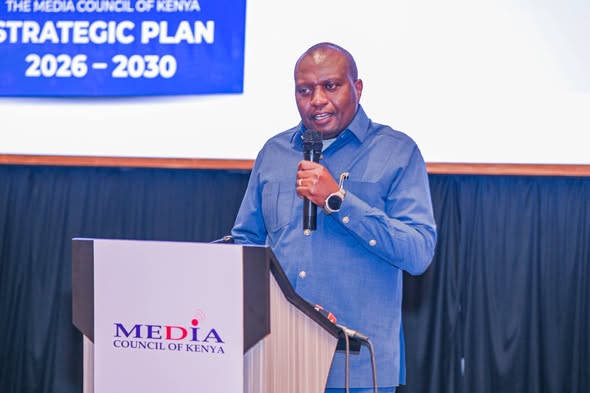
MCK Chief Executive Officer David Omwoyo. Photo/MCK
By Newsflash Writer
The Media Council of Kenya (MCK) has launched the Guidelines for Election Coverage 2027 and its Strategic Plan 2026–2030 as the media sector begins preparations for the 2027 General Election.
The two documents were launched in Nakuru on Friday, August 14, 2026, attended by Cabinet Secretary for Information, Communications and the Digital Economy William Kabogo, MCK Chief Executive Officer David Omwoyo and Kenya Editors Guild (KEG) President Zubeida Kananu.
The event also saw the commissioning of the MCK Nakuru Media Hub, intended to strengthen the Council’s presence and bring training and regulatory services closer to journalists.
Kabogo reiterated the important role played by the media in promoting democracy and public participation at elections.
“Investment in journalism is also an investment in democratic governance,” Kabogo said.
“My ministry’s work on digital infrastructure, cyber security, artificial intelligence and access to information depends on a media sector that citizens can trust.”
The Cabinet Secretary said the Strategic Plan provides a framework for strengthening professional standards, institutional independence and public confidence in journalism.
He urged media organisations to start preparing for the 2027 elections by incorporating the new guidelines into their editorial processes.
“As we launch the Guidelines for Election Coverage 2027, preparation must begin now, before the campaigns start. Media organisations need to review and integrate the guidelines into their editorial processes early enough to ensure accurate, fair and balanced coverage of the elections,” said Kabogo.
He said journalists would operate in an increasingly complex information environment because of the rapid development of Artificial Intelligence and the spread of misinformation and disinformation.
“Artificial Intelligence can generate false text, images and videos within minutes, while misinformation can spread before the truth catches up. As digital platforms become a major source of information for voters, responsible use of technology is critical to protecting public trust and the integrity of our democratic processes,” he said.
Guidelines to protect credible reporting
MCK Chairman Maina Muiruri said the launch of the Strategic Plan, election guidelines and Nakuru Media Hub represented a broader commitment to strengthening Kenya’s wider media sector.
He said the credibility of the 2027 General Election would depend not only on voting but also on the quality of information available to citizens.

“As we launch the Guidelines for Election Coverage 2027, we must recognise that the credibility of an election is influenced not only by how the vote is conducted, but also by the quality and credibility of the information available to citizens,” he said.
Read more: DCI to Gachagua: Stop media theatrics
Omwoyo described the Strategic Plan as the Council’s roadmap for the next five years, while comparing the election guidelines to a “seatbelt” that would help journalists navigate election pressures.
“We are here for a simple task but very complex. We are launching the strategic plan and then the election guidelines to ensure that politicians don’t hijack our vehicle and to frame the conversation,” Omwoyo said.
“Our strategic plan is our roadmap for the next four years, but the election guidelines are the seatbelt to survive in the election.”
He cautioned journalists against allowing the pressure to secure scoops and break news to compromise accuracy and credibility.
“We have a duty to ensure that the scoops and the breaking news does not outweigh the duty to deliver credible facts,” he said.
Technology and public trust
Kananu said technological changes should not undermine the fundamental principles of journalism, particularly as AI-generated content becomes harder to distinguish from authentic material.
“Technology may change the tool of electoral reporting, but it must never change the fundamentals of journalism. Verify before you amplify. Be fair. Provide context and put public interest first. Ultimately, this is all about trust,” she said.
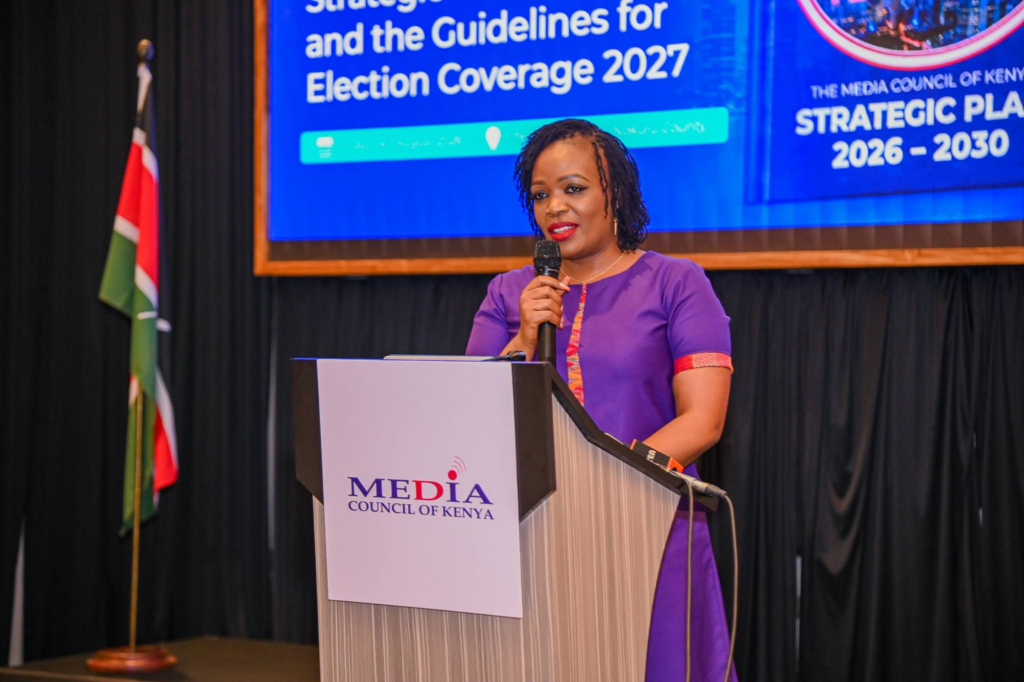
“In an environment where everyone and anyone can create convincing text, images, audios or videos, the greatest currency our newsrooms will have is whether the public can trust what carries our name.”
The launch was followed by the signing of a stakeholder commitment form on the Guidelines for Election Coverage 2027, with media stakeholders pledging to support responsible election coverage.
The event later moved to the MCK Nakuru Office for commissioning of the Nakuru Media Hub.
Other officials present included Digital Broadcasters Association Chairman Joel Karanja, Association of Media Women in Kenya Executive Director Queenter Mbori and Media Complaints Commission Vice Chairperson Polly Gathoni, among other media stakeholders.


About the Author