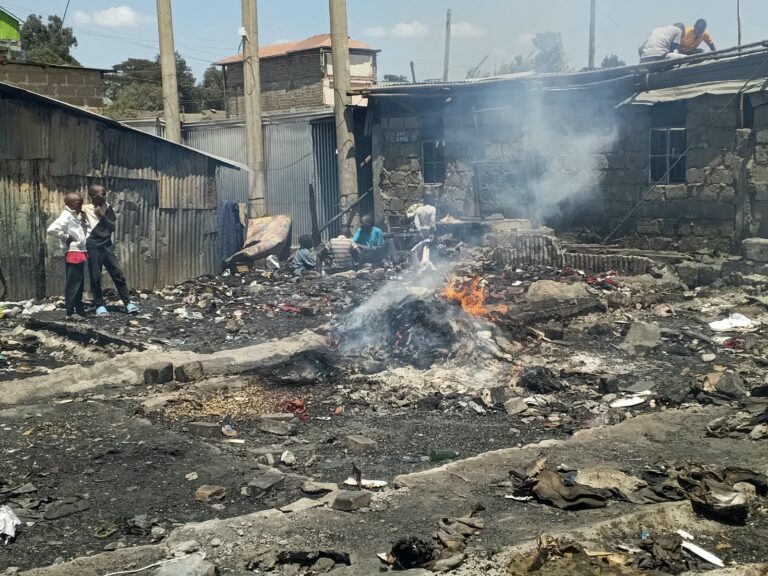
A mother fetches water from a private bowser as children wait with jerrycans. (Photo: Handout)
By Daisy Okiring
MOMBASA, Kenya: For months, residents of Mikindani in Mombasa have lived with dry taps, rising water costs, and a growing feeling of abandonment. What started as irregular disruptions has grown into a prolonged crisis. Families now depend on private bowsers for water, even as their monthly bills remain unchanged.
Behind their anguish lies a deeper story. It is a story shaped by politics, ageing infrastructure, alleged sabotage, and the quiet profiteering of water cartels. And now the community is demanding answers.
Daily life on borrowed water
On a hot Tuesday afternoon, 38-year-old Lilian Akinyi waits by a dusty roadside with dozens of neighbours. She carries four jerrycans, each costing more to fill than what piped water normally costs her entire household in a week.
“Water has become a luxury in our own homes,” she says. She wonders why she pays her bills to MOWASCO yet still buys water almost every day.
Her frustration reflects that of thousands of residents who say their taps have been dry for weeks at a time. Meanwhile, bowser operators continue to thrive.
Read More: Kenya secures EU deal to boost climate action

Sabotage allegations no one wants to address
Suspicion has spread across Mikindani as the crisis deepens. Many residents believe the water shortage is being engineered from within the distribution system. They claim influential individuals are manipulating supply to create demand for expensive bowser water.
Karisa Nyiro, a long-time resident, says the signs are too obvious to ignore. He questions how 20 litres from a tap costs five shillings, yet the same amount from a bowser goes for thirty. To him, someone is benefiting from the chaos.
Officials deny any wrongdoing, but the allegations have become too widespread to dismiss. Residents now want an independent investigation.
Businesses on the edge of collapse
At a small kiosk near the main road, food vendor Hilda Njagi struggles to keep her business alive. She says she spends more on bowser water than on the food she prepares for customers.
Her profits have vanished, and she often operates at a loss. “Some days I open only to pay debts,” she says. For many small entrepreneurs, the water crisis is slowly turning into an economic disaster.
Read More: Kenya’s mega dam delays reveal deeper weaknesses

When desperation turns to protest
Weeks earlier, residents took to the streets to demand the restoration of water supply. The protest briefly improved distribution, but the relief lasted only a few days. Soon the taps went dry again.
Salim Juma, one of the protest organisers, says another demonstration is already in the works. He says the water situation has disrupted school routines and sanitation systems, affecting thousands. “This is not mismanagement. This is neglect,” he says.
Inside the stakeholders meeting
Mikindani MCA Jacktone Madialo recently convened a meeting with residents, MOWASCO officials, and county representatives. The discussions revealed several issues that have contributed to the prolonged crisis.
Madialo said Mombasa is currently receiving reduced volumes from Mzima Springs. He added that old infrastructure between Mzima and Mazeras is leaking thousands of litres before the water reaches the western parts of the county.
The meeting also revealed that most water bowsers operate using private boreholes rather than MOWASCO supply. Residents were told that the county lacks a system to test the safety of bowser water. This has raised concerns about the health risks posed by unregulated water vendors.

MOWASCO responds but residents remain unconvinced
Last week, MOWASCO issued a public statement acknowledging ongoing disruptions. The utility blamed the situation on a technical fault at Baricho Water Works and promised to restore normal supply once repairs are completed.
But residents say they have heard similar promises before. Many want clear timelines, public updates, and independent reporting on pipeline repairs. “We want timelines, not promises,” says Firdaus Omar, a mother of three.
The politics of water and the profit in scarcity
Water experts say Mikindani’s problems resemble patterns seen in other regions where water scarcity aligns with powerful interests. They warn that inconsistent management, political interference, and poorly supervised distribution can create opportunities for cartels to flourish.
In Mikindani, where bowsers appear almost immediately after taps run dry, failure has become profitable. Residents say the crisis is too organised to be random and want accountability at every level of the supply chain.
A county at a crossroads
Pressure is mounting on the county government to intervene decisively. Residents and community leaders are calling for a full audit of the water distribution system. They also want regulation and mandatory testing of bowser water and the publication of a clear supply schedule.
Without meaningful reforms, experts warn that similar crises could spread to neighbouring estates. Many areas in Mombasa already show signs of irregular supply.
A community determined not to stay silent
In the absence of action, one sentiment remains constant across Mikindani: frustration. “We want dignity,” Akinyi says as she carries her jerrycans home. She cannot understand why access to clean water has become a daily struggle.
Her question lingers in the humid coastal air. And until officials deliver answers, Mikindani will not back down.


About the Author