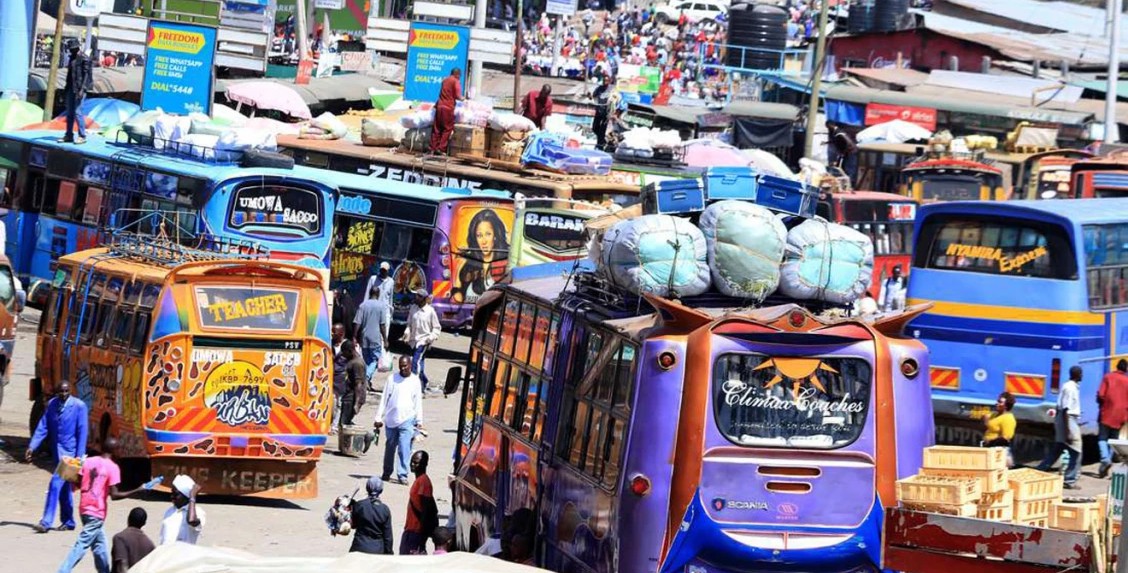
Kenyans troop to bus stages to travel upcountry for Christmas and New Year festivities. Photo/Handout
By Newsflash Reporter
More than half of Kenyans will not celebrate Christmas and New Year this year, a new survey has revealed, underscoring the deepening economic strain facing households as the country heads into the festive season.
According to the Infotrak End of Year Poll conducted between December 19 and 20, 2025, 55 per cent of respondents said they will not celebrate the festive period as they have in the past, compared to 45 per cent who intend to mark the season in some form
The findings point to a sobering shift in social behaviour traditionally associated with family gatherings, travel and celebration.
Economic hardship dampens festive spirit
The poll attributes the decline in celebrations largely to financial constraints, with 78 per cent of those not celebrating citing lack of money as the primary reason. Rising cost of living, stagnant incomes and unemployment continue to weigh heavily on households, limiting disposable income during a period that typically involves additional spending.
Financial inability to celebrate was most pronounced among Kenyans aged 46 to 55, where 86 per cent said they could not afford festive activities.
Read more:Support for Ruto government rises despite economic woes – TIFA
Regionally, Nairobi and Western Kenya recorded the highest levels of financial strain, with 87 per cent of non-celebrants in each region blaming lack of money.
Beyond finances, 16 per cent of respondents said they had no interest in celebrating the festive season, while 11 per cent indicated they would be working through the holidays, reflecting shifting priorities and economic realities.
Fewer celebrations
The poll shows a modest improvement compared to 2024, when 60 per cent said they would not celebrate, but the overall picture remains subdued. Even among the 45 per cent who plan to mark the season, celebrations are expected to be muted and centred on low-cost activities.
Read more:TIFA: More Kenyans struggling financially under Ruto’s government
For those who will celebrate, spending time with family remains the most common activity at 53 per cent, followed by attending church or prayer services at 31 per cent. Social gatherings with friends stood at 20 per cent, while only 11 per cent plan to travel for holidays.
Traditional festive behaviours have continued to decline year-on-year. In 2024, 63 per cent of celebrants prioritised family time, compared to 53 per cent this year. Activities such as partying, drinking and travel also recorded drops, signalling a more restrained approach to the season.
Regional and demographic differences
Celebration patterns vary significantly across regions. The Coast region recorded the highest proportion of respondents planning to party and drink, at 14 per cent, while Nairobi residents were the most likely to travel for holidays, with 21 per cent indicating plans to go away.
North Eastern stood out for its strong religious focus, with 56 per cent of respondents planning to attend church or prayers. Central Kenya and Coast recorded higher levels of family-based celebrations, reflecting cultural and social differences.
Gender and age also played a role. Men were slightly more likely to celebrate than women, while younger Kenyans aged 18 to 26 showed higher participation in social activities such as spending time with friends. Older respondents, particularly those over 55, were more inclined towards family gatherings and religious observance.
Country headed in wrong direction
The survey reveals a stark divide in public sentiment over Kenya’s current trajectory. A significant 42 percent of respondents believe the country is headed in the wrong direction, contrasting sharply with the 21 percent who view the nation positively. Regional disparities are pronounced, with North Eastern Kenyans exhibiting the highest optimism at 42 percent, while Central Kenya records the greatest dissatisfaction, with 65 percent expressing concern over the nation’s path.
Read more:Half of Kenyans express deep distrust in IEBC – Survey
Nearly one-third of respondents (32%) adopt a neutral stance, suggesting a substantial portion of the population remains in a “wait-and-see” mode. Gender and age dynamics further nuance the findings: men appear slightly more optimistic (23%) than women (18%), while younger adults aged 18–26 show lower “wrong direction” sentiment at 38% but display elevated uncertainty, with 12 percent unsure of the country’s course.
The survey, leveraged CATI methodology with a representative sample of 1,000 adults, ensuring insights reflected national perspectives.


About the Author