
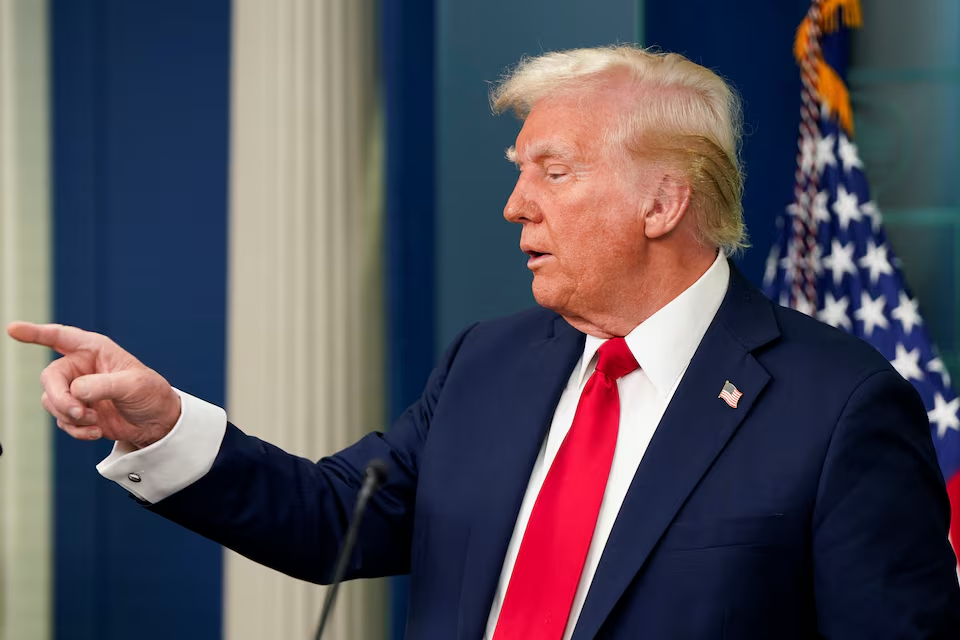
US President Donald Trump. Photo/Reuters
By Newsflash Writer
A new wave of tariffs proposed by former U.S. President Donald Trump could spell economic hardship for Kenya, with over 80,000 jobs hanging in the balance and vital sectors such as manufacturing and healthcare facing severe disruptions.
Trump has imposed a 10% universal tariff on all imports to the U.S.—a move that could drastically affect Kenya’s export-driven industries, reduce foreign earnings, and weaken trade ties with Washington.
According to the Kenya Export Promotion and Branding Agency (KEPROBA), Kenya exported goods worth $737.3 million (Sh95.5 billion) to the U.S. in 2024. The country’s imports from the U.S. stood slightly higher at $782.5 million (Sh101.4 billion), leaving a trade deficit of $45.2 million (Sh5.86 billion). The proposed tariff would widen this gap further by making Kenyan products less competitive in the American market.
Textiles, farmers and jobs at risk
Textiles and apparel, which account for the bulk of Kenya’s exports under the African Growth and Opportunity Act (AGOA), would be the hardest hit. The sector supports around 80,000 jobs directly and indirectly, with many employed in Export Processing Zones (EPZs) in Nairobi, Athi River, and Mombasa. A 10% tariff would drive up the price of Kenyan garments in the U.S., discouraging American buyers and pushing orders to lower-cost competitors like Bangladesh and Vietnam.
“The cost implications of a 10% tariff could render our exports unviable,” says trade economist Dr. Faith Oduor. “Kenya has leveraged AGOA for over two decades to build its textile and apparel sector. If these tariffs are enforced, we risk losing not only jobs but also investor confidence.”
Kenya has been among the leading African beneficiaries of AGOA, a preferential trade agreement enacted in 2000 that allows duty-free access to U.S. markets for thousands of products. The program is set to expire in September 2025, and negotiations to renew or replace it have slowed amid shifting U.S. foreign policy priorities. Trump’s proposed tariffs would undercut any potential gains from the remainder of the AGOA timeline and send a strong signal that U.S. trade preferences may not be guaranteed in future administrations.
Read more: How Trump’s ‘America first’ policies are hurting Ruto’s plans
In addition to textiles, Kenya exports coffee, tea, macadamia nuts, and titanium ore to the U.S.—all sectors that contribute significantly to rural employment and foreign exchange earnings. Farmers, already grappling with erratic weather and fluctuating commodity prices, could see reduced incomes if U.S. demand declines due to higher prices.
“The ripple effects on smallholder farmers could be devastating,” warns agricultural economist Peter Njuguna. “Macadamia and coffee have found a niche market in the U.S., but with price-sensitive buyers, even a modest tariff could shift demand to Latin American producers.”
Health sector and trade ties under strain
Kenya’s dependency on U.S. markets for specialized goods also puts it in a vulnerable position. American exports to Kenya include petroleum products, capital goods, aircraft and parts, industrial machinery, and pharmaceuticals—essential for infrastructure development and public health. With trade relations strained, delays or price hikes in these imports could stall key projects and strain the health sector.
Already, the health sector is facing challenges, with over 54,000 jobs reportedly lost in the NGO-supported health programs over the last year due to reduced U.S. donor funding. A deterioration in trade and diplomatic ties could further limit access to life-saving drugs and health technologies, especially for HIV, tuberculosis, and maternal health programs.
Kenya’s Ministry of Trade has acknowledged the potential threat and is seeking alternative markets in Europe, Asia, and intra-African trade blocs. However, experts caution that replacing the U.S. market won’t be easy.
Read more:China imposes tariffs on American goods in retaliation against Trump’s move
“Trade diversification is crucial, but it’s a long-term solution,” Dr. Oduor notes. “In the short term, we need to engage diplomatically with U.S. policymakers and lobby for exemptions or transitional arrangements if these tariffs come into force.”
As the U.S. elections near, Kenya’s economic planners and exporters will be closely watching Trump’s campaign and trade policy proposals. With AGOA nearing expiry and protectionist winds blowing from Washington, the future of Kenya-U.S. trade relations is hanging in the balance—and so are thousands of livelihoods.


About the Author





1 thought on “How Trump’s tariffs will affect Kenya”
Comments are closed.