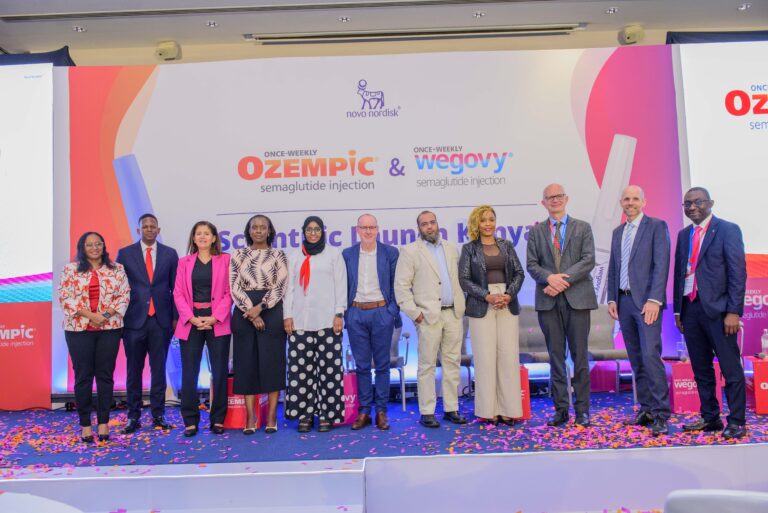
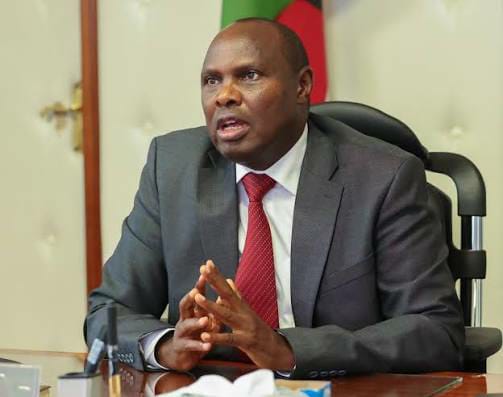
President Ruto witnesses the signing of the Kenya-U.S. health framework in Washington. (Photo: PCS)
By Daisy Okiring
Kenya has entered a new chapter in its health sector after signing a landmark Ksh.207 billion agreement with the United States. The deal, witnessed by President William Ruto in Washington, represents the first-ever government-to-government health framework between the U.S. and an African nation. Officials say it will replace donor-led models with a new system that strengthens Kenya’s public institutions from within.
For the first time, American health funding will flow directly into Kenya’s national systems rather than being managed externally. This marks a major shift in how global health support is structured and how Kenya will finance its long-term health goals.
A new model that changes who controls Kenya’s health money
Unlike past global health programs where donor agencies controlled priorities, the new framework hands Kenya more decision-making power. The U.S. will inject 1.6 billion dollars over five years into key agencies, including the Social Health Authority, the Digital Health Authority, KEMSA, IFMIS, the Ministry of Health, and the National Public Health Institute.
Kenyan officials say this structure ensures investments build durable systems rather than temporary donor-run projects. It also binds the Kenyan government to greater transparency and accountability, since the money will now pass through audited public channels.
Read More: The care crisis: Why more Kenyans are dying of cancer
What Kenya must deliver in return
Behind the celebration, the agreement carries binding obligations for Kenya. The framework requires the government to progressively increase its own health budget, starting with an additional Ksh.10 billion in 2026 and rising to Ksh.50 billion by 2030.
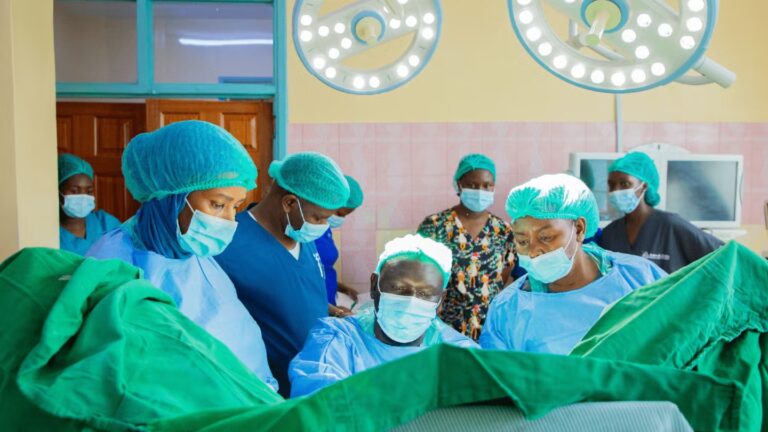
Kenya must also absorb more than 13,800 health workers previously funded by American programs. This shift is seen as a test of Kenya’s ability to sustain its workforce without relying on external donors.
Additionally, the country must take full responsibility for essential health commodities by 2031. This includes HIV drugs, malaria medication, TB supplies, and emergency response stockpiles.
Transition to full self-reliance by 2030
The long-term goal of the deal is to transition Kenya to a fully self-sufficient health system within the next five years. The U.S. expects Kenya to eliminate dependency on donor-backed operations, build stronger emergency response structures, and prepare for future outbreaks through the National Public Health Institute.
For Kenya, this means renovating digital systems, expanding disease surveillance, and modernising supply chains that have long been plagued by inefficiency and corruption. If implemented properly, the reforms could permanently stabilize a sector that has suffered from chronic underfunding.
Read More: WHO releases first global rules for diabetes in pregnancy
Strengthening the fight against HIV, TB, and malaria
Officials say the bulk of the investment will target the country’s three biggest health burdens. Kenya remains one of the largest beneficiaries of HIV funding globally, with over 1.4 million people relying on antiretroviral therapy. The new arrangement ensures consistent supply while empowering Kenya to manage its own treatment programs.
Program managers also expect an overhaul of TB and malaria response systems. The plan includes increased investment in diagnostics, improved tracking of drug-resistant TB, and expansion of malaria control in high-burden counties along the lake region and the coast.

Accountability, efficiency, and ending donor dependency
The Ministry of Health says the agreement is designed to strengthen Kenya’s health sovereignty. By channeling funds through national systems, the government hopes to end the cycle of donor-driven priorities that often overshadow local needs.
However, the new framework means the government must meet higher accountability thresholds. U.S. officials have emphasized efficiency, reduced wastage, and clear reporting structures as conditions for continued support. This includes closer oversight of KEMSA, an agency that has faced procurement scandals in the past.
How ordinary Kenyans stand to benefit
If executed well, the deal promises visible improvements for millions of Kenyans. First, Kenya’s Universal Health Coverage agenda will expand as the Social Health Authority receives direct financial reinforcement. This could ease the cost of primary healthcare, especially for low-income households.
Second, the upgraded digital health infrastructure may reduce duplication of services, long queues, and inconsistent medical records. Rural counties, which often face chronic shortages, are expected to receive additional staff and better-equipped facilities.
Third, emergency preparedness will finally receive sustained investment. The COVID-19 pandemic exposed Kenya’s weaknesses in surveillance and response, and the new arrangement aims to fix these gaps before the next crisis.
The geopolitics behind the partnership
The signing took place during President Ruto’s trip to Washington, where he also attended the DRC-Rwanda peace agreement ceremony. U.S. officials say the health partnership aligns with America’s new global health strategy, which prioritizes bilateral agreements and “efficiency over dependency.”
The deal also reflects strengthening Kenya-U.S. relations amid shifting global alliances. Analysts say Washington views Kenya as a stable regional partner capable of anchoring East Africa’s health security.
A high-stakes agreement with long-term consequences
The Ksh.207 billion deal could become one of the most consequential reforms in Kenya’s health system in decades. If implemented with transparency, it could accelerate the country’s journey to universal healthcare and reduce its reliance on donors.
But if mismanaged, it could strain local systems and expose the country to financial risk once donor support tapers. The coming years will test Kenya’s capacity to manage its own health destiny.
For now, officials insist the next phase will focus on audits, system upgrades, and building the workforce required to deliver reliable healthcare to every Kenyan.


About the Author