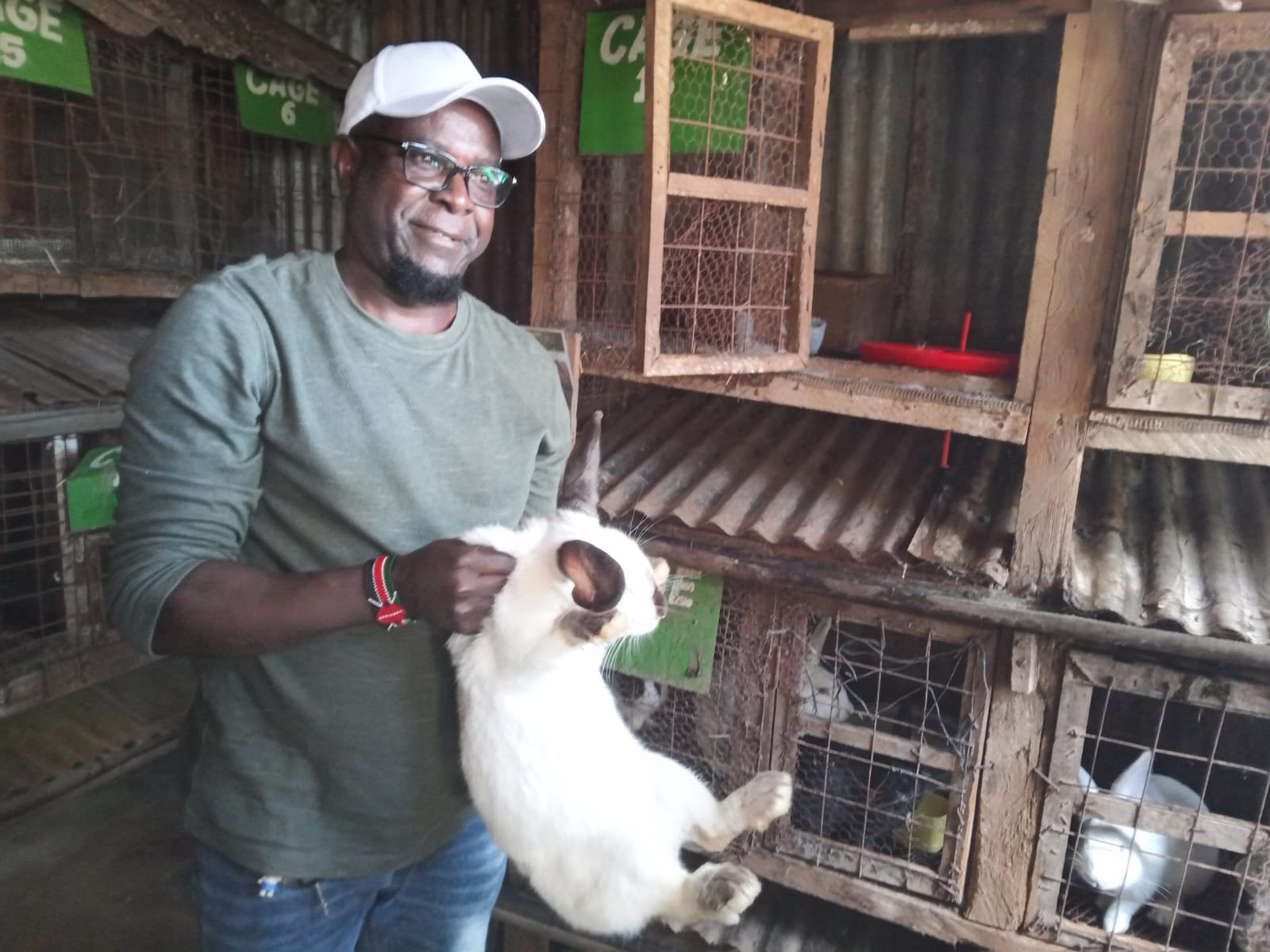
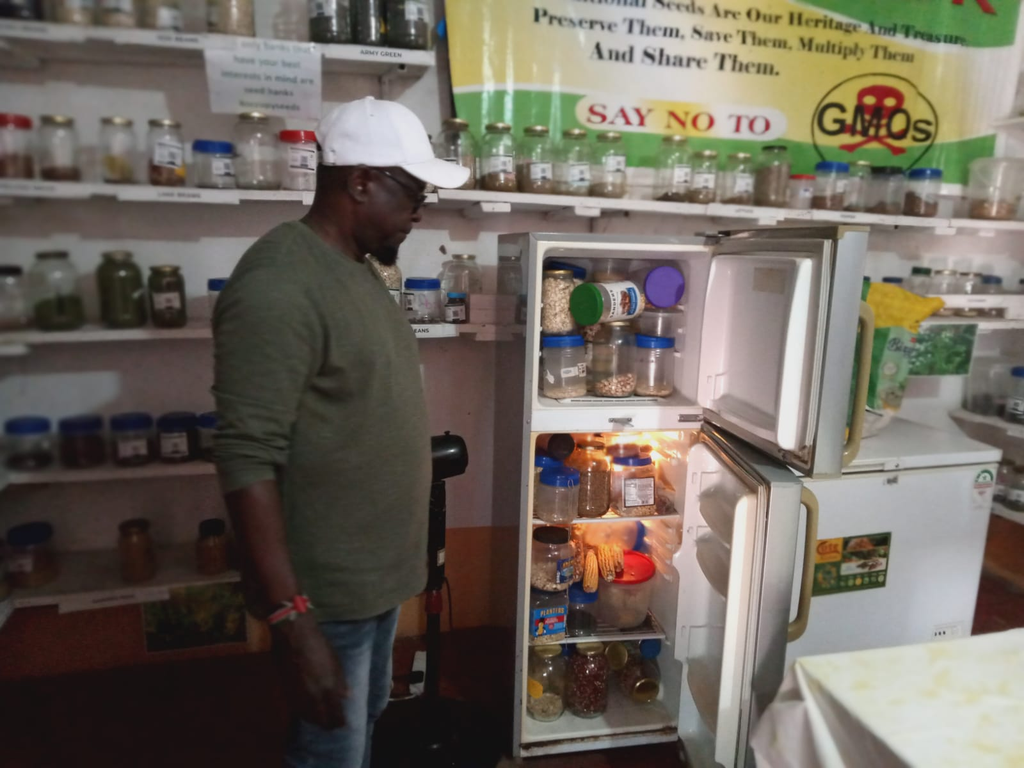
G-BIAK Director Sam Nderitu, whose organisation is involved in livestock farming in the Thika area. Photo/Lawrence Ongaro
By Lawrence Ongaro
The G-BIAK organisation promotes livestock farming as a way of helping farmers reduce the cost of animal feed for poultry and other livestock.
The organisation’s director, Mr Sam Nderitu, rears Black Soldier Flies, which are highly beneficial in livestock farming.
The insects are reared in a designated area where they can lay between 500 and 1,500 eggs at a time. However, the Black Soldier Fly has a lifespan of only about 44 days before it dies.
At the pupation and larval stages, after 22 and 24 days respectively, the insects are dried and later mixed with animal feed for chickens, ducks, pigs and rabbits.
According to Mr Nderitu, an expert in the field, the insects provide a rich source of protein for livestock feed.
“When you mix the pupae and larvae with animal feed, they significantly increase the protein content of the feed,” Mr Nderitu explained.
He said many farmers visit the centre to buy animal feed.
Training farmers in modern agriculture
The centre also serves as a training facility for livestock farmers and students who want to learn about animal husbandry and agriculture.
The one-acre centre has served as an important training facility for the past 18 years.
It is located along the Thika-Garissa Highway, in Muguga village, Thika.
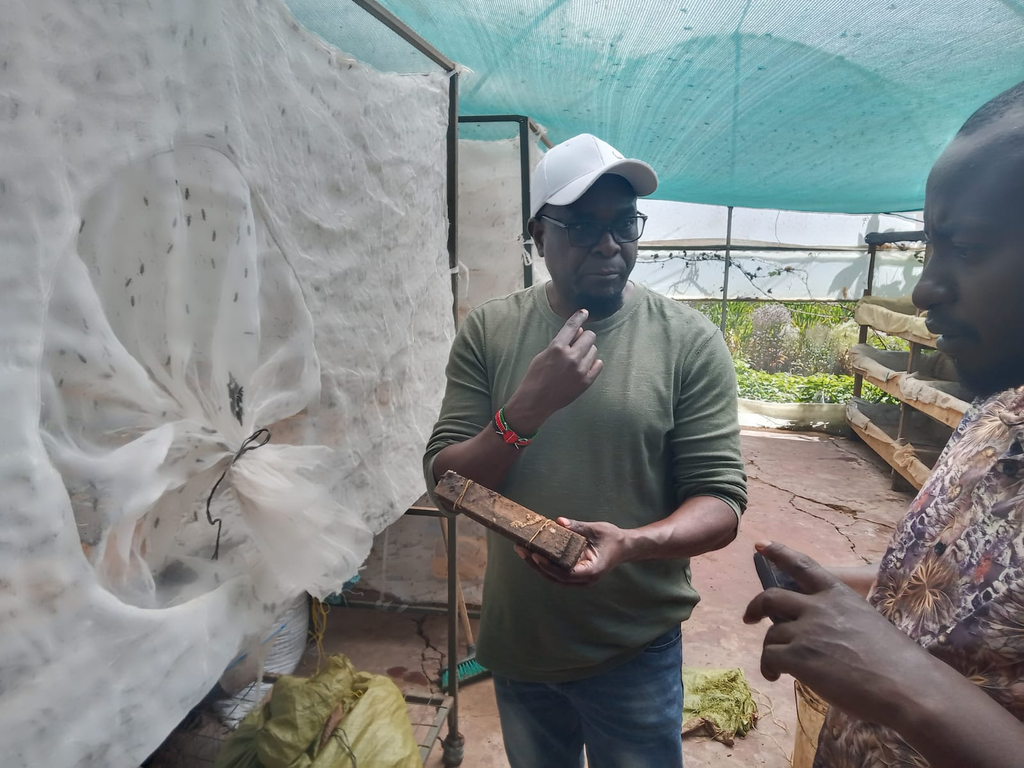
Some of the livestock reared at the centre include chickens, turkeys, rabbits and fish.
Read more: Microplastics in Kenya’s beaches — from cities to sea life
According to Mr Nderitu, once the Black Soldier Flies lay their eggs, they have completed their reproductive cycle, and the eggs are stored in a specially designed wooden structure.
Mr Nderitu also highlighted the importance of organic farming, which does not rely on chemicals.
He said the organisation has established a reputation for providing agricultural training to farmers seeking to improve their farming skills.
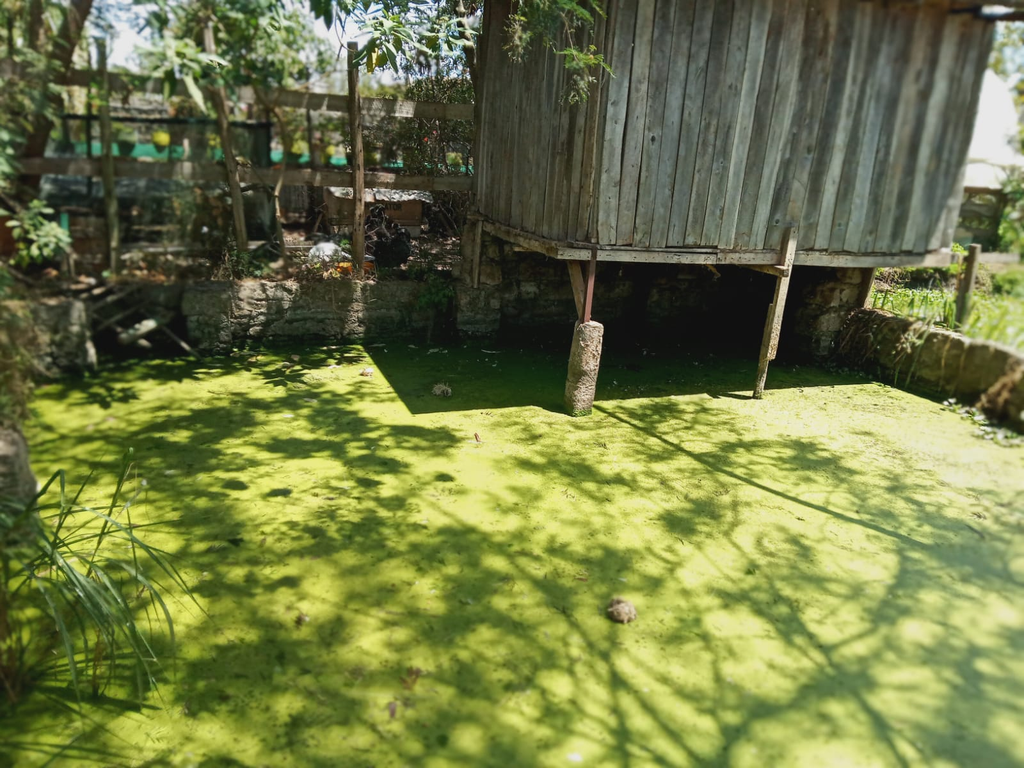
“Most of the time, I train different livestock farmers from various parts of the country on animal husbandry and agriculture,” the director explained.
He said farmers should grow food without chemicals as a way of reducing exposure to diseases such as cancer in the future.
Rabbit farming offers income opportunities
Mr Nderitu is also an expert in rabbit farming, which he said requires a high level of care.
He said rabbits can give birth after one month and can reproduce up to three times a year. A mature rabbit begins reproducing at between six and eight months.
He said rabbit farming requires a clean environment.
Read more:Kenya’s soil crisis is Africa’s warning to restore the earth
“The branches fed to rabbits must be dried slightly rather than being fresh and wet,” he explained.
He said rabbit meat has a ready market, particularly in major restaurants.
“I encourage young people to embrace agriculture because that is where there are many opportunities to make money,” he said.
Mr Nderitu said rabbit urine is valuable because it is used as a top-dressing fertiliser for crops.
He said rabbit urine is sold at Sh300 per litre.
He described farming and livestock keeping as important activities for the future and urged young people to embrace agriculture in general.
He also called on groups interested in learning about poultry, pig, duck and fish farming to visit the centre, saying they would receive comprehensive training to help them achieve their farming goals.


About the Author