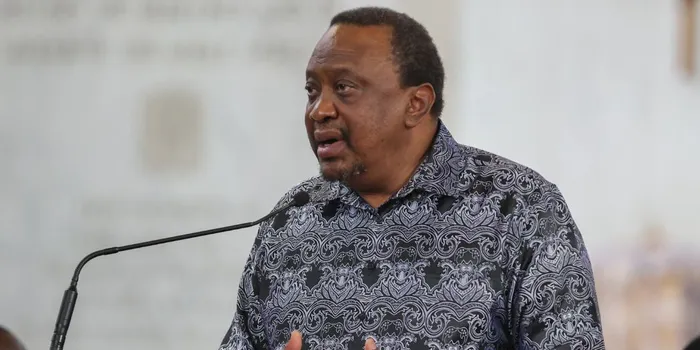
Former powerful North Eastern PC Benson Kaaria. Photo/The Star
By Newsflash Team
Benson Kaaria, the former Provincial Commissioner who oversaw one of Kenya’s darkest episodes—the Wagalla massacre—died earlier this week at the age of 91.
His death revives painful memories of the 1984 atrocity in Wajir, where hundreds, possibly thousands, of ethnic Somalis were killed in a government-sanctioned security operation.
Throughout his career, Kaaria was known as a staunch loyalist of President Daniel arap Moi’s administration. He served in various capacities within the provincial administration, but his legacy remains largely defined by his role in the Wagalla operation, a military crackdown that escalated into a mass killing of civilians.
The Wagalla Massacre
On February 10, 1984, Kenyan security forces rounded up thousands of men from the Degodia clan at Wagalla Airstrip in Wajir. The official justification was to disarm and suppress clan conflicts, but survivors recount a horrific ordeal of systematic torture, starvation, and mass executions.
Witnesses described how detainees were left without food and water under the scorching sun for days. Those who attempted to escape were shot. The government initially downplayed the massacre, claiming only 57 people had died. However, testimonies from survivors and human rights organizations estimate the death toll in the thousands.
Read more: How Raila controls Ruto’s 2027 presidential bid
Kaaria, as the then-Northeastern Provincial Commissioner, played a central role in the operation. According to a 2013 report by the Truth, Justice and Reconciliation Commission (TJRC), he authorized the detention of the men at the airstrip. The report condemned the government’s handling of the operation, concluding that it amounted to gross human rights violations.
Defending his actions
Despite mounting evidence and survivor testimonies, Kaaria never publicly expressed remorse. When summoned before the TJRC, he denied responsibility for the massacre, insisting that his actions were in line with government security protocols at the time.
“I did what I had to do as a government official. It was a difficult time, and decisions had to be made,” he once stated in a rare interview.
His stance drew condemnation from human rights groups and victims’ families, who accused him of evading accountability.
A polarizing legacy
Even in death, Kaaria’s legacy remains polarizing. Some former colleagues remember him as a disciplined administrator who upheld law and order. Others view him as a symbol of the brutal excesses of the Moi regime.
“He was a tough administrator, but he served with dedication,” said a retired provincial officer who worked under him. “Whether you agree with his methods or not, he was a product of the system in place at the time.”
Read more: Journalist Leonard Mambo Mbotela dies at 85
For the families of the Wagalla victims, however, his passing brings no closure. “We wanted justice, not just the passage of time,” said Halima Abdi, whose father disappeared during the massacre. “He may be gone, but the pain he caused will never fade.”
A chapter closed, but wounds remain
Kaaria’s death marks the end of a life intertwined with one of Kenya’s most tragic events.
Yet, for survivors and human rights advocates, the struggle for truth and justice continues. The massacre remains a painful wound in Kenya’s history, a stark reminder of the need for accountability and reconciliation.


About the Author