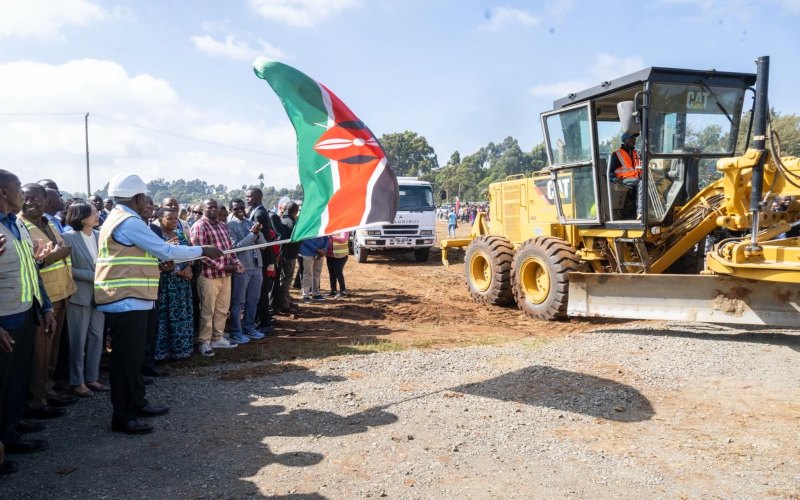
President Ruto Flags off the Nairobi–Nakuru–Mau Summit highway. Photo/Courtesy
By Daisy Okiring
NAIROBI, Kenya: President William Ruto’s launch of the Ksh170 billion Nairobi–Nakuru–Mau Summit highway was presented as a historic milestone, a moment he described as the dawn of a new era in Kenyan infrastructure. But as the country applauds the promise of faster travel and modern roads, the project is already raising questions about financing, transparency, tolling decisions and the long-term implications of handing a critical national corridor to private operators.
The project Kenya waited decades for
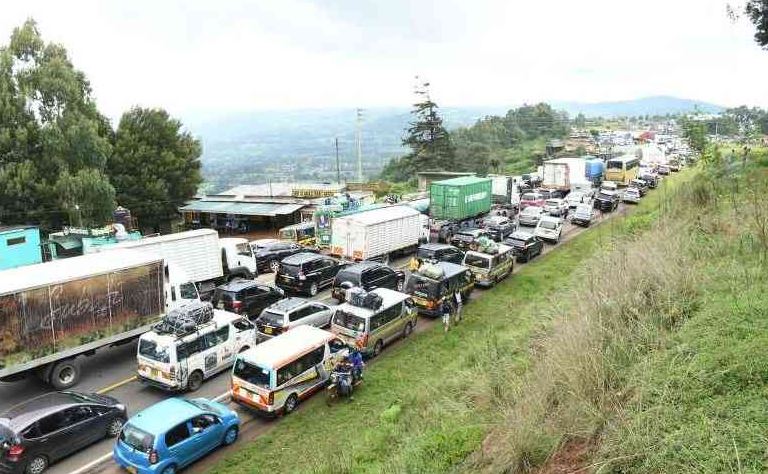
The 175 km Nairobi–Nakuru–Mau Summit dual-carriageway, combined with the 58 km Nairobi–Maai Mahiu–Naivasha section, is Kenya’s biggest Public-Private Partnership (PPP) project to date. For decades, the highway—one of East Africa’s busiest trade arteries—has suffered from gridlock, fatal accidents and constant breakdowns. Government statistics show that some stretches of the A8 corridor record among the highest truck congestion rates in the region, costing billions in lost productivity annually.
During the launch, Ruto insisted that public budgets alone could not finance such megaprojects. He framed the PPP model as the country’s only path out of a long-standing infrastructure dilemma. By allowing private investors to design, expand, operate and maintain the road, the state hopes to free public funds while accelerating delivery timelines.
But as analysts point out, the model shifts financial pressure elsewhere. The public may escape upfront debt, but the costs often return through decades of tolling, availability payments or revenue guarantees. For a project of this scale, economists warn that the long-term financial burden could surpass the original Ksh170 billion price tag.
A financing model that raises transparency concerns
The government portrays the deal as a smart partnership, but little has been publicly disclosed about the exact contractual terms. Independent road-financing experts note that critical information—including toll pricing frameworks, the private operator’s guaranteed revenue levels, and the risk-sharing model—has not been shared with the public.
Statistics from previous PPP road projects in Africa reveal that opaque agreements often result in higher tolls and longer concession periods than initially announced. While the government argues that the project saves taxpayers from borrowing, investigative reviews of similar deals show that governments often bear hidden liabilities when revenue targets fall short.
Read More: Can Kenya Power’s new scanning technology end human manipulation and billing faults?
In Kenya’s case, it remains unclear who will ultimately absorb financial shocks if projected vehicle volumes do not meet investor expectations. Without public disclosure of the concession agreement, watchdog groups say it is difficult to determine whether the deal safeguards national interests or leaves future governments locked into decades of costly commitments.
Political timing sparks debate
The launch comes at a politically sensitive moment. Ruto framed the highway as proof that his administration is delivering transformational projects without increasing debt or raising new taxes. Supporters argue the project demonstrates a shift away from heavy borrowing that defined previous administrations.
But critics note that the timing—two years ahead of the 2027 election—raises questions about whether the announcement is part of a broader political strategy. Investigative political analysts point to stalled or abandoned megaprojects from past administrations, warning that ribbon-cutting moments do not always guarantee successful completion.
Moreover, the President’s comparison of Kenya’s 22,000 km of tarmacked roads to Japan’s one million kilometres sparked debate. Experts say the analogy oversimplifies historical, economic and geographic differences. Still, it served as a powerful political message, setting the stage for upcoming nationwide road announcements.
Read More: Kenya’s mega dam delays reveal deeper weaknesses
Chinese partners return amid past quality debates
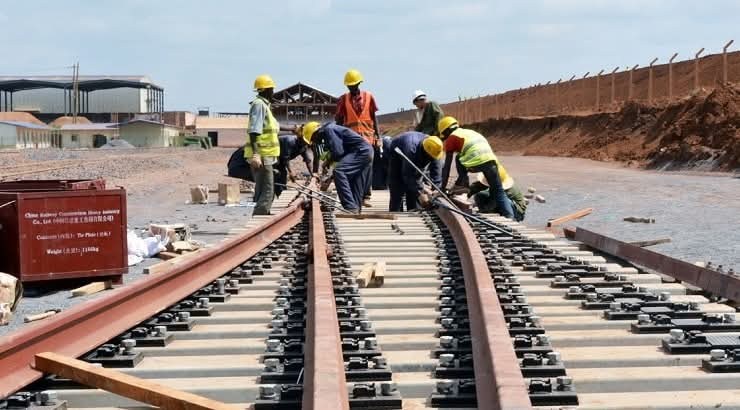
Chinese technical partners—long central to Kenya’s major infrastructure projects—are heavily involved in the project. While their expertise is widely recognised, their return has revived long-standing concerns.
Past investigations into major Chinese-built roads in Kenya have found instances of rapid wear, delayed maintenance, land compensation disputes and budget variations. A 2023 audit by Kenya’s infrastructure oversight agencies recorded multiple cases where contractors failed to meet durability standards, prompting calls for stricter supervision.
The government insists that this PPP model will enforce tougher accountability because contractors are expected to maintain the road for decades. However, civil society groups argue that such accountability only works if monitoring reports are made public—something that rarely happens in Kenyan infrastructure projects.
Tolling fears grow among motorists
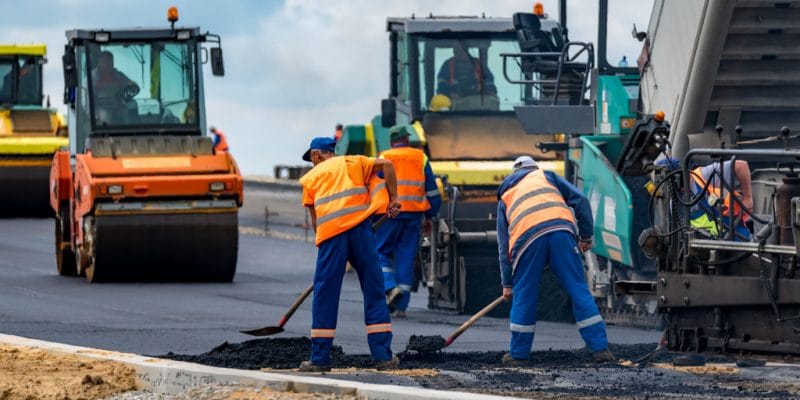
Among ordinary Kenyans, the biggest concern is tolling. The government has already signaled that the new corridor will operate as a toll road once completed. While tolls are common in PPP projects, questions remain about pricing, exemptions and the impact on long-distance transport costs.
Logistics associations warn that steep tolls could raise the price of goods transported along the Northern Corridor, potentially increasing the cost of living. For a country already grappling with high fuel costs and inflation, the economic ripple effects could be significant.
Government officials maintain that toll prices will be “reasonable,” but without clear guidelines, transport unions fear that affordability will depend more on revenue targets than on public welfare.
The promise and the risk ahead
Even critics recognise the project’s potential to reshape Kenya’s infrastructure landscape. If completed as promised, the new highway could reduce travel time, cut accidents, create thousands of jobs and support regional trade.
Yet the long-term success of the project depends on transparency, fair tolling, contractor accountability and the government’s willingness to disclose the deal’s full details. Investigative economic analysts warn that Kenya’s past megaprojects offer a simple lesson: the price of secrecy almost always shows up later.
As bulldozers move in and construction begins, the question lingering over the Ksh170 billion project is no longer whether Kenya needs this highway. It is whether the country will get full value for a project that will shape its economy for decades.


About the Author