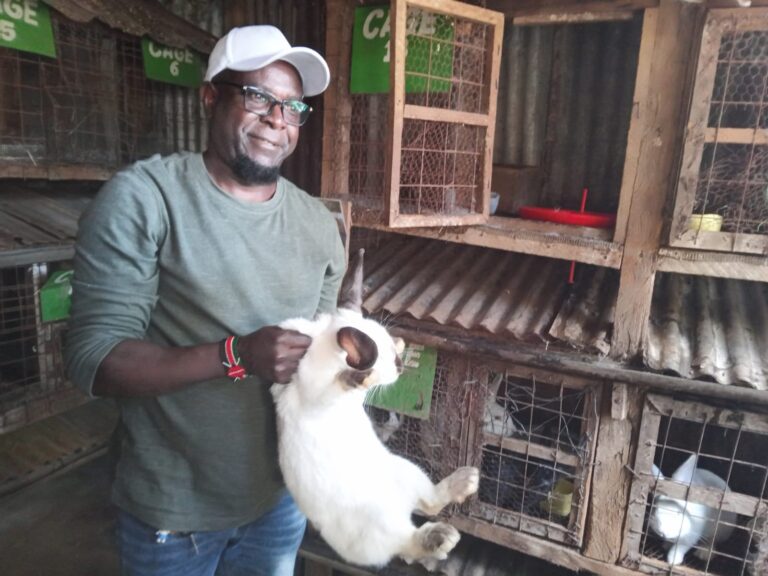
FAO officials hand over the KIAMIS system to Agriculture CS Mutahi Kagwe during the Naivasha forum.. Photo/Courtesy.
By Daisy Okiring
NAIROBI, Kenya: Over seven million Kenyan farmers are set to enter a new digital era after the government received full control of the Kenya Integrated Agriculture Management Information System. The handover took place in Naivasha during the Intergovernmental Forum on Agriculture. Officials celebrated the move as a national breakthrough. Yet the size and speed of the rollout raise questions about oversight, privacy and long-term readiness.
The system, known as KIAMIS, now sits at the Kenya Agricultural Digital Information Centre. The centre will serve as a central hub for crop and livestock data. FAO Deputy Country Representative Hamisi William led the handover to Agriculture Cabinet Secretary Mutahi Kagwe. The move marks one of the largest digital transitions in Kenya’s agriculture sector.
Officials say farmers will receive digital services through one integrated platform. But independent analysts note that Kenya has attempted large data-driven projects before, with mixed results.

A milestone with hidden gaps
The government says KIAMIS contains data for 7.1 million registered farmers. This includes both crop and livestock producers. The scale makes the platform one of the continent’s most ambitious agriculture databases.
CS Kagwe praised the system as a new dawn for farming households. He said every farmer will be connected to the national digital superhighway. He added that the system will support targeted subsidies and push accurate soil and climate advisories directly to farmers.
The promises appear bold, but policy experts question whether the ministry can handle the scale. Kenya has faced data leaks in other sectors. Agriculture data contains sensitive economic information. Analysts warn that such a huge database may attract cyber threats.
Read More: Gov’t to clear sugar factory workers’ pay, says CS Kagwe
Tracing animals, tracing money
The handover comes months after the launch of the Animal Identification and Traceability system. ANITRAC was introduced to track livestock from birth to export. It records vaccination histories, movement and health status. The system aims to open doors to premium markets where traceability is mandatory.
Livestock Principal Secretary Jonathan Mueke said that ANITRAC has already boosted meat exports by 45 percent. He said consumers now demand proof of production decisions. He added that Kenya must show strict compliance to keep its place in global markets.
The figure signals a rapid transformation. Yet independent economists argue that the value chain remains uneven. Many pastoral counties still lack stable network coverage. Livestock officers in remote regions often struggle with digital tools. These gaps raise concerns about national equality in the digital shift.

Billions at stake in new digital pipeline
The integration of KIAMIS and ANITRAC under one centre creates a powerful data pipeline. KADIC will hold farmer identities, land sizes, yields, soil data and livestock details. The ministry says this information will help shape national policy.
But researchers underline the risks. Centralised systems can become bottlenecks when updates stall. A single failure could freeze key agricultural services. The country has seen similar disruptions in the past linked to centralised platforms.
Statistics also show that many farmers still lack dependable smartphones. This raises questions about rollout costs. The government has not disclosed the long-term maintenance budget for the new centre. Past digital projects collapsed when donor funding ended. This raises fears that the system could stall without consistent investment.
Read More: AU-IBAR pushes unified feed strategy for Horn of Africa
What farmers gain — and what they might lose
The ministry says the platform will support e-voucher subsidies and faster extension services. Farmers will access agronomic advice tailored to local conditions. The approach could reduce waste and increase productivity.
However, farmer groups want more transparency. They want details on how data will be stored and who will access it. They also want guarantees that small farmers will not be locked out by complex digital requirements.
Data rights groups warn that Kenya lacks a clear protocol for agricultural data. They argue that farmers risk losing control over their production histories. International companies could use the information to influence market prices.
The ministry says that the platform will follow security standards. But it has not released a detailed public framework. Investigators note that Kenya’s past data policies often launch before full safeguards are set.

A turning point for the sector
The integrated system places Kenya among the few African countries with national digital agriculture and traceability. Officials say this gives the country an edge in global markets. FAO has praised Kenya’s willingness to adopt digital tools.
The transition comes at a moment when climate shocks threaten food security. Accurate data could help predict and respond to droughts. It could also support insurance models that protect farmers from losses.
Yet the promise depends on execution. Sector insiders say that digital tools often fail when frontline staff are undertrained. Counties must play a strong role. The success of the rollout depends on whether the national and county governments coordinate effectively.
The unanswered questions
The handover marks progress, but critical questions remain. How will the ministry ensure equal access for farmers without smartphones? What budget will sustain the system after donor support ends? What happens if the centre suffers a cyberattack? Who will audit the system to ensure data accuracy?
These issues demand clarity before the system expands further. Kenya’s farming sector drives national food security. Any digital disruption could have wide consequences.
As Kenya embraces its digital future, the need for accountability grows. The promise is real. The risks are also clear. The country must now prove that the new system will protect farmers and strengthen the food chain.


About the Author