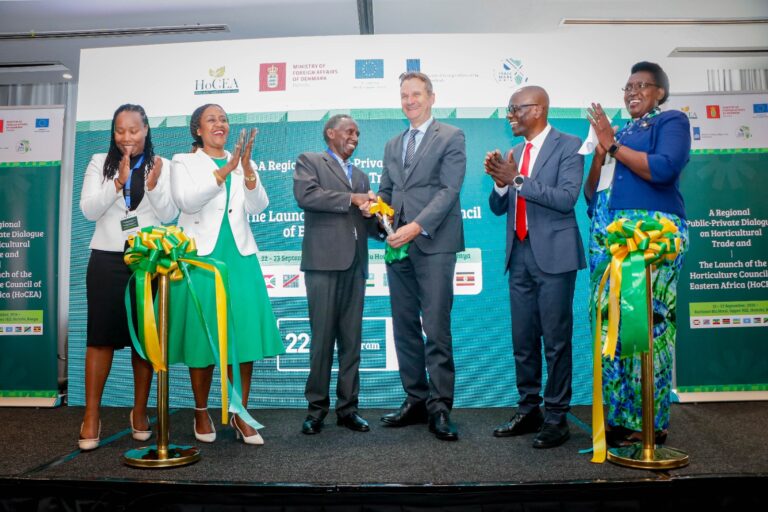
Participants at the forum. Photo/Suleiman Mbatiah
By Newsflash Correspondent
Livestock experts and policymakers are calling for urgent investment in feed production, storage, and distribution to address the growing feed deficit in the Horn of Africa.
They warn that without a workable investment plan and stronger advocacy for resource mobilization, the region’s livestock sector—its economic backbone—will continue to face devastating losses during droughts.
The call was made during a regional workshop on Strengthening Feed and Rangeland Security in Pastoral Regions of the Horn of Africa, held in Naivasha, Kenya. The meeting, organized by the African Union–Interafrican Bureau for Animal Resources (AU-IBAR) through the African Pastoral Markets Development (APMD) Platform, brought together technical experts, government officials, and regional organizations to assess the implementation of feed and rangeland strategies and agree on coordinated measures to enhance feed security in pastoral regions.
Dr. Huyam Salih, Director of AU-IBAR, said the workshop outcomes will guide the creation of an AU Feed Security Coordination Task Force, ensuring that policy coherence translates into tangible results on the ground.
“At AU-IBAR, we recognize that achieving feed and rangeland security requires more than technical solutions. It demands partnership—between governments, communities, and markets; between science and policy; and between Africa’s continental vision and the everyday realities of pastoralists,” she said in a speech read on her behalf by Professor Ahmed Elbeltagy, the APMD Platform Policy Pillar Lead.
Drought losses highlight urgency for feed security
Data from the Intergovernmental Authority on Development (IGAD) show that more than half of Africa’s livestock is found in East Africa, with 55 percent of IGAD’s total livestock resources located in Ethiopia, Kenya, and Somalia.
Despite this wealth, the region continues to suffer huge losses due to recurrent droughts. Between 2020 and 2023, the three countries lost about 13 million animals valued at USD 1.2 billion, excluding the massive loss in milk production. The crisis also left about five million children malnourished across the three countries.
Read more: Expect food shortages from October to December, Kenyans warned
Experts warn that overgrazing remains a serious problem across the pastoral lowlands, particularly around permanent water points, markets, and settlements, where high livestock concentration continues to degrade rangelands, deplete vegetation cover, and reduce land productivity—threatening both pastoral livelihoods and long-term ecological balance.
“In Kenya, overgrazing is spread over large areas of the rangelands and is estimated to affect about 40 percent of them,” said Dr. Ameha Sebsibe, a livestock trade and feed consultant.
Experts push policy and market reforms
Dr. Sebsibe urged governments to promote rangeland management practices such as grazing reserves—including the KALO system commonly practiced in Ethiopia—herd movements, herd splitting, and reseeding, a method already in use in parts of Kenya to restore degraded lands.
“Countries should institutionalize participatory rangeland management, formalize rangeland governance, and recognize and integrate customary institutions. Policymakers should also support the establishment and operationalization of national animal feed reserves modeled on national food reserves for humans,” he advised.
He emphasized the need to strengthen livestock marketing systems for efficient offtake of marketable animals and urged that pastoralists be supported to access feed, water, and fodder resources year-round to enhance feed security and strategic herd management.
Read more: Why irrigation is Kenya’s lifeline for climate resilience and growth
IGAD’s Drylands and African Pastoralism expert, Dr. Guyo Roba, stressed the importance of countries aligning their policies with regional and continental frameworks to strengthen the feed value chain, enhance livestock productivity, and promote sustainable resource management across pastoral regions.
“Member states should review and implement continental and regional policies, strengthen private sector and community participation, and promote coordinated regional partnerships to support a sustainable fodder value chain,” he said.
On policy reforms and improvements, Dr. Roba urged governments to protect pastoral mobility and cross-border grazing systems to strengthen year-round feed security and resilience. He noted the need for clear mandates across government levels, formalized grazing corridors, integrated rangeland monitoring, and greater budget prioritization for restoration and feed security initiatives.
The four-day forum is expected to produce a shared evidence base on fodder and rangeland policies, build consensus on coordinated interventions, document best practices, develop roadmaps for sustainable management and private-sector engagement, and outline steps to establish the AU Feed Security Coordination Task Force.


About the Author