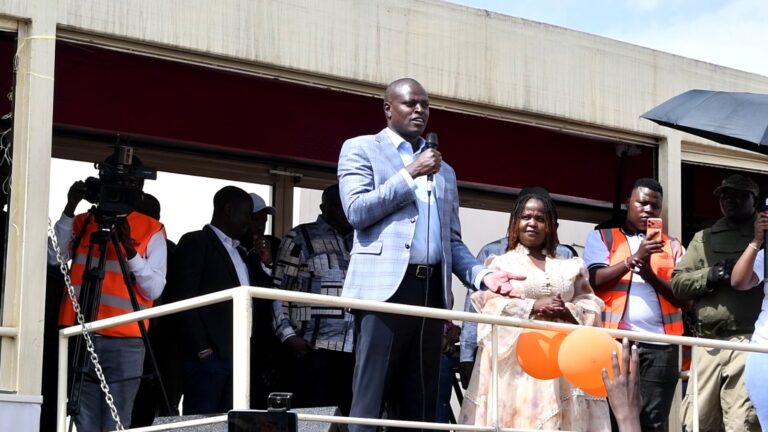
Embakasi East MP Babu Owino. Photo/Handout
By Newsflash Writer
Embakasi East MP Babu Owino has emerged as the leading contender in the race for Nairobi governor ahead of the 2027 General Election, according to a new opinion poll that places him ahead of all other aspirants seeking to lead the capital city.
The survey, released by the Centre for African Progress (CAP) on Saturday, July 25, 2026, shows Babu enjoying 36 per cent support among Nairobi voters, giving him a narrow but clear lead over businesswoman Agnes Kagure, who follows closely with 32 per cent.
Incumbent Governor Johnson Sakaja is a distant third with 11 per cent, while Milton Lusheria garnered 10 per cent and Embakasi North MP James Gakuya received seven per cent support. Four per cent of respondents remain undecided.
The poll was conducted between July 11 and 16 and sampled 4,500 registered voters across Nairobi’s 17 constituencies and 85 wards. It has a margin of error of 1.8 percentage points and a confidence level of 95 per cent.
Babu leads crowded field
Presenting the findings, outgoing CAP Research Director Onchari Oyeyo said the results reflected the prevailing political mood in the capital ahead of the next General Election.
“If the election is held today, Babu Owino would be elected governor with 36 per cent of the vote,” Oyeyo said.
Read more: Babu, Matiang’i emerge Kenya’s most likeable politicians
The findings suggest Babu has established an early advantage in what is shaping up to be a highly competitive contest. However, Kagure remains within striking distance, signalling that the race is still wide open as political campaigns gradually gather momentum.
Sakaja faces uphill re-election bid
The survey paints a grim picture for Governor Sakaja, whose approval rating has fallen to just 10 per cent. According to the poll, 84 per cent of respondents disapprove of his performance, while six per cent expressed no opinion.
Oyeyo noted that Sakaja’s approval rating closely mirrors his electoral support, indicating that the governor could face an uphill task securing a second term if the current political trends remain unchanged.
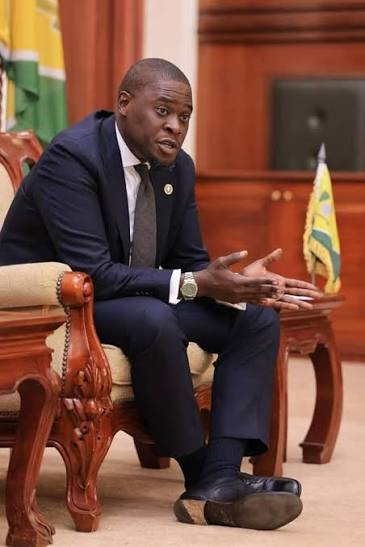
He attributed the governor’s declining popularity to public dissatisfaction over the county’s disaster response, deteriorating infrastructure, allegations of corruption involving county enforcement officers and limited employment opportunities for young people.
Political parties and key concerns
The poll also points to changing political dynamics in Nairobi, with newer political parties gaining significant ground.
The Democracy for the Citizens Party (DCP) emerged as the most popular political party in the county with 28 per cent support, followed by ODM at 15 per cent, UDA at 14 per cent, the Kenya Patriots Party at 12 per cent and the National Economic Development Party at 11 per cent.
On the issues shaping voter preferences, respondents identified the economy as Nairobi’s biggest challenge, with 51 per cent citing it as the county’s most pressing concern. Corruption ranked second at 25 per cent, followed by leadership at 20 per cent and security at four per cent.
Read more: The ‘Sifuna Effect’: Passing cloud or new political tsunami?
Responding to questions from journalists, Oyeyo dismissed claims that the survey was politically sponsored, insisting that the Centre for African Progress adheres to professional research standards and has consistently delivered credible election projections.
He also announced that the media briefing marked his final appearance as CAP Research Director, revealing that he would be taking up the position of Secretary General of the National Economic Development Party.



About the Author