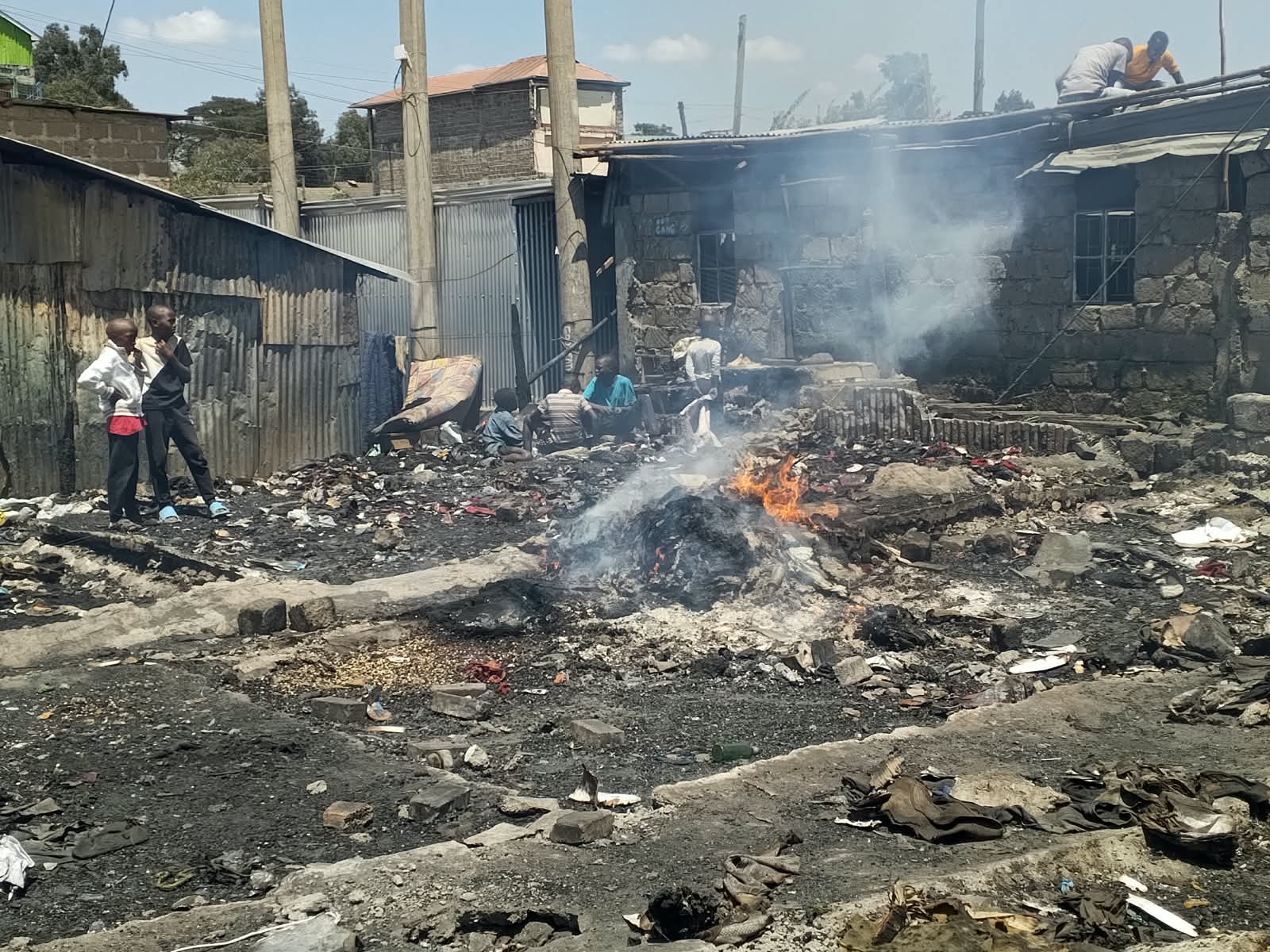
A section of Mukuru slums, Nairobi, which caught fire recently. Photo/Sammy Kimatu
By Sammy Kimatu
A deadly fire in Mukuru Kayaba has exposed the potentially fatal consequences of blocked access roads in Nairobi’s informal settlements after a 23-year-old man died in an inferno that a responding fire engine could not reach.
The tragedy occurred in the Dallas area of Mukuru Kayaba in South B, Starehe Sub-county, where residents watched helplessly as firefighters struggled to access the scene because roads had allegedly been narrowed or blocked by structures.
The incident has triggered a fresh crackdown on the encroachment of access roads, with local administrators warning structure owners that emergency routes must remain clear.
Area chief Edwin Murunga, together with a Nyumba Kumi official, has issued a notice to owners of structures that have encroached on access roads, directing them to clear the routes.
The administrators say the blocked roads have created a serious emergency response challenge, making it difficult for fire engines and ambulances to reach residents in distress.
Emergency access under threat
The death of the young man has placed road encroachment at the centre of attention in Mukuru Kayaba, with residents facing the risk of being cut off from emergency services when they need them most.
In informal settlements, where houses and businesses are often built close together, fires can spread within minutes. The danger becomes even greater when firefighters cannot get close enough to affected structures.
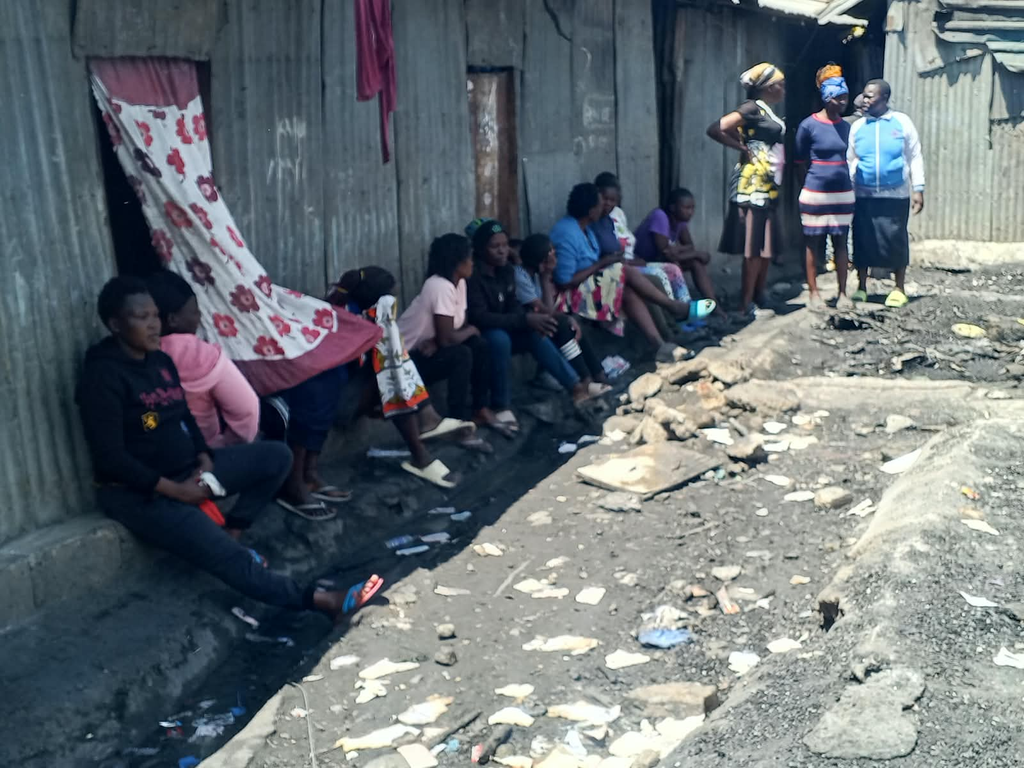
A fire engine may have the equipment and personnel required to contain a blaze, but those resources become less effective if the vehicle is forced to stop several metres or even streets away from the emergency.
Read more: One dead, 50 families homeless after Mukuru night fire
For the family of the 23-year-old, the incident has ended in tragedy. For the wider Mukuru community, it has raised a disturbing question: what happens when an emergency vehicle is called but cannot reach the person who needs help?
The problem extends beyond firefighting.
Ambulances require clear roads to transport critically ill and injured patients to medical facilities. Police and other emergency response teams also depend on accessible routes when responding to distress calls.
Administrators say allowing structures to occupy these routes puts an entire community at risk.
Calls to clear blocked routes
The latest notice is also likely to reignite debate over alleged land grabbing and the occupation of spaces reserved for public access in informal settlements.
Some access routes have reportedly been reduced to narrow passages as structures are constructed along road reserves and other open spaces.
The consequences are particularly severe in densely populated areas, where residents have limited alternative routes.
When a road becomes too narrow for a fire engine, residents may be forced to rely on buckets of water and other improvised methods while waiting for firefighters to find another way into the affected area.
By then, flames can have spread to neighbouring homes.
The administrators’ directive is therefore being viewed as an attempt to restore emergency access before another disaster occurs.
Structure owners whose buildings or businesses have encroached on the roads have been put on notice that the access routes must be cleared.
Residents have also been urged to support the initiative and report obstructions that could prevent emergency responders from reaching affected households.

The Mukuru Kayaba tragedy highlights a wider challenge facing Nairobi: how to protect residents of rapidly growing informal settlements while ensuring that basic infrastructure, including roads and emergency corridors, is preserved.
For residents, the issue is not simply about convenience.
Read more:Over 1,000 Mukuru learners get holiday food support
An open road could determine whether a firefighter reaches a burning house in time, whether an ambulance gets to an injured person quickly enough, or whether a family escapes a disaster before it is too late.
The death in Dallas has brought that reality into sharp focus.
As administrators move to enforce the directive, residents will be watching to see whether the exercise results in the lasting restoration of access roads or merely a temporary clearance operation.
The message from the local administration is unequivocal: access roads must remain open.
For Mukuru Kayaba, the hope is that the death of the 23-year-old will not become another statistic, but a turning point in efforts to ensure that emergency vehicles can reach every resident when disaster strikes.



About the Author