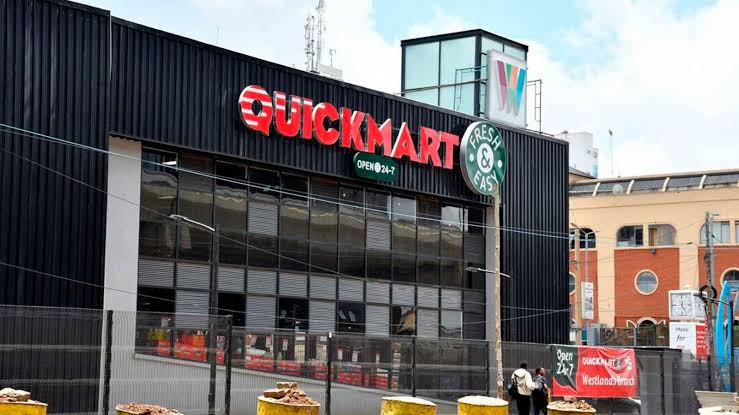
The Central Bank of Kenya. Photo/KBC Digital
By Newsflash Reporter
Kenya’s Financial Reporting Centre (FRC) has raised alarm over the scale of suspicious financial activities in the country, revealing that Sh6.976 trillion was flagged between 2021 and 2023.
According to the newly released Money Laundering and Terrorism Financing Trends and Typologies Report 2025, this staggering figure represents 99.4 percent of all Sh7.016 trillion reported to the agency in that period.
Banks were the primary channels through which the questionable funds flowed, handling Sh6.38 trillion—equivalent to 91.04 percent of the total.
The FRC attributes the high volume of suspicious activity to a growing level of sophistication among perpetrators, who often use shell companies to conceal ownership and source of funds. Another common tactic is structuring large transactions into smaller amounts to avoid detection.
The report also notes that the FRC’s investigations extended beyond Kenya’s borders to at least 21 countries, including Somalia, Nigeria, Ethiopia, the UAE, Qatar, Iran, Saudi Arabia, India, Pakistan, Australia, Malta, and Hong Kong. While the names of suspects and entities remain undisclosed, the report highlights deep-rooted vulnerabilities in both public and private institutions, especially after Kenya was grey-listed by the Financial Action Task Force (FATF) in February 2024.
State entities, fake firms, and public sector abuse
Among the most common red flags were 4,830 government-related payments followed by immediate cash withdrawals, and 3,846 cases where transaction patterns did not align with known business profiles. Banks also flagged 1,658 cases involving transaction splitting and 1,479 linked to fictitious documentation.
“These indicators point to potential financial crimes including money laundering, corruption and fraud and are all aimed at distancing the perpetrators from the illicit funds, complicating the transactions audit trail and thus avoiding detection by authorities,” the FRC stated.
Read more: Absa launch business credit card to boost financing for MSMEs
In a notable case, a county awarded Sh361.86 million in tenders to 15 companies—all registered on the same day and linked to county employees, including some who sat on tender committees. Funds were moved through structured withdrawals below the reporting threshold and transfers to related accounts. Some contracts were awarded before the companies were registered; others were signed after project completion.
In another instance, a CBO in County Y received Sh185.69 million from County Z under the guise of emergency aid. The group, registered a month after submitting its project proposal, moved the funds through cash withdrawals and hardware purchases. Supporting documents were found to be forged.
From fake invoices to cryptos and gold scams
The report also details cases of politically exposed persons embezzling Sh1.22 billion through construction companies across three counties. Bank records show the money was withdrawn in cash and transferred to companies owned by a senior county official.
An accountant earning less than Sh150,000 monthly was flagged for handling over Sh200 million in unexplained cash deposits. In five years, the individual’s net worth ballooned to Sh1 billion. After prosecution, they were fined Sh282.65 million and forfeited a Sh35 million house.
Trade-based money laundering also featured prominently. One case involved two individuals who wired Sh303.95 million to companies in India and Dubai after receiving Sh449.44 million from local firms for equipment purchases—without proper documentation.
Read more: Ex-NHIF boss lifts lid on how a vibrant fund was sacrificed for SHA
A tea exporting firm, Majani Limited, reportedly received Sh2.87 billion between 2018 and 2023 from local firms dealing in lubricants and bitumen, despite its declared export business. The invoices were vague, and one major depositor, Mjengo Limited—a road construction firm—was linked to Tehran, Iran.
Other flagged schemes included a Sh3.57 billion tax fraud ring run through 15 fake supply companies, a Sh149 million crypto pyramid scheme targeting Kenyans via social media, and a Sh242.2 million fake gold scam involving foreign nationals.
The FRC report paints a troubling picture of systemic financial abuse that continues to threaten Kenya’s economic integrity and its standing in global anti-money laundering efforts.


About the Author