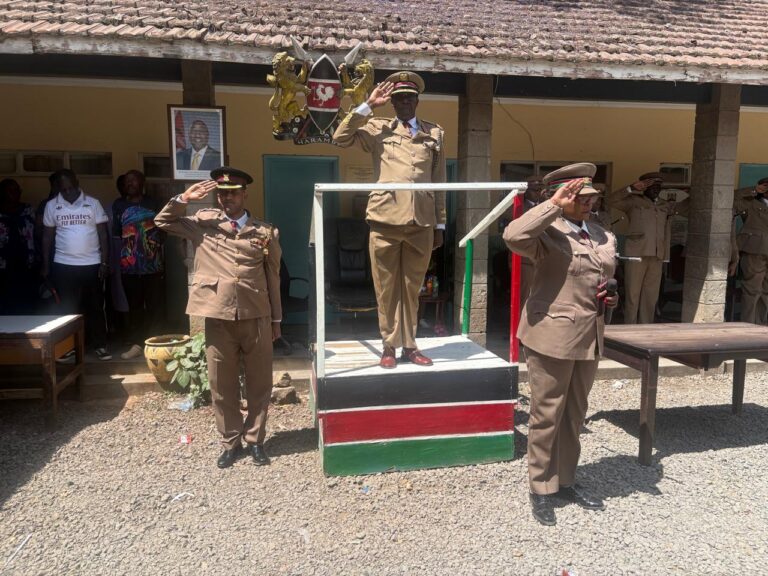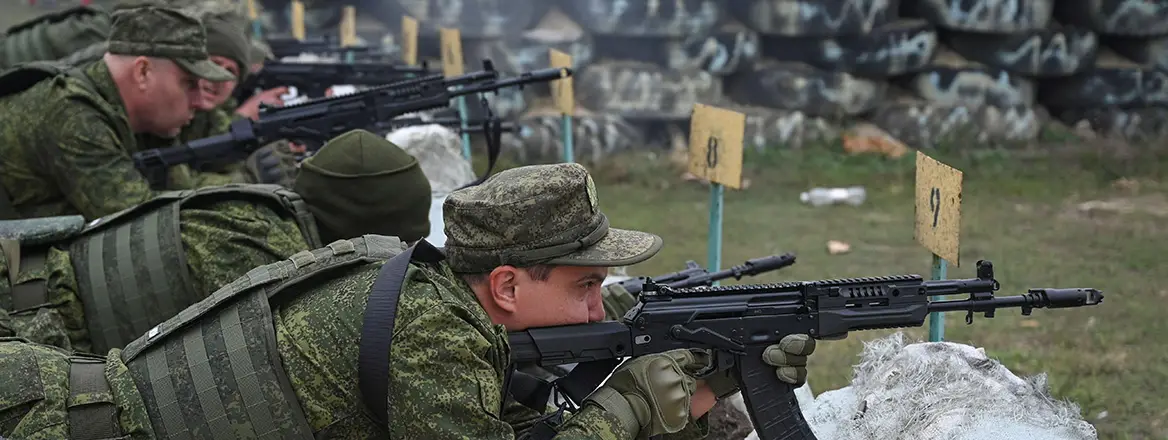
Soldiers in action during the Russia–Ukraine war. Photo/RUSI
By Newsflash Team
At least 82 Kenyans are now caught up in Russia’s military campaign in Ukraine, with several confirmed dead, others seriously injured, and many struggling to find a way out of the war zone.
Internal communication between Kenya’s embassy in Moscow and the Ministry of Foreign and Diaspora Affairs reveals the depth of the crisis facing the government as its citizens are allegedly being recruited into a foreign conflict.
The documents show that many Kenyans travelled to Russia after being promised legitimate jobs, only to be forced into the Russian military and deployed to active combat areas in the continuing war with Ukraine.
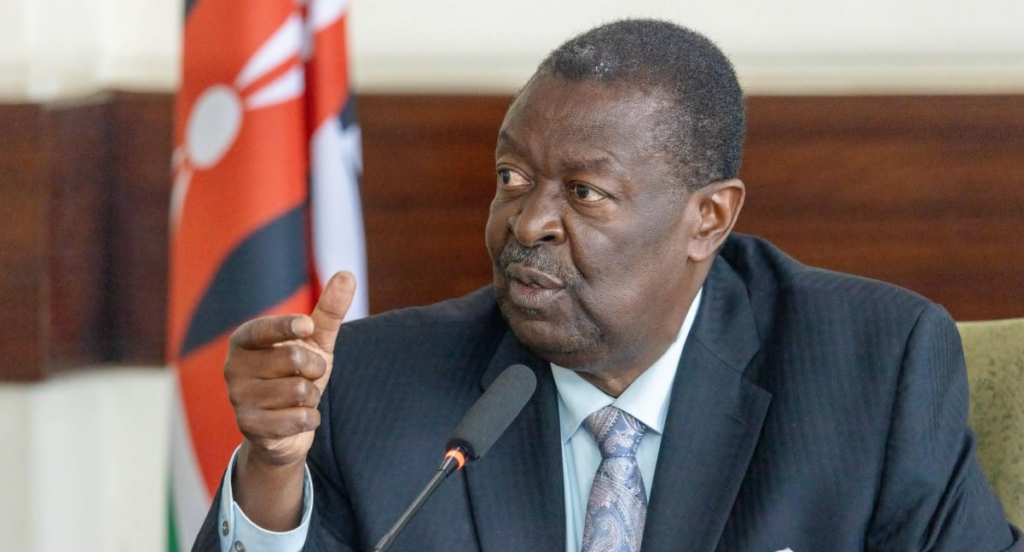
Government officials caution that the confirmed cases may represent only a small portion of the total number involved. In November 2025, Foreign Affairs Cabinet Secretary Musalia Mudavadi disclosed that more than 200 Kenyans may have joined Russian forces since the war began in 2022.
Deception, coercion and rushed training
Most of those recruited had no military background. After undergoing short crash courses lasting about five days in remote training camps—often handling weapons for the first time—they were sent directly to the front lines. Former members of Kenya’s disciplined services were also targeted, with recruiters exploiting their past experience through deception or pressure.
A comprehensive briefing prepared by Ambassador Peter Mathuki and submitted to Foreign Affairs Principal Secretary Korir Sing’oei on September 26, 2025 details the identities, contacts, dates of entry, camp locations and current status of the Kenyans involved.
Read more: Russia launches massive airstrikes on Kremenchuk after Washington peace talks
The report categorises those already deployed, the injured receiving medical care, and individuals who have been rescued or repatriated.
Dr Mathuki warned that young Kenyans continue to fall victim to dishonest recruitment agents. He called on the State Department for Diaspora Affairs to step up public awareness campaigns, urging job seekers to verify overseas employment offers through official government channels and Kenyan diplomatic missions.
According to the brief, Kenyans are spread across several locations in Russia, including Belgorod, Istra—linked to a Wagner-associated military base—Saint Petersburg, Rostov-on-Don, and other undisclosed sites.
Camps, deaths and medical evacuations
In Belgorod’s Selo Novaya Tavolzhanka camp, about 700km from Moscow, 20 Kenyans have been stationed since August 2025. Of these, 18 remain at the camp, one is hospitalised, and one has died. Those listed include Gilbert Yanoh, Daniel Mundia, Paul Wanjiru, Nicholas Keino, Alexander Chepkurui, Dan Masanga, Steven Wamalwa, Job Makera, Seif Pamba, Mark Mwangi, George Kigia, Francis Ndarua, Anthony Kihika, Anthony Magoma, David Simiyu, Joseph Leshinka, Wesley Nyabuti and Erastus. Benson Osomo is receiving treatment, while Willy Muniu Macharia has died.
Read more: Ukraine claims Russia has lured more than 1
At Istra, roughly 80km from Moscow, 29 Kenyans are based. Three—Shaquille Wambo, Pius Mwika and Derrick Njaga—were rescued by the Kenyan embassy between September 12 and 16, 2025. The rest remain in training or operational preparation, including Eddie Kimani Mungai, Daniel Mburu Muringi, Antony Maina Ruhii, Mathew Mwasi Makelele, Nixon Onwonga Omwenga, Mugeka Nderitu Muriithi, George Rimba Mwagona, Billal Masila Rumaida, Victor Mbuga Kinuthia and Christopher Mwangi Macharia, among others.
Saint Petersburg has hosted 26 Kenyans since July 2025. Four have since been repatriated, while four others are hospitalised in Moscow with severe injuries such as amputations and fractures. Two Kenyans—Oscar Khagola Mutoka and Wesley Lugadiru—have been deployed to Rostov-on-Don, and six others are at undisclosed locations.
Recruitment networks under scrutiny
Kenyan authorities have expressed growing concern over the recruitment networks operating both locally and abroad. The embassy has urged stronger public education, tighter airport surveillance and closer coordination among immigration and security agencies to disrupt fraudulent recruiters.
Mark Kariuki, recently rescued from the Russian front, said recruits were promised jobs in meat processing, packaging and cleaning, with all travel and accommodation expenses covered. “We were told it was a government-supported programme. We paid Sh30,000 and everything appeared legitimate,” he said, adding that recruits were later coerced into military service under threat.
Read more: How Russia war-hiring conduit is endangering Kenyans
In September 2025, detectives arrested a Russian national for allegedly playing a central role in recruiting Kenyans into the Russian military. In a letter dated September 30, the Ministry of Foreign and Diaspora Affairs condemned the practice as a breach of international law and demanded explanations from the Russian Embassy in Nairobi.
Martin Macharia Mburu from Ruaka, Kiambu, became the first officially confirmed Kenyan fatality in the Russia–Ukraine conflict. He died on October 30, 2025 at the Donetsk–Lyman front after being recruited under the guise of a driving job and forced to sign a military contract written in Russian.
Officials warn that recruitment rings remain active, leaving many Kenyans injured, stranded or exposed to extreme danger as the war drags on.


About the Author