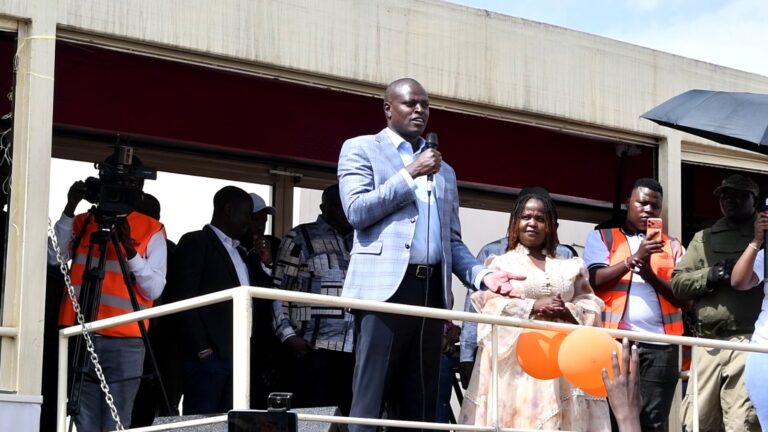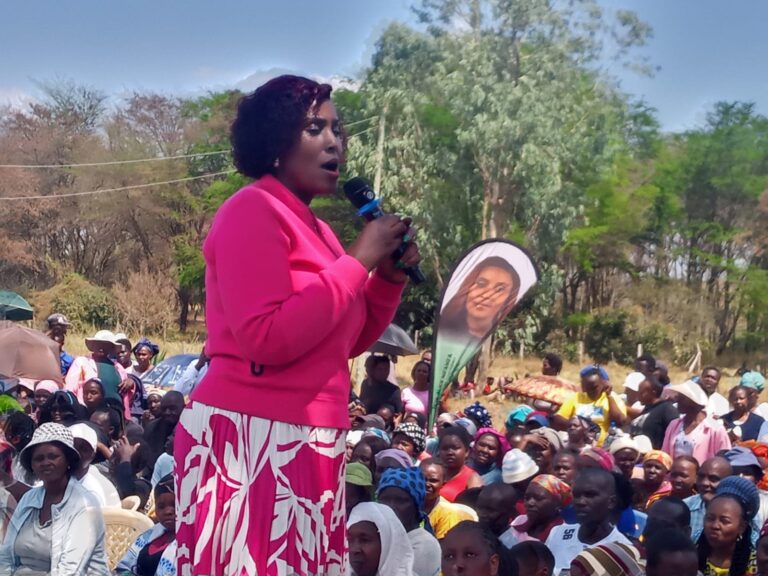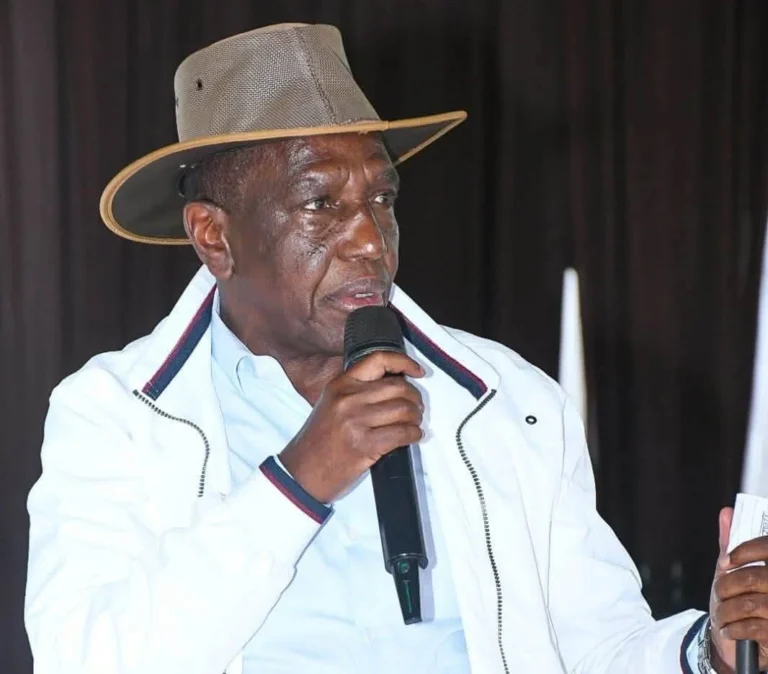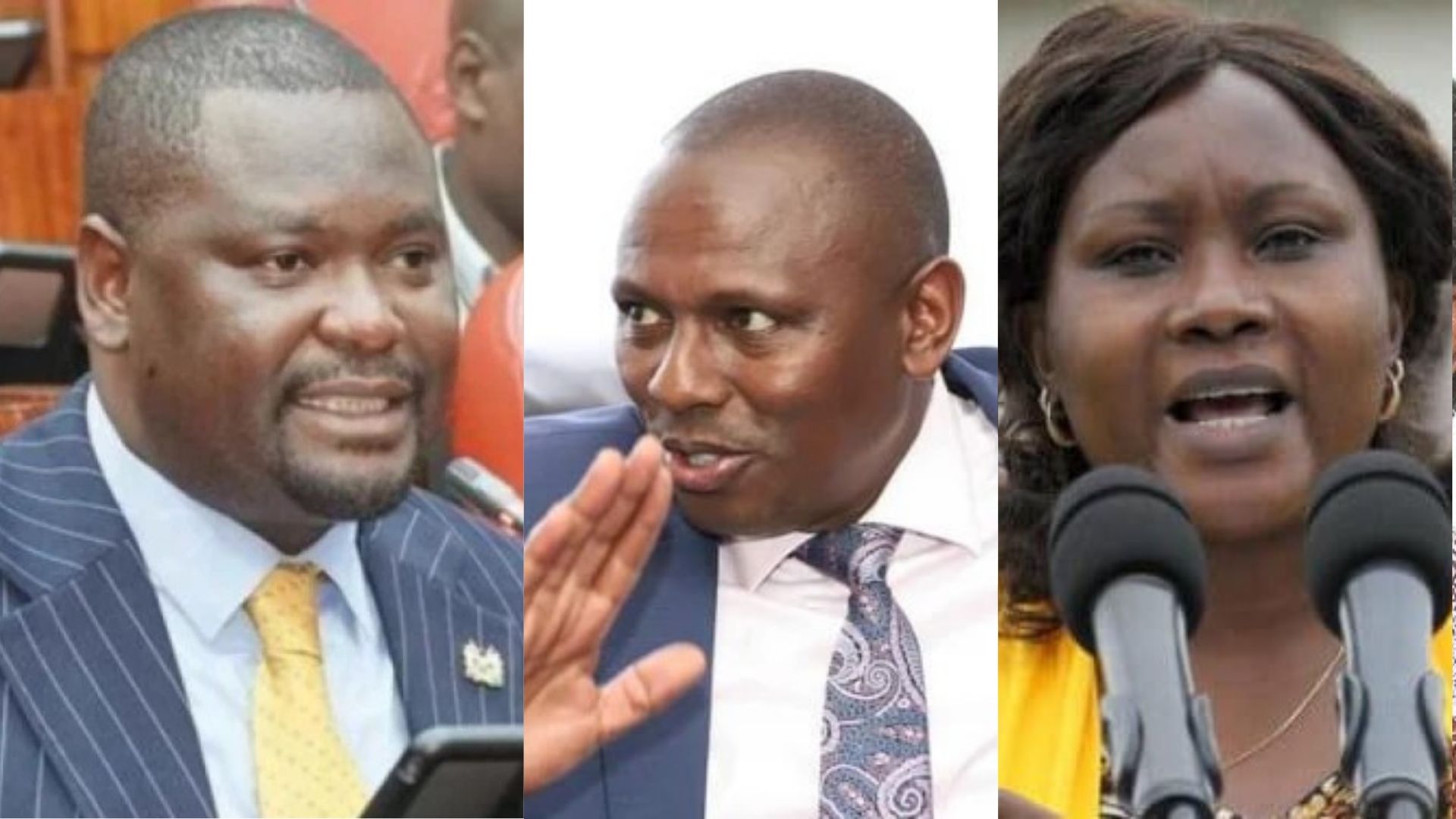
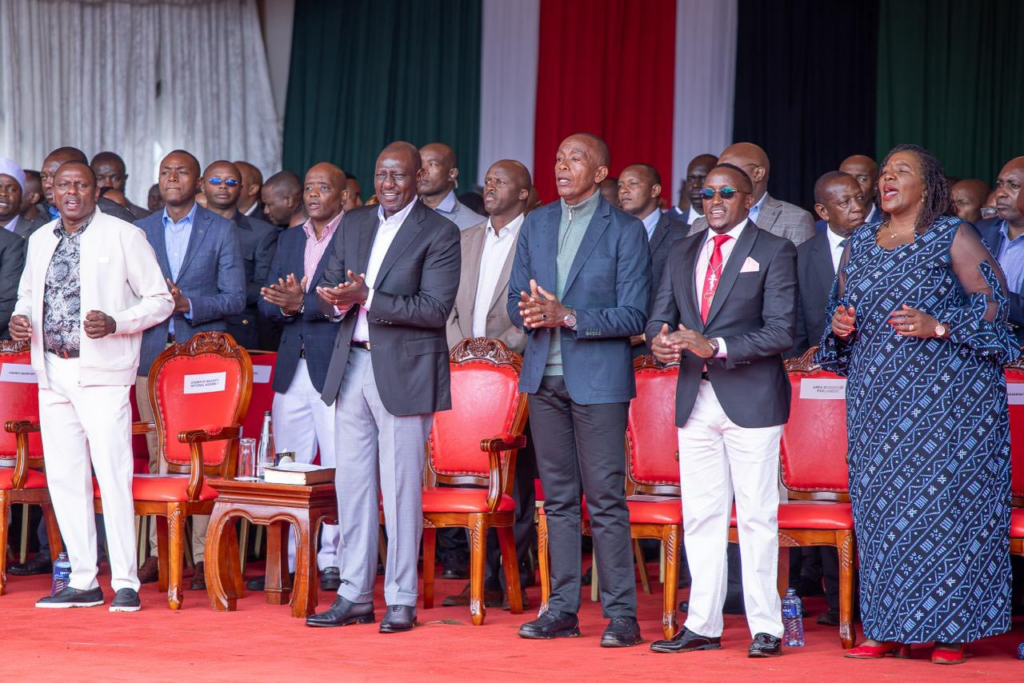
Public Service CS Geoffrey Ruku, Majority Leader Kimani Ichung’wa and Embu Governor Cecily Mbarire. Photo/Handout
By Wanderi Kamau
After winning the Mbeere North by-election on November 27, President William Ruto has rolled out an elaborate political strategy aimed at breaking the larger Mt Kenya bloc into three distinct political units, using carefully positioned allies to reshape loyalties ahead of the 2027 General Election.
The plan, according to political insiders, is designed to weaken resistance in the region following the impeachment of former Deputy President Rigathi Gachagua and to secure enough votes to cushion Ruto’s re-election bid.
At the centre of this strategy are Public Service Cabinet Secretary Geoffrey Ruku, Embu Governor Cecily Mbarire and National Assembly Majority Leader and Kikuyu MP Kimani Ichung’wa, all of whom are emerging as key mobilisers in different parts of the Mountain.
The first clear signal of the strategy went public on Sunday, December 14, when CS Ruku openly called for the separation of Mt Kenya East from the broader Mt Kenya political formation. Speaking during a church service at Full Gospel Churches of Kenya Kangaru in Manyatta constituency, Embu County, Ruku urged residents to ignore leaders calling on the region to turn against President William Ruto and his administration.
He warned of what he described as a well-coordinated scheme to incite Mt Kenya residents to hate the President, alleging that the plan was being orchestrated by former Deputy President Rigathi Gachagua. Ruku argued that Mt Kenya East had for years suffered under what he termed the “Mt Kenya basket agenda,” where the region’s unique concerns were lumped together with broader Mt Kenya politics, often to its disadvantage.
“We cannot allow ourselves to be consumed in a political pocket moving forward. Mt Kenya East must stand firm and protect its own political and economic interests,” Ruku said.
He emphasised that Mt Kenya East had capable national leadership, citing Deputy President Prof. Kithure Kindiki as proof that the region could chart its own future without external political control.
“We will divide the Mountain if we must. Mt Kenya East will stand alone. The East will have its own title deed,” Ruku declared, in remarks that underscored the new political tone being promoted by Ruto’s allies.
Drawing new political boundaries
At the same function, Embu Governor Cecily Mbarire echoed Ruku’s sentiments, warning that Mt Kenya East would not hesitate to pursue an independent political path if pushed.
“I want to echo the words of CS Ruku. If need be, as Mt Kenya East, we shall chart our own political path moving forward. We will not be dragged into politics that do not serve our people,” Mbarire said.
According to a strategist involved in devising the plan who spoke to Newsflash, President Ruto’s approach is to split the region into three political zones: Mt Kenya West, Mt Kenya East and Kiambu County.
Read more: Uhuru-Gachagua Mt Kenya rivalry threatens Opposition unity
The goal, the insider said, is not necessarily to win over the entire Mountain but to secure substantial backing from zones that have remained receptive to Ruto since Gachagua’s impeachment.
In this calculus, Mt Kenya West — comprising Nyeri, Nyandarua, Kirinyaga and Murang’a counties — is viewed as hostile territory. The four counties have largely remained loyal to Gachagua, making it difficult for Ruto and his allies to soften local attitudes. Within the strategy, Ruto reportedly considers the area a political “Red Zone,” where direct confrontation would yield minimal returns.
Betting on the East
On the other hand, Mt Kenya East — which includes Meru, Tharaka-Nithi and Embu counties — is seen as fertile ground. The recent Mbeere North victory, where UDA’s Leonard Wamuthende defeated the opposition-backed candidate Newton Karish, has reinforced confidence within Ruto’s camp that the region can be secured for 2027.
Ruto’s handlers believe the by-election outcome signals growing acceptance of his leadership in the East, especially when contrasted with the hostility he continues to face in parts of Mt Kenya West. The presence of Deputy President Kithure Kindiki, a key figure from the region, further strengthens the argument that Mt Kenya East can rally behind Ruto as its preferred national anchor.
The Kiambu calculation
Kiambu County forms the third pillar of the strategy. With a voting population estimated at over 1.5 million, Kiambu is considered critical to Ruto’s re-election path. His allies, led by Majority Leader Kimani Ichung’wa, have increasingly floated the idea of Kiambu politically seceding from the broader Mt Kenya identity and asserting itself as a standalone force.
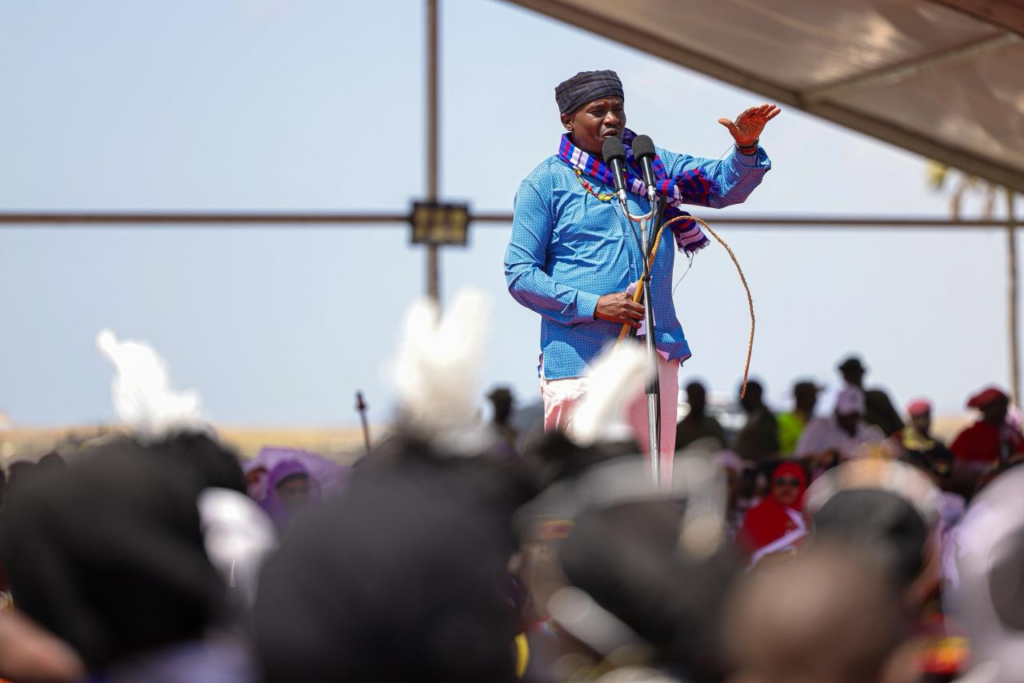
This thinking partly explains why President Ruto has made two trips to Kiambu since UDA won the Mbeere North seat. His most recent visit was on Sunday, when he attended a church function in Gatundu North constituency. According to insiders, these visits are meant to reassure local leaders and voters that Kiambu occupies a central place in his political plans.
Read more: Ruto set to return to Mt Kenya in August
“Expect President Ruto’s more trips in Kiambu as well as Mt Kenya East counties in the coming days,” said a source familiar with the strategy.
Political analyst Prof Peter Kagwanja views the unfolding manoeuvres as a major test of the region’s historical cohesion.
“This is a great test to the political test of the GEMA cousinage which the region has enjoyed over the years,” Kagwanja said.
As Ruto’s allies openly speak of dividing the Mountain, the long-standing idea of Mt Kenya as a single political bloc is facing perhaps its most serious challenge yet. Whether the strategy delivers the numbers Ruto needs in 2027 remains uncertain, but it has already begun to redraw the region’s political map.


About the Author