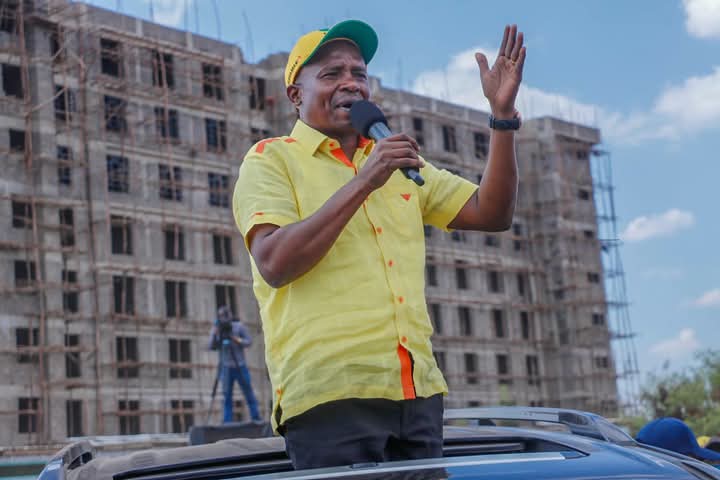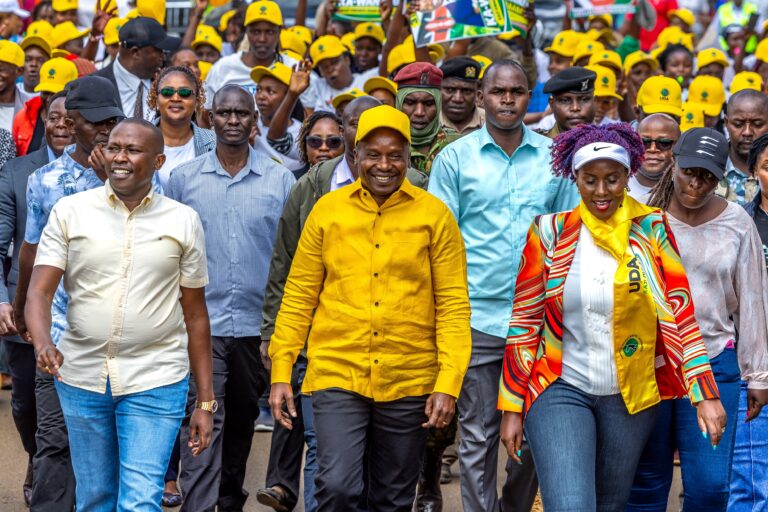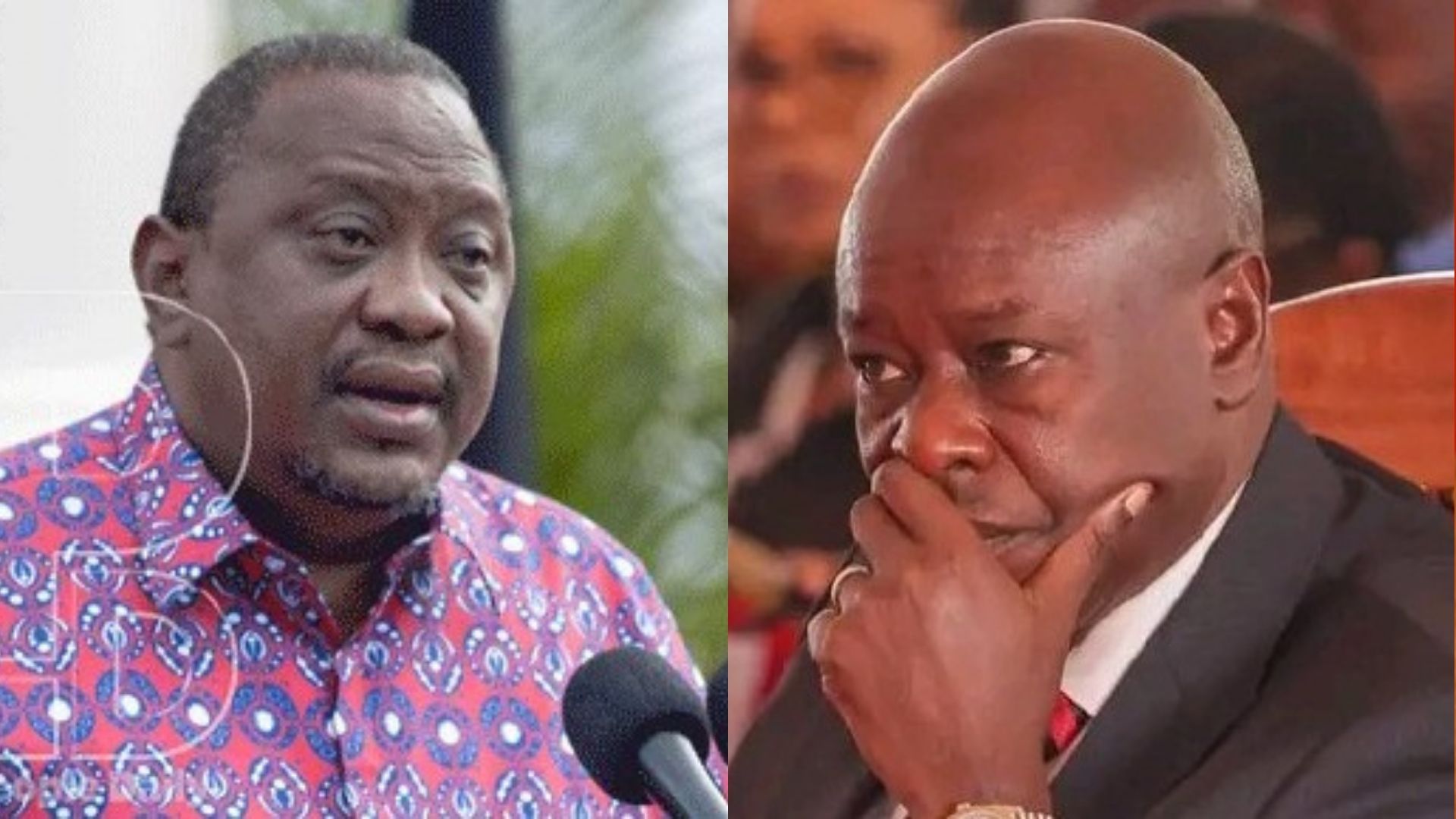
Former President Uhuru Kenyatta and DCP party leader Rigathi Gachagua. Photo/Handout
By Newsflash Team
The political rivalry between former president Uhuru Kenyatta and former Deputy President Rigathi Gachagua over control of the vote-rich Mount Kenya region is emerging as a fault line that threatens to split the United Opposition into two rival camps.
What was initially framed as a united front against President William Ruto’s administration is now being reshaped by a quiet but intense contest for regional dominance, pitting a faction aligned to Mr Gachagua and Wiper Patriotic Front leader Kalonzo Musyoka against another gravitating around Mr Kenyatta and rallying behind former Interior Cabinet Secretary Fred Matiang’i.
At the centre of the emerging schism is Mr Gachagua’s public endorsement of Mr Musyoka as the opposition’s “best bet,” a move that has heightened tensions and exposed competing strategies within the coalition. Mr Gachagua argues that Mr Musyoka’s long experience in challenging incumbent regimes, and his perceived ability to draw the Orange Democratic Party (ODM) into the opposition fold, give him a strategic edge.
Endorsements stir internal rifts
The United Opposition—bringing together Wiper, the Democracy for the Citizens Party (DCP), Martha Karua’s People’s Liberation Party, Justin Muturi’s Democratic Party, Mr Kenyatta’s Jubilee Party, Eugene Wamalwa’s Democratic Action Party of Kenya (DAP-K) and Peter Munya’s Party of National Unity (PNU)—was conceived as a broad numerical alliance, anchored on shared grievances against the Kenya Kwanza administration and the urgency of fielding a single presidential candidate.
However, beneath that common cause lies a deeper struggle over who commands key voting blocs, particularly Mount Kenya.
Read more: Ruto, Gachagua, Gideon Moi mourn Jirongo
For Mr Gachagua, retaining influence in the region is central to his political relevance after his fallout with President Ruto. For Mr Kenyatta, Mount Kenya represents both legacy and leverage in shaping the opposition’s succession roadmap.
Mr Gachagua’s endorsement of Mr Musyoka appeared to unsettle the coalition, triggering parallel meetings last Thursday ahead of the Jamhuri Day celebrations. The split was underscored by the absence of Dr Matiang’i, Ms Karua and Mr Munya—alongside coalition spokesperson Dr Mukhisa Kituyi—from a press briefing at DAP-K headquarters.
Mr Wamalwa, who read a joint statement on behalf of those present, dismissed suggestions of internal rifts, insisting that absences should not be interpreted as discord and urging critics to treat claims of division as unfounded.
Parallel meetings create mixed signals
Yet within hours, Dr Matiang’i’s camp issued a separate communiqué from a different location, complete with photographs, reinforcing perceptions of an opposition divided along rival centres of power. Ms Karua later said she was unaware of any arrangement naming Mr Musyoka as the coalition’s flag bearer, but stressed that open competition was healthy and inevitable at this stage.
Her remarks reflected a broader reality within the United Opposition: each principal is quietly building individual political capital ahead of negotiations, even as public unity is maintained. Analysts caution, however, that the visibility of these manoeuvres risks weakening the coalition before it consolidates its internal processes.
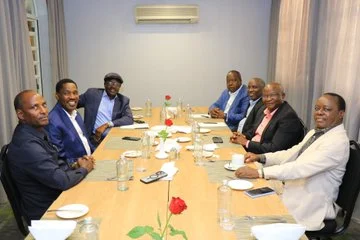
Within Mr Musyoka’s camp, the mood is one of cautious confidence mixed with suspicion of interference. Allies interpret the growing debate around the flag bearer as part of a wider attempt to slow his momentum, particularly from quarters uncomfortable with Mr Gachagua’s expanding influence.
Kitui Senator Enoch Wambua framed the tensions as deliberate efforts by detractors to fracture an alliance he says poses the greatest threat to President Ruto’s hold on power. He maintained that the coalition would remain intact and ultimately rally behind a single candidate chosen through consensus.
Read more: Ngunjiri Wambugu: Uhuru is current Mt Kenya kingpin
The sharpest resistance to early endorsements has come from Jubilee Party, which is closely associated with Mr Kenyatta and appears internally conflicted between deepening its role in the opposition and rebuilding independently. Secretary-General Jeremiah Kioni rejected what he termed “boardroom decisions,” arguing that the flag bearer should be determined by the electorate and only closer to the election.
Mr Kioni also opposed attempts to zone regions such as Nairobi, insisting Jubilee would field candidates nationwide. His stance has drawn criticism from leaders aligned to Mr Musyoka and Mr Gachagua, who accuse Jubilee of maintaining ambiguous loyalties.
Makueni Senator Dan Maanzo accused Jubilee of speaking from both sides, arguing that its failure to negotiate decisively fuels suspicions that it is not fully committed to the opposition project.
The Kenyatta-Gachagua rivalry
As the Kenyatta–Gachagua rivalry intensifies, voices allied to Dr Matiang’i have become more outspoken about what they view as premature succession politics driven by Mount Kenya interests. Kitutu Chache South MP Anthony Kibagendi accused Mr Gachagua of recklessly igniting succession battles and attempting to dominate both Mount Kenya and Nairobi politics.
He warned that unless the coalition exercises restraint, it risks falling into President Ruto’s political trap by fragmenting before establishing a clear nomination framework. Mr Kibagendi argued for a phased approach that allows candidates to campaign individually before a technical team develops a nomination formula.
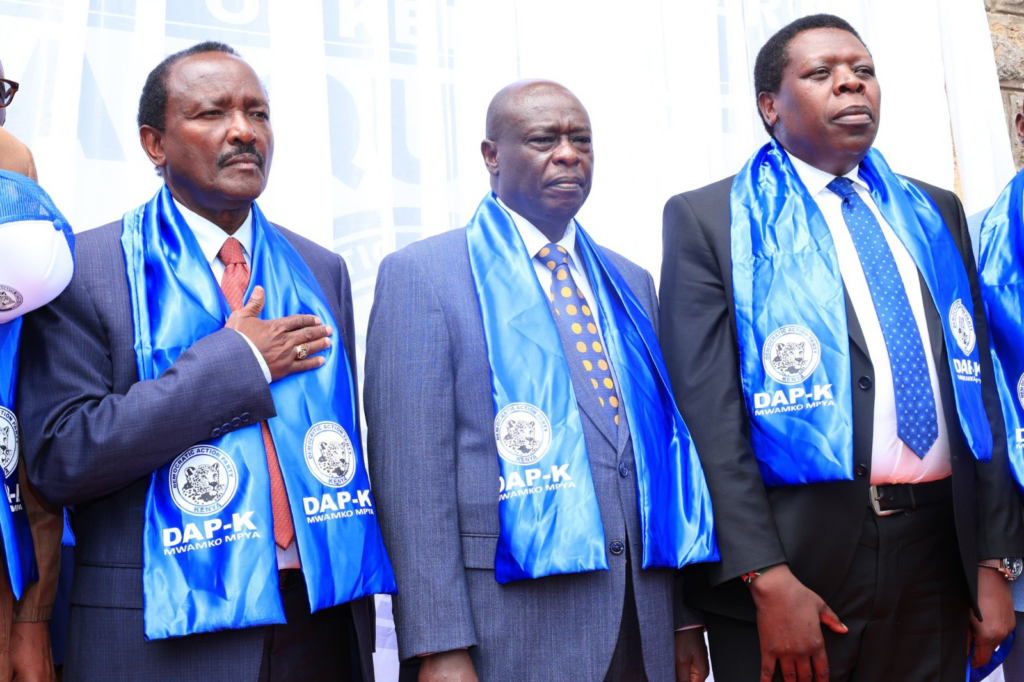
From within Mr Musyoka’s inner circle, Machakos Deputy Governor Francis Mwangangi welcomed Mr Gachagua’s support but cautioned that endorsements linked to Mount Kenya politics must be carefully managed to avoid alienating other principals. He maintained that while Mr Musyoka is a strong candidate, consensus remains essential.
Homa Bay Senator Moses Kajwang’ said that Mr Musyoka faces no inherent resistance in Nyanza, where his past role as Raila Odinga’s running mate is remembered, but acknowledged unease with some of his close allies—an implicit reference to Mr Gachagua’s involvement.
Read more: Uhuru lashes out at Kioni for constantly attacking Gachagua
Meanwhile, DAP-K is contending with its own internal rivalry between party leader Mr Wamalwa and his deputy, Trans Nzoia Governor George Natembeya, weakening the party’s influence within the wider coalition. Secretary-General Eseli Simiyu dismissed succession talk as speculation.
Democratic Party leader Mr Muturi, seeking to avoid blame after a difficult by-election, declined to comment on claims that Mr Gachagua’s DCP attempted to influence the outcome, noting that electoral success often attracts many claimants.
Historically, Kenyan opposition alliances—from Narc and Cord to Nasa and Azimio—have weathered similar storms before settling on a shared candidate. Analysts say the current standoff, driven by the contest between Mr Kenyatta and Mr Gachagua over Mount Kenya and its electoral weight, reflects unresolved regional, ideological and strategic tensions that will ultimately shape whether the United Opposition emerges united or splintered.


About the Author