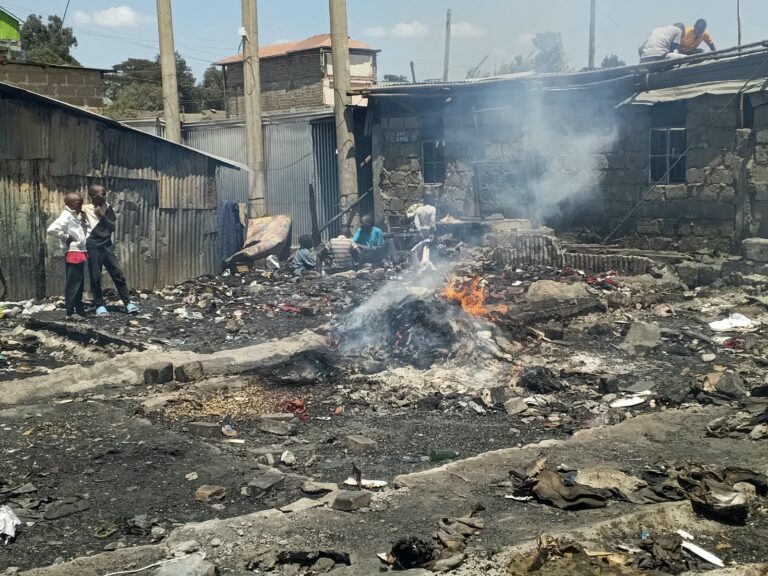
Rising Lake Naivasha has displaced families. Photo/Courtesy
By Daisy Okiring
NAIVASHA, Kenya – Thousands of residents in Naivasha’s Kihoto informal settlement are facing dual threats of hippopotamus attacks and waterborne disease outbreaks as rising Lake Naivasha waters continue to flood homes and infrastructure. The months-long flooding has created a humanitarian crisis that local authorities say requires immediate government intervention.
According to area MCA Alex Mbugua, over 3,000 households comprising approximately 15,000 residents have been affected by the steadily rising water levels. The majority of residents remain trapped in flooded homes due to lack of funds to relocate, despite the dangerous conditions that have persisted for several months.
Hippo Attacks Pose Immediate Danger
The floodwaters have created ideal conditions for hippos to roam far from their normal lake habitat, bringing them into direct contact with residents. School children are particularly vulnerable as they navigate flooded paths to and from educational institutions.
Read More: Kenya’s broken promise to Wangari Maathai: Is the green legacy fading?
Josiah Okumu, a resident of the affected area, described the daily dangers faced by community members. “We face daily risks of being attacked by the hippos as they invade the flooded homes with school going children being the most exposed,” Okumu stated. The large animals, known for their aggressive nature when threatened, have turned flooded residential areas into their new territory.

Health Crisis Emerges
Beyond the immediate threat from wildlife, residents face a growing health emergency. The flooding has overwhelmed sanitation infrastructure, submerging toilets and blocking sewer systems. This has created ideal conditions for cholera and other waterborne diseases to spread rapidly through the community.
“The residents are also at risk of being infected with cholera as area toilets have been flooded and sewer system blocked,” Okumu added, highlighting the deteriorating sanitary conditions that threaten to trigger a major health crisis.
Read More:Turkana County launches digital dashboard to revolutionize water management
Economic Impact and Government Response
The flooding has devastated local economies that supported numerous families in the low-income housing units. Rose Adayo, another affected resident, explained how the crisis has crippled businesses: “The flooding has crippled area businesses that were supporting tens of families at the low income housing units with most unable to feed their families and enable them move out to other neighborhoods.”
MCA Mbugua called for urgent government action to address what he described as an “annual occurrence.” He emphasized that many property owners hold valid title deeds sourced from government agencies and therefore deserve compensation before being required to vacate the area.
“The government should resolve the now annual occurrence by compensating the rightful owners of the properties affected and seal off the area from being inhabited,” Mbugua stated, proposing a permanent solution to the recurring flooding problem.

Nancy Atieno, another resident, echoed the concerns about both disease and wildlife threats: “Families are facing mounting challenges including being exposed to diseases, hippo attacks which pose a major health threat in case of an outbreak.”
The situation in Kihoto represents another chapter in Kenya’s ongoing struggle with climate-related disasters and inadequate urban planning in informal settlements. As water levels continue to rise, residents remain caught between the immediate dangers of wildlife attacks and disease, and the long-term challenge of finding sustainable housing solutions.


About the Author