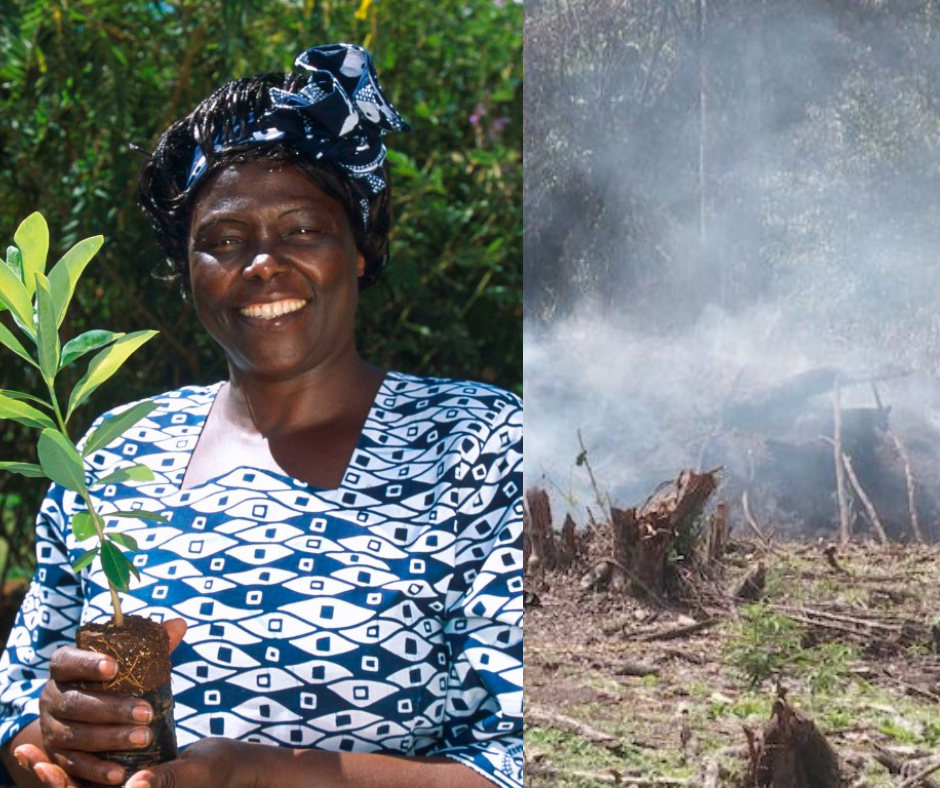
A split image of Wangari Maathai holding a tree and a recent cleared forest patch in the Mau Complex. Photo/Daisy Okiring
By Daisy Okiring
Nairobi, Kenya, 14th September, 2025
In 2004, the world celebrated as Professor Wangari Maathai became the first African woman to receive the Nobel Peace Prize. She was honored not for waging war, but for waging peace through a radical act: planting trees.
Wangari’s Green Belt Movement, a grassroots environmental organization, demonstrated that healing the land was intrinsically linked to securing democracy, human rights, and community welfare.
Her legacy was meant to be Kenya’s blueprint for a sustainable future. Yet, two decades later, a haunting question lingers: Has Kenya fulfilled her profound environmental and social vision—or has it betrayed it?
The statistics paint a troubling picture. According to the Kenya Forest Service (KFS), the nation loses over 12,000 hectares of forest every year to illegal logging, agricultural expansion, and urbanization. Despite a landmark ban in 2017, plastic pollution chokes rivers and urban drains. Meanwhile, the impacts of climate change, a crisis Maathai presciently warned against, are intensifying, with severe droughts and floods displacing millions and threatening food security.
“Kenya has made pledges, but promises are not trees, and policies without action are just paper,” said Wanjira Mathai, Wangari Maathai’s daughter and a renowned environmental advocate. This investigation looks into the gap between policy and practice, examining how well Kenya has lived up to the ideals enshrined by its most famous environmentalist and where the nation is falling dangerously short.
Maathai’s Vision: The Deeper Roots of a Green Revolution
To understand the promise, one must first understand the visionary. Wangari Maathai’s fight was never merely about conservation in a vacuum. It was a holistic struggle for justice, good governance, and human dignity. She famously linked the health of the ecosystem to the health of the body politic, warning that corruption and short-term greed would erode the very foundations of Kenya’s future.
Read More: Africa demands $50 billion yearly climate finance to avert crises
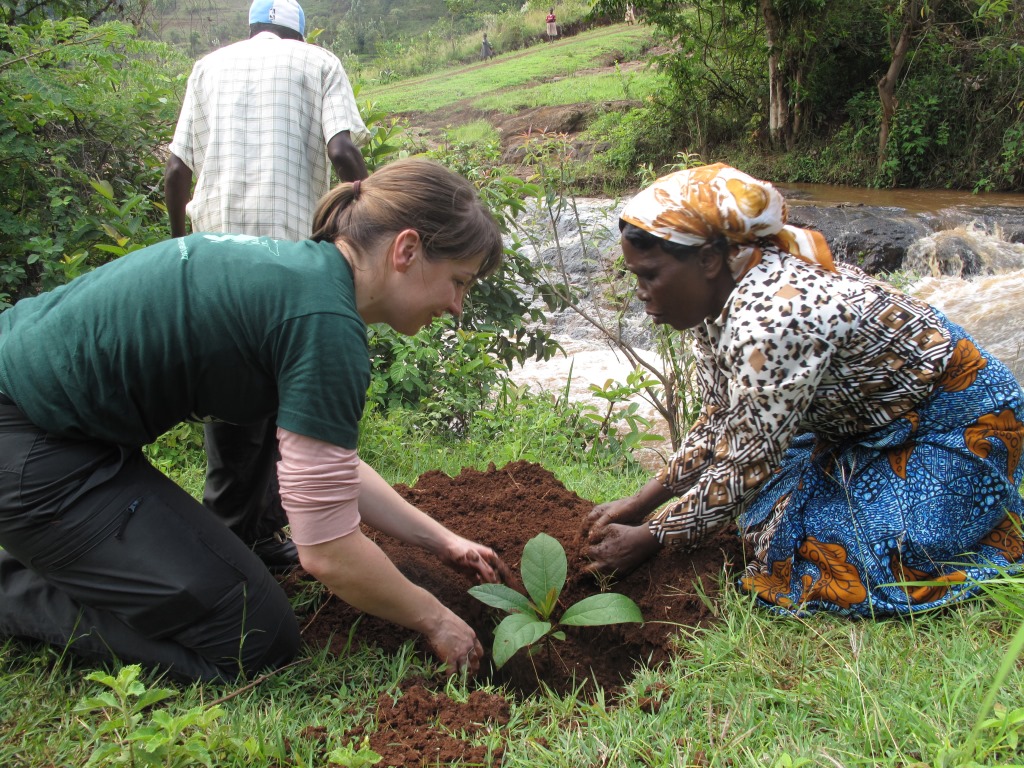
Launched in 1977, the Green Belt Movement mobilized communities, particularly women, to combat deforestation and soil erosion by planting tree nurseries. By the time of her passing in 2011, the movement was responsible for planting over 51 million trees across Africa. But her influence extended far beyond saplings.
Her courageous, often solitary, stand against the authoritarian regime of Daniel arap Moi—during which she was beaten, jailed, and publicly mocked—paved the way for broader democratic reforms. Her activism directly inspired key provisions in Kenya’s progressive 2010 Constitution, which enshrined every citizen’s right to a clean and healthy environment (Article 42). She was also instrumental in pushing for stronger climate action and forestry laws.
“Wangari stood up when no one else could. She was beaten, jailed, and mocked, but she never gave up. Kenya owes her more than statues and speeches—we owe her action,” said Kumi Naidoo, former head of Greenpeace International.
Forests Legacy Under Siege
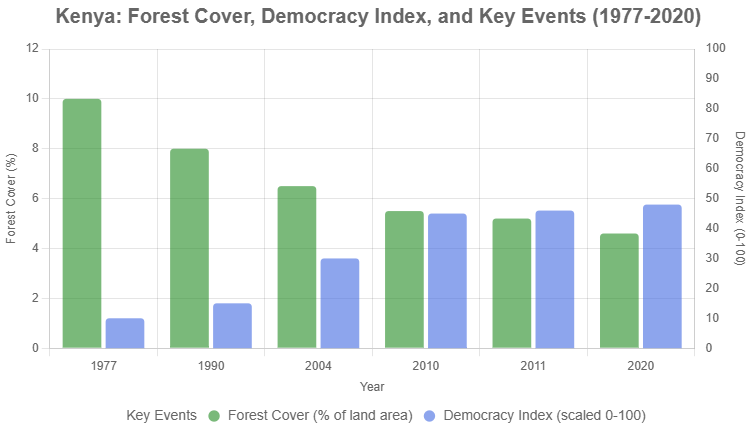
The most visible measure of Maathai’s legacy is the state of Kenya’s forests. The government has repeatedly committed to increasing national forest cover, initially pledging to reach 10% by 2022—a target that was missed and subsequently pushed to 2030. President William Ruto has publicly claimed Kenya has surpassed this goal, reaching 12.13% forest cover.
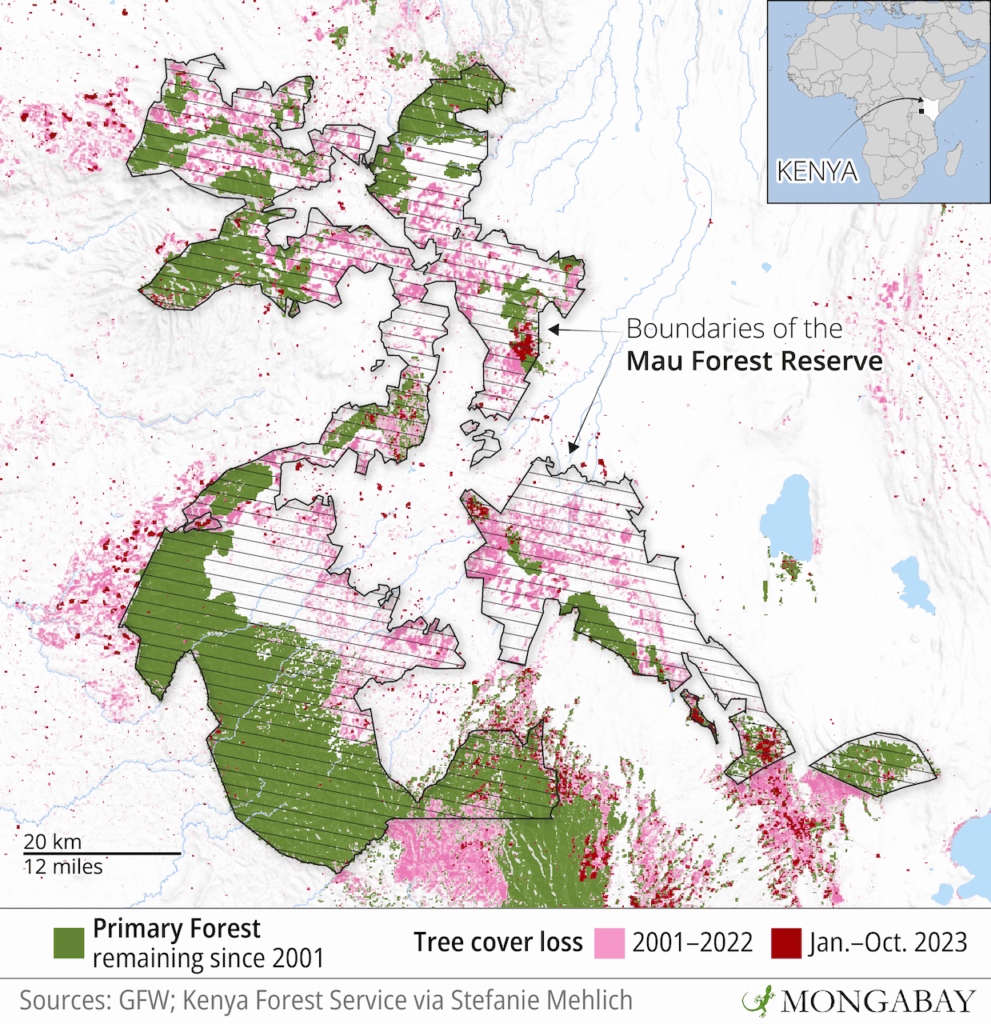
However, these official figures are contested by independent monitoring bodies. Global Forest Watch data reveals a starkly different story: in 2022 alone, Kenya lost 54,000 hectares of precious tree cover, much of it in critical water catchment areas like the Mau Forest Complex. This loss represents a 27% increase from 2021 and is equivalent to emitting 25.5 million tonnes of CO₂.
The drivers of this destruction are well-known and persistent: illegal logging, charcoal production for fuel, and the conversion of forest land to agriculture, often enabled by corrupt land allocation. “The truth is painful. While the government boasts about percentages, sacred forests like the Mau and Aberdares are still bleeding,” said Elizabeth Wathuti, founder of the Green Generation Initiative.
Read More: Cycling safaris are reshaping climate tourism in Hell’s Gate Park
Despite a series of logging bans, the most recent issued in 2023, enforcement remains weak and selective, allowing the degradation of these vital ecosystems to continue often under the cover of darkness or official complicity.
Climate Change: Rising Heat, Rising Risks
Kenya finds itself on the front lines of a climate crisis it did little to create. The nation contributes less than 0.1% of global greenhouse gas emissions, yet it is disproportionately battered by the consequences.
Between 2020 and 2023, the Horn of Africa endured its worst drought in four decades. The UN’s reported that over 4.4 million Kenyans were left severely food insecure, with pastoralist communities in the north losing millions of heads of livestock—their entire livelihoods wiped out by relentless heat and failed rains.
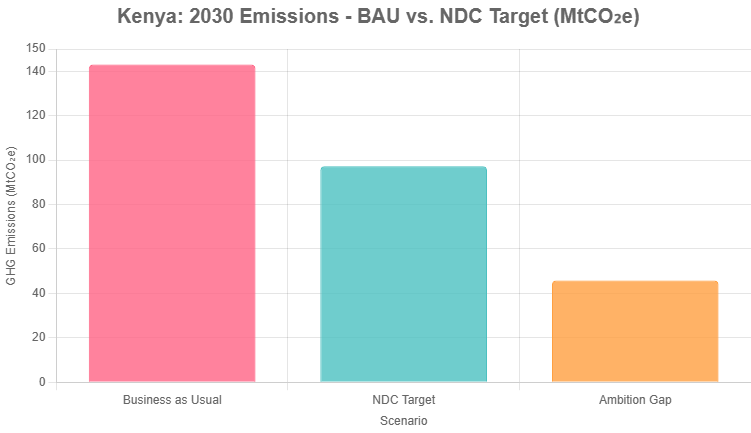
In response, Kenya has been ambitious on the global stage. Its Nationally Determined Contribution (NDC), pledges to reduce greenhouse gas emissions by 32% by 2030. The country has also made remarkable strides in renewable energy, which now constitutes over 73% of its installed electricity capacity, thanks to significant geothermal resources in the Rift Valley and growing wind power projects.
However, this progress is threatened by contradictory policies. The long-contested plan to build a 1,050 MW coal-fired power plant in Lamu, a UNESCO World Heritage Site, symbolized this conflict. Though the project’s environmental license was ultimately following fierce public opposition and legal challenges, it revealed a troubling appetite for fossil fuels among certain policymakers.
“The Lamu coal project was madness. It was like spitting on Wangari Maathai’s grave,” said Mohamed Adow, director of the think tank Power Shift Africa. The episode serves as a warning that Kenya’s green energy leadership is not yet set in stone.
Water and Wetlands: Dying Lifelines
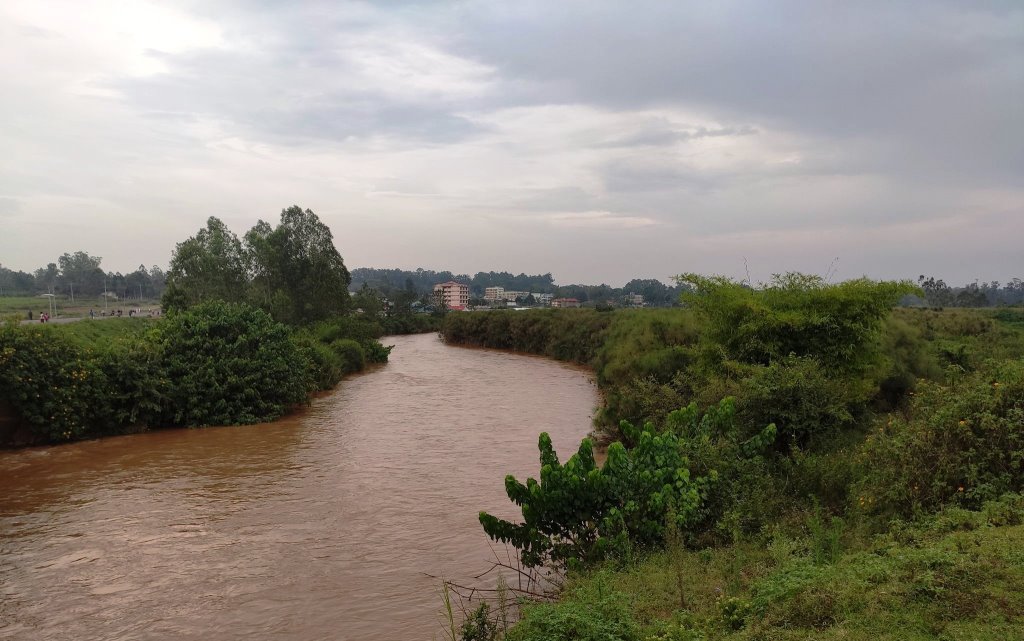
Maathai often said, “A river is a river only when it has water.” Today, many of Kenya’s rivers are mere drains, and its wetlands are under siege. The Nairobi River, which flows through the capital, is a notorious open sewer, contaminated with raw industrial effluent, solid waste, and agricultural runoff.
The problem is national in scale. The Water Resources Authority (WRA) estimates that 60% of Kenya’s rivers are polluted with plastics, pesticides, and heavy metals. This contamination threatens both human health and aquatic life, poisoning the primary source of water for many communities.
Wetlands, which act as natural water filters and flood buffers, are being rapidly degraded. The Yala Swamp, one of Kenya’s most important wetland ecosystems on Lake Victoria, has been systematically drained and converted for large-scale commercial agriculture, destroying biodiversity and displacing local communities.
This degradation exacerbates the water scarcity crisis. “Water scarcity is no longer a rural problem—it is a national crisis,” warned Inger Andersen, Executive Director of the UN Environment Programme , during a recent conference in Nairobi. The fight for water is becoming a source of conflict, a trend Maathai predicted if natural resources were not managed equitably and sustainably.
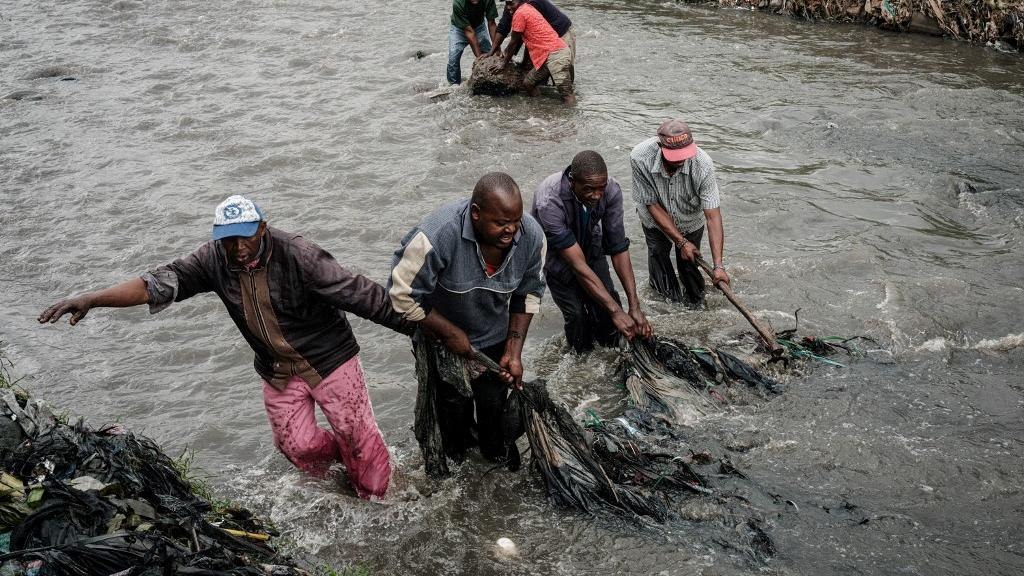
Plastic Pollution: The Return of a Banned Enemy
In 2017, Kenya took a bold step that made global headlines: it enacted one of the world’s toughest bans on plastic carrier bags, with violators facing fines of up to $40,000 USD or four years in imprisonment. The ban was initially a spectacular success, leading to a visible reduction of plastic bags littering streets, parks, and wildlife areas.
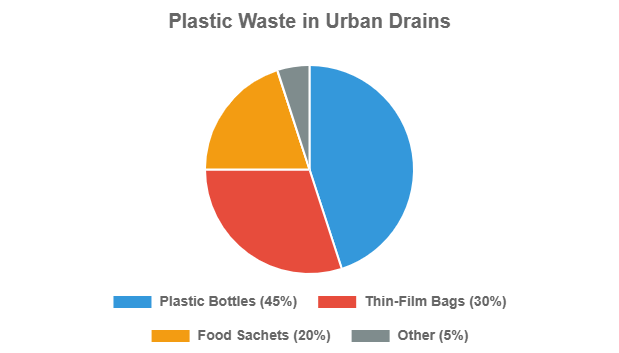
But that victory is now unraveling. Enforcement has waned, and thin, illegal plastic bags have slowly crept back into markets and streets. More critically, the ban did not cover other single-use plastics like bottles and food wrappers, the volume of which has exploded.
Read More: Who really benefits from Kenya’s carbon credit deals
A 2023 study by UNEP, found microplastics in a staggering 74% of fish samples taken from Lake Victoria, threatening both aquatic life and the health of the millions who depend on the lake for food. In urban areas, discarded plastic bottles and sachets clog drainage systems, a major contributor to the destructive urban flooding that plagues cities like Nairobi during rainy seasons.
“Plastic pollution is like corruption—it keeps coming back because enforcement is selective,” said Griffins Ochieng, Executive Director of the Centre for Environmental Justice and Development. The return of plastic is a potent symbol of a broader challenge: Kenya’s struggle to sustain its environmental victories over the long term.
Urban Growth: Concrete vs. Green
Kenya is rapidly urbanizing, with over 50% of its population expected to live in cities by 2050. This growth is coming at the direct expense of green spaces. Nairobi, once famously known as the “Green City in the Sun,” has lost nearly 60% of its public parks and green spaces to relentless real estate development, road construction, and informal settlement growth.
The heroic stand Maathai led in the 1990s to save Karura Forest from being carved up for luxury housing now stands as a testament to what can be saved with enough public will. Today, Karura is a thriving urban lung. Yet, it remains an exception. Other smaller green spaces, like Jeevanjee Gardens in the city center, have faced constant battles against developers, with some sections already lost.
This loss of urban greenery has tangible consequences: worsened air pollution, urban heat island effects, and increased flooding as concrete replaces absorbent soil. There are also profound psychological impacts. “Nairobi risks becoming a city where only the rich breathe clean air,” said Professor David Ndetei, a leading psychiatrist who has studied the link between the loss of green spaces and rising rates of depression and anxiety in urban populations.
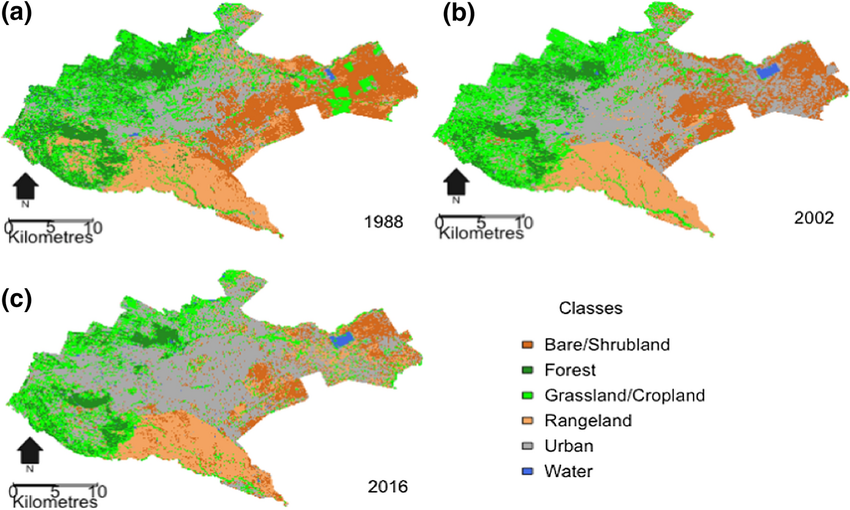
The declining cover of Nairobi’s green spaces between 1988 and 2016. Source: Reserch Gate.
Governance and Corruption: The Rotten Roots
Wangari Maathai’s most enduring warning was that corruption posed a greater threat to Kenya’s environment than any other force. “The generation that destroys the environment is not the generation that pays the price,” she often said, highlighting how graft allows a few to profit by sacrificing the future of the many.
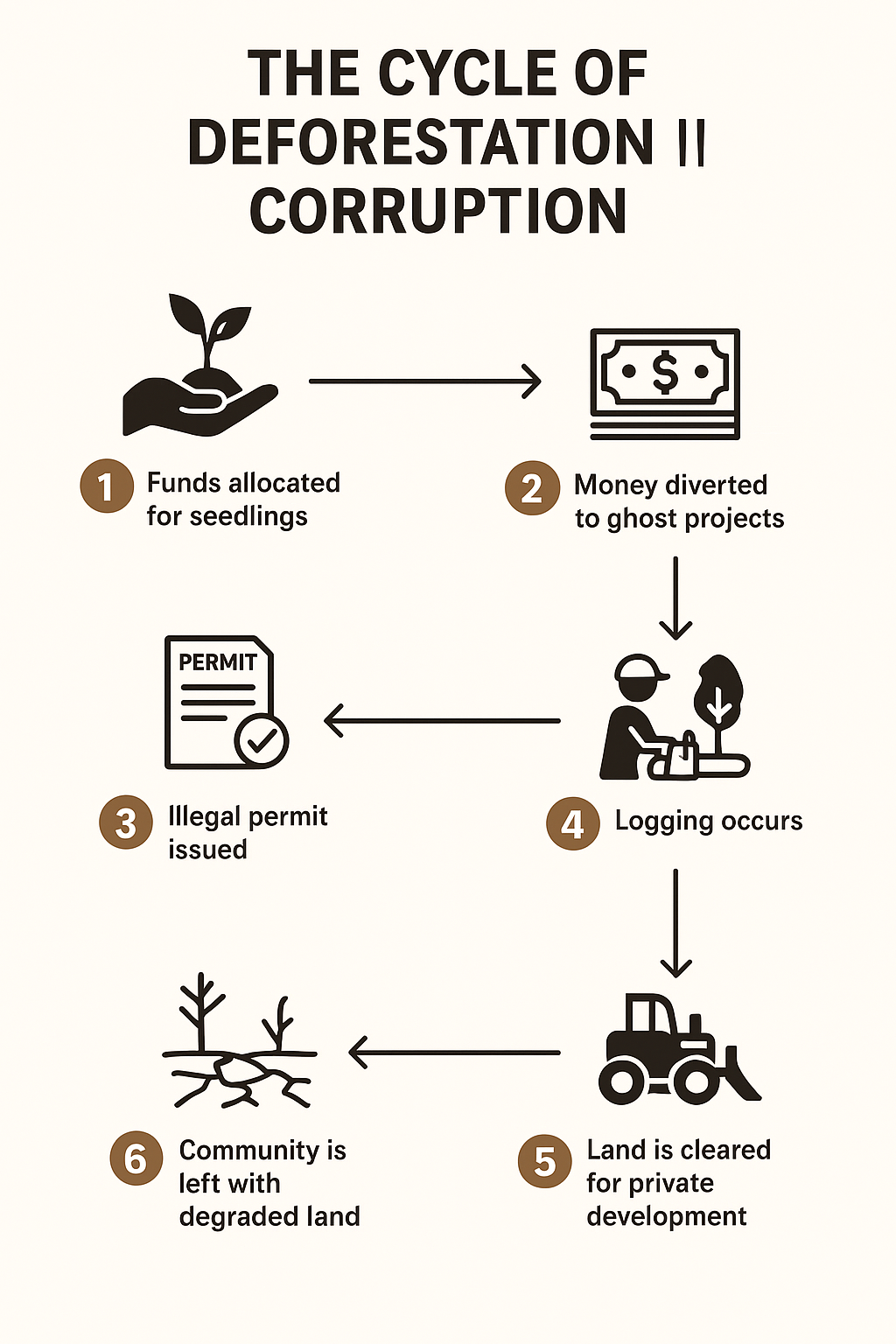
This prediction has proven devastatingly accurate. In 2022, Kenya’s Auditor-General released a damning report (see p. 143) revealing that billions of Kenyan shillings allocated to the National Tree Growing Restoration Campaign could not be accounted for. The audit found massive irregularities in the procurement of seedlings, with funds disbursed for non-existent projects.
On the ground, community forest associations (CFAs) meant to co-manage public forests with the Kenya Forest Service (KFS) routinely accuse officials of issuing illegal logging permits to connected individuals, bypassing the very communities tasked with protection.
“Every tree in Kenya has a price tag, and that price is set by corrupt officials,” said activist and photographer Boniface Mwangi. This corruption undermines not only environmental protection but also public trust, disincentivizing the very citizen participation that Maathai’s work was built upon.
Global Pledges vs. Local Reality
On the international stage, Kenya projects an image of a climate leader. In September 2023, Nairobi hosted the inaugural Africa Climate Summit, where President Ruto passionately argued for Africa to become a “green powerhouse” and called for massive global investment in the continent’s renewable energy potential.
Yet, this glossy international narrative often crumbles under the weight of local realities. As Kenya promotes itself as a hub for carbon credit markets, attracting foreign investment for projects that sequester carbon, indigenous communities living in key forest areas report violence and eviction.
The Ogiek people of the Mau Forest, a community Maathai long championed, have faced repeated evictions by government authorities, despite a landmark 2017 ruling by the African Court on Human and Peoples’ Rights that affirmed their right to live on their ancestral land as guardians of the forest. Their story highlights the tension between top-down conservation models and the rights of indigenous peoples.
Read More: The hunger paradox: Why africa feeds the world but can’t feed itself
“Climate justice starts at home. Kenya cannot preach in New York while displacing its own people in Mau,” said Houghton Irungu, Executive Director of Amnesty International Kenya. This disconnect between global rhetoric and local action risks making Kenya’s climate leadership seem like a performance for a foreign audience.

President William Ruto adressing the nation during the inaugural Africa Climate Summit, in September 2023. Photo/UNDP
The Broken Promise
There are flashes of progress that would make Wangari Maathai proud. Kenya’s world-class renewable energy grid, the constitutional right to a clean environment, and the momentary success of the plastic bag ban are part of her legacy. The continued work of countless grassroots organizations, often led by women, shows her spirit is very much alive.
But overall, the promise remains largely unfulfilled. The rot of corruption, the paralysis of poor enforcement, and the hypocrisy of contradictory policies have consistently eroded the foundation of her vision. Forests continue to shrink, rivers are poisoned, plastics return, and climate change deepens the suffering of the most vulnerable.
The tragedy is not just ecological—it is profoundly moral. Kenya celebrates Wangari Maathai with speeches, statues, and postage stamps but too often ignores the courageous, principled, and often inconvenient actions she embodied.
“Wangari told us to plant trees, but more importantly, she told us to plant hope. Today, hope is dying,” environmentalist Elizabeth Wathuti stated grimly.
Kenya now stands at a crossroads. It can continue on a path of short-term exploitation, burying Maathai’s legacy under concrete, corruption, and climate disaster. Or it can choose to honor her not with words, but with action: by fiercely protecting its ecosystems, upholding justice for all communities, and finally fulfilling the green promise it made to its greatest environmental hero.
The choice will define Kenya for generations to come.


About the Author