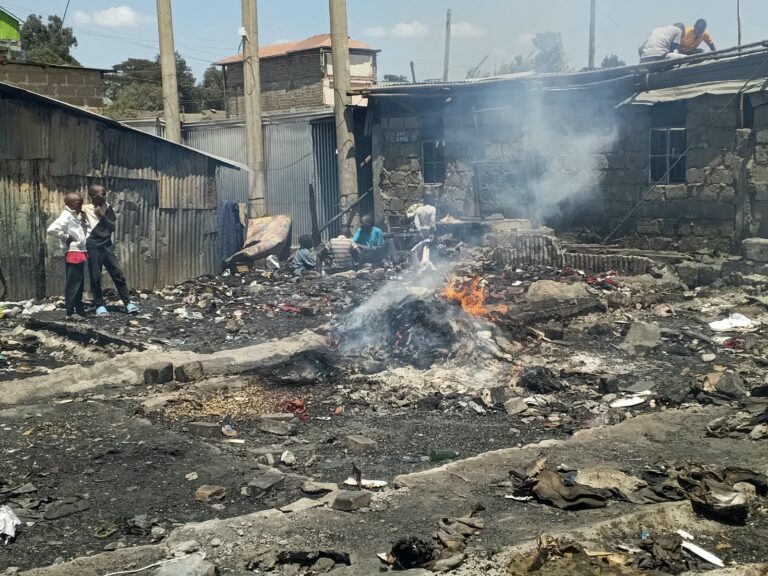
The carcasses of dead animals line the road between Lodwar and Lokori in south Turkana. Photo/WV
By Daisy Okiring
NAIROBI, Kenya – Kenya finds itself among six Intergovernmental Authority on Development (IGAD) member states confronting one of the most severe food crises in recent history, with 42 million people across the region projected to experience high levels of acute food insecurity in 2025. The alarming findings come from the IGAD Regional Focus of the 2025 Global Report on Food Crises, released Tuesday in Nairobi, revealing a dramatic escalation of hunger throughout Eastern Africa.
The report identifies Sudan, South Sudan, Djibouti, Kenya, Somalia, and Uganda as the epicenter of the crisis, with conflict, climate extremes, and economic collapse creating a perfect storm of food insecurity. The data shows a troubling trajectory—the number of people facing crisis-level food insecurity or worse has tripled since 2016, soaring from 13.9 million to 41.7 million in just nine years.

Sudan’s Deepening Humanitarian Catastrophe
Sudan accounts for the largest highly food-insecure population, with 24.6 million people struggling to survive amid ongoing conflict and economic disintegration. Several regions of the country have already descended into famine or face imminent famine conditions, representing one of the world’s most severe humanitarian emergencies.
The situation in South Sudan remains equally dire, with nearly six in ten people—57 percent of the population—experiencing crisis-level food insecurity or worse. Two counties currently face the risk of famine, highlighting the extreme vulnerability of the world’s youngest nation.
Read More: TIFA: More Kenyans struggling financially under Ruto’s government

Climate Extremes Exacerbate Crisis
IGAD’s Climate Prediction and Applications Centre (ICPAC) forecasts further deterioration as climate extremes persist across the region. The center predicts drier-than-usual conditions in southern Ethiopia, eastern Kenya, and much of Somalia, areas that have already endured consecutive below-average rainy seasons.
Drought conditions continue to plague central and northern Somalia, and another failed rainy season could intensify hunger and malnutrition across the entire region. These climate patterns directly impact agricultural production and pastoral livelihoods, essential components of food security in Eastern Africa.
Children Bear the Heaviest Burden
The human cost of the food crisis is most starkly visible among children. Across seven IGAD member states, 11.4 million children under five suffer from acute malnutrition, with 3.1 million requiring urgent lifesaving treatment for severe acute malnutrition. Tragically, funding shortfalls mean up to 1 million of these vulnerable children may miss out on critical nutritional support.
The report emphasizes that malnutrition in early childhood can cause irreversible physical and cognitive damage, potentially affecting an entire generation’s development and future prospects.
Read More: Kenya’s broken promise to Wangari Maathai: Is the green legacy fading?

Displacement Compounds Vulnerability
Forced displacement adds another layer of complexity to the food security crisis. As of June 2025, 23.2 million people across the IGAD region have been uprooted from their homes, including 17.8 million internally displaced persons and 5.4 million refugees and asylum seekers.
Sudan alone accounts for 10 million internally displaced people, representing the world’s largest displacement crisis. Uganda continues to host the continent’s largest refugee population at 1.9 million people. Displacement shatters livelihoods, severs social support networks, and increases reliance on humanitarian assistance that is already stretched thin.
Call for Collective Action
IGAD Executive Secretary Dr. Workneh Gebeyehu emphasized the interconnected nature of the crisis, stating: “The food crisis in our region is more than just hunger; it’s a stark reminder of the challenges we face—conflict, the severe effects of climate change, economic shocks, and displacement. No single institution can tackle these crises on its own.”
The Food and Agriculture Organization’s Subregional Coordinator for Eastern Africa ad-interim, Farayi Zimudzi, highlighted the urgent need to protect agricultural communities: “Rural agricultural communities are among the worst affected. With another poor rainy season expected, we must act now with anticipatory actions.”
World Food Programme Regional Director for Eastern and Southern Africa Eric Perdison described the scale of the crisis as “deeply alarming,” warning that “In Sudan, famine is already unfolding, and the situation could worsen.”
The report serves as a call to action for governments, regional institutions, and humanitarian partners to implement evidence-based solutions that address both the immediate needs and underlying drivers of food insecurity across Eastern Africa.


About the Author