

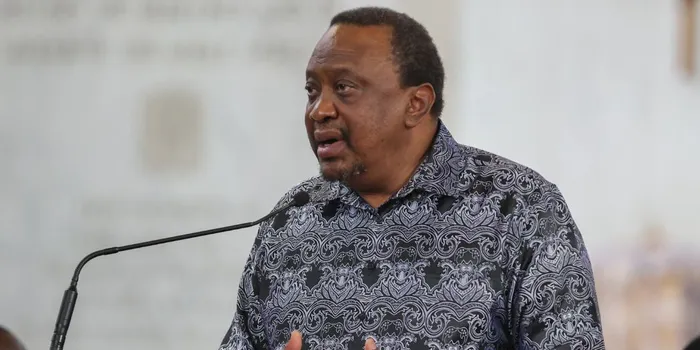
Deputy President Kithure Kindiki addressing participants at an Economic Empowerment drive at Kigumo, Murang’a County on 16 May, 2025. Photo/DPCS
By Wanderi Kamau
President William Ruto has embarked on a renewed economic offensive in the Mt Kenya region, employing what he calls “empowerment programs” as a political tool to reclaim the region’s support from his estranged former deputy, Rigathi Gachagua.
These programs, which largely involve the disbursement of cash to youth and women groups, are being coordinated by a growing circle of loyalists, including Deputy President Kithure Kindiki and a cluster of vocal MPs.
Though touted as grassroots economic initiatives, analysts believe the programs are a calculated effort to resuscitate the dwindling “Hustler” narrative and neutralize Gachagua’s tribal-based political campaign.
At least Sh180 million has been funneled into eight such events across five Mt Kenya counties, according to a Newsflash audit, since Ruto’s underwhelming April tour of the region.
Repackaging the ‘Hustler’ narrative
The empowerment drives bear a striking resemblance to Ruto’s 2022 campaign strategy, where he positioned himself as a champion of the “hustler” class.
Back then, the message resonated with Mt Kenya’s small-scale traders and economically vulnerable youth. However, the post-election reality—marked by high taxes and an unrelenting cost of living—has dulled the narrative’s appeal.
“This is political deja vu,” said political analyst Felix Muriithi. “What we’re witnessing is a desperate rebranding of a campaign tool that worked in 2022. But circumstances have changed. The economic pain on the ground is real, and symbolic handouts may not work this time.”
According to Dr Muriithi, the targeting of youth and women is no accident. “These are politically potent groups. Appealing to them is strategic. But it’s not empowerment in the true sense—there’s no capacity building, no structure, just optics.”
New political pointmen
Apart from Kindiki, a select group of MPs has emerged as Ruto’s new political generals in the region.
Notably, Oscar Sudi (Kapseret), Elijah Njoroge Kururia (Gatundu North), Gabriel Kagombe (Gatundu South), and Nyandarua Woman Representative Faith Gitau have taken prominent roles in organizing and addressing empowerment events. Their task appears twofold: distribute money and discredit Gachagua.
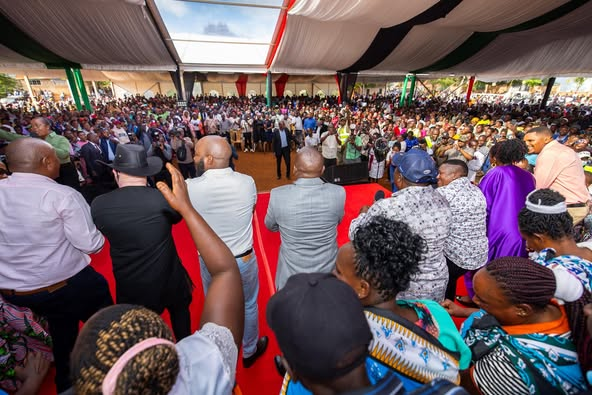
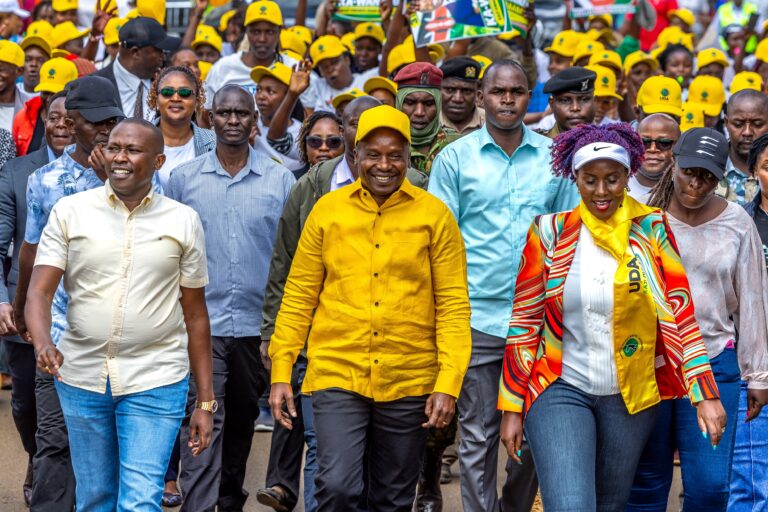
“These MPs are the face of a new political experiment,” said political commentator Naomi Wangechi. “By fronting relatively newer and aggressive allies, Ruto is signaling a generational shift. But it’s also a tactical snub to older political gatekeepers like Gachagua, who view Mt Kenya as their stronghold.”
Read more: Ruto’s itinerary for Mt Kenya tour released
Many of these MPs have publicly attacked Gachagua during empowerment events, accusing him of promoting tribalism and a retrogressive “Mt Kenya kingpin” ideology. They have sought to reframe the conversation from tribal identity to national economic inclusion—an echo of Ruto’s “bottom-up” economic philosophy.
The empowerment events have also become political battlegrounds where Gachagua’s influence is challenged.
Once seen as Ruto’s natural successor in Mt Kenya politics, Gachagua has lately adopted a more ethnic-centric approach, often referring to himself as the region’s senior-most leader and a custodian of “Mt Kenya interests.”
“Gachagua has boxed himself into a corner,” argued Kenneth Irungu, a lecturer political science lecturer.
“He is now an easy target for accusations of tribalism, especially when the government is trying to project a unifying image. The empowerment drives are an indirect way of showing Mt Kenya voters that they don’t need to cling to tribal leaders to access government resources.”.
Money and optics: Will it work?
Despite the political undertones, the cash disbursements are being welcomed—at least momentarily—by many beneficiaries.
In towns such as Karatina, Ol Kalou, and Githunguri, thousands have turned up at these events, drawn by the promise of capital to boost their small businesses.
Yet concerns about the sustainability and transparency of the funds persist. There is no public accountability framework to track how the Sh180 million has been allocated, or to ensure it reaches intended recipients. Civil society actors have raised concerns that the funds are being used as political bribes disguised as development aid.
“Throwing money at voters is not empowerment,” said Caroline Githua, an economist based in Nairobi. “Empowerment is about creating structures—access to credit, skills training, market access. This is a short-term public relations stunt, not long-term development.”
A region in political flux
The broader question is whether these efforts can shift Mt Kenya’s political tide.
The region, which delivered a significant chunk of votes to Ruto in 2022, has grown increasingly restless. High economic expectations, rising taxes, and perceived marginalization have created fertile ground for political realignment.
Ruto’s strategy, analysts say, is about more than just votes—it is about shaping the next political order in Mt Kenya. By empowering new leaders, weakening tribal-based politics, and re-energizing the hustler base, he hopes to reassert control before the 2027 campaign season heats up.
Read more:Ruto loses Mt Kenya East to Gachagua
“It’s a high-risk, high-reward strategy,” saidIrungu. “If it works, Ruto reclaims Mt Kenya and sidelines Gachagua for good. If it fails, he risks losing the region to a new political challenger altogether.”
As the empowerment programs continue across Nyeri, Kirinyaga, Meru, Embu, and Nakuru, the stakes remain high—not just for the politicians handing out cash, but for a region still searching for a clear political direction in the post-Uhuru Kenyatta era.


About the Author



1 thought on “Economic ‘empowerments’: Ruto’s new strategy to woo Mt Kenya”
Comments are closed.