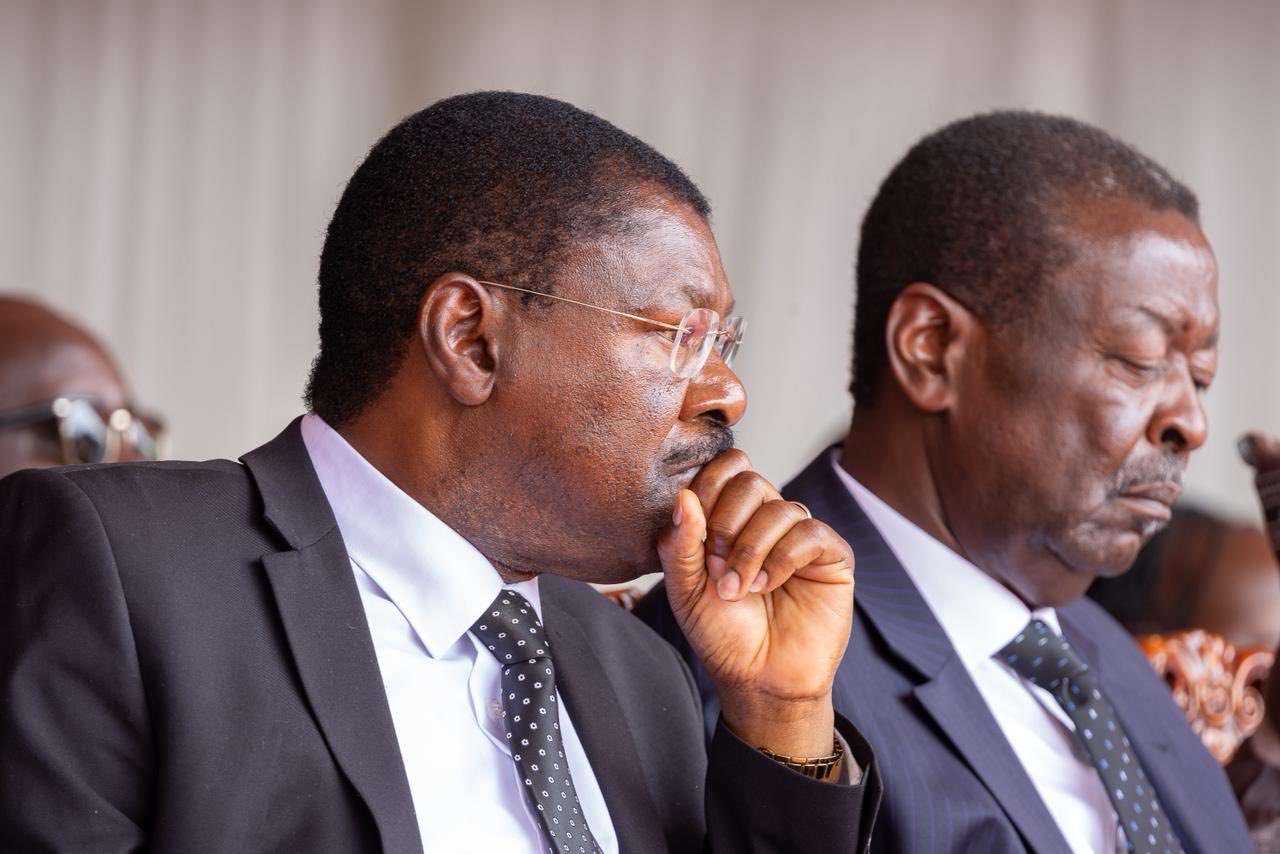
National Assembly Speaker Moses Wetang’ula and PCS Musalia Mudavadi. Photo/Handout
By Newsflash Writer
The political landscape of the Mulembe nation is undergoing a significant realignment, threatening to sideline the region’s longtime leaders, Prime Cabinet Secretary Musalia Mudavadi and National Assembly Speaker Moses Wetang’ula, as the 2027 General Election draws closer.
New political entrants are aggressively working to unite Western Kenya and reshape the regional power structure, putting the old guard under increasing pressure.
Following the death of veteran opposition leader Raila Odinga, many anticipated that Mudavadi and Wetang’ula would seize the moment to consolidate authority and rally the region. For decades, Odinga was the central figure in Western Kenyan politics, commanding loyalty across ethnic and generational lines. However, that window of opportunity now appears to be closing, with growing opposition threatening the duo’s dominance.
The situation has been exacerbated by a relentless two-year campaign spearheaded by Trans Nzoia Governor George Natembeya, whose challenges have significantly undermined their political base. Initially dismissed as a political newcomer, Natembeya has gained traction as other opposition voices—including Kakamega Senator Boni Khalwale, former Senator Cleophas Malala, ODM Secretary General Edwin Sifuna, ODM deputy party leader Godfrey Osotsi, and several MPs—have joined his cause.
Through his Tawe movement, Natembeya has built momentum that threatens the established political order. The situation has grown so severe that local residents are increasingly showing open hostility toward Mudavadi and Wetang’ula, while their opponents enjoy growing popular support. Analysts suggest that the boos and jeers the duo faced during the burial of former Lugari MP Cyrus Jirongo, coupled with poor showings in two wards during November’s by-elections, may only represent the beginning of a deeper political challenge leading into 2027.
By-election setbacks
In the recent by-elections, Wetang’ula cast his vote at Namakhele Primary School in Chwele-Kabochai. Independent candidate Erick Wekesa won the seat, defeating Ford Kenya’s Vincent Maunda with 268 votes to 195. The Speaker’s poor performance has been highlighted by observers, including Westlands MP Tim Wanyonyi, who has shifted focus from Nairobi to his home turf and is reportedly eyeing the Bungoma gubernatorial race in the next general election.
Wanyonyi, Wetang’ula’s younger brother, has long distanced himself from his sibling’s political path, aligning instead with ODM since entering politics in 2007. His supporters have emphasized that Ford Kenya, the party under which Governor Kenneth Lusaka ran, is no longer a viable option for leadership in the region.
Read more: Maraga slams Mudavadi’s 2027 referendum push
Criticism is mounting among residents as well. “Wetang’ula has been in power for too long without delivering tangible development for Western Kenya,” said Simon Barasa. Similarly, in Kisa East, Mudavadi’s UDA candidate, James Shiraku, received only 61 votes, casting further doubt on the region’s old guard’s ability to retain dominance.
For Mudavadi, the road ahead seems increasingly difficult. His initial aggressive political stance within the Kenya Kwanza Alliance has softened, and he now emphasizes a referendum to entrench the positions of prime minister and official opposition in the Constitution. He is also navigating the challenge of redefining his political identity after folding his Amani National Congress party into President William Ruto’s United Democratic Alliance, seeking political survival within the ruling coalition.
Emerging forces challenge the old guard
Observers argue that shifting political dynamics and the rise of new power centers in Western Kenya are gradually pushing Mudavadi and Wetang’ula toward a political cliff. The region is looking for fresh leadership, with many perceiving the duo as having failed to assert their authority.
Read more: Mudavadi: Why Kenya needs a referendum in 2027
Political analyst Barrack Muluka notes, “Mudavadi and Wetang’ula were expected to reorganize Western politics after Raila. Instead, we have seen hesitation, self-preservation, and an inability to articulate a shared regional vision.” Both leaders have retreated into elite circles in Nairobi, leaving grassroots politics largely unattended.
Natembeya’s emergence as a vocal, defiant political figure has further disrupted the traditional order. Speaking at Luuya Comprehensive School in Kwanza Constituency, he challenged Mudavadi’s authority to comment on the referendum, arguing that the office he holds is unconstitutional. “Kenya does not need more political lectures; people want solutions. Citizens are struggling with the cost of food, education, and healthcare,” he said.
Natembeya’s new messaging
Touring all Western counties, Natembeya has presented a simple but compelling message: the region needs new leadership. His platform, emphasizing economic justice, regional unity, and resistance to perceived marginalization, has resonated strongly, particularly among young voters. Frequent clashes with state agencies have only increased his appeal, presenting him as fearless and unafraid to challenge authority.
Political analysts caution, however, that Natembeya’s success carries risks. “He is gaining traction because his message resonates, but his biggest weakness is operating alone. Unity cannot be built by a single person shouting in isolation,” said Muluka. Without alliances across counties and cooperation with senior leaders, Natembeya risks political isolation.
Read more: Why Mudavadi’s political star is waning in Mulembe
Other leaders are aligning with him. Khalwale has expressed readiness to collaborate with Natembeya to unite the community and advance shared goals. Similarly, ODM Secretary General Edwin Sifuna is leading criticism of Mudavadi and Wetang’ula, arguing that they have done little to uplift the region. Sifuna’s opposition messaging, positioning the government as an elite alliance disconnected from ordinary citizens, has kept grassroots politics alive, further complicating the old guard’s attempts to consolidate support.
During the burial of businessman and political operative Cyrus Jirongo, efforts to present Mudavadi and Wetang’ula as the Luhya community’s leading voices were met with boos. Even Nairobi Governor Johnson Sakaja faced jeers while urging mourners to respect the two leaders.
Despite these challenges, Mudavadi’s allies continue to rally behind him, advocating for his consideration as a potential running mate to President Ruto in 2027.
Last Saturday, Vihiga Woman Representative Beatrice Adagala stated that Mudavadi possesses both the experience and capability to serve as Deputy President, highlighting his prior tenure as Vice President and his senior position within the current administration.


About the Author