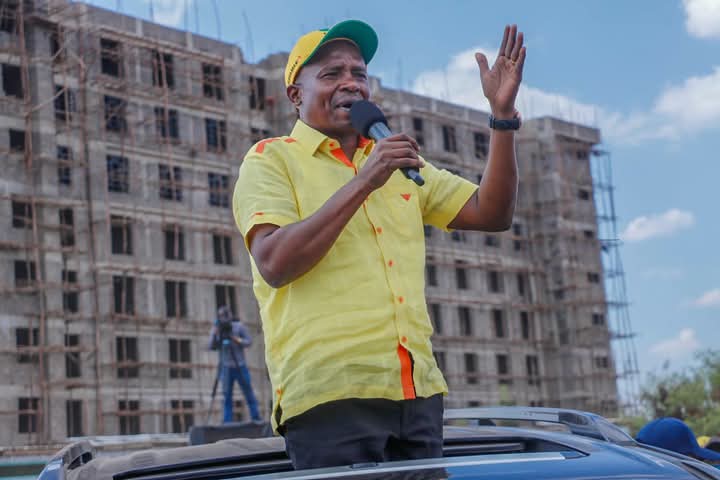
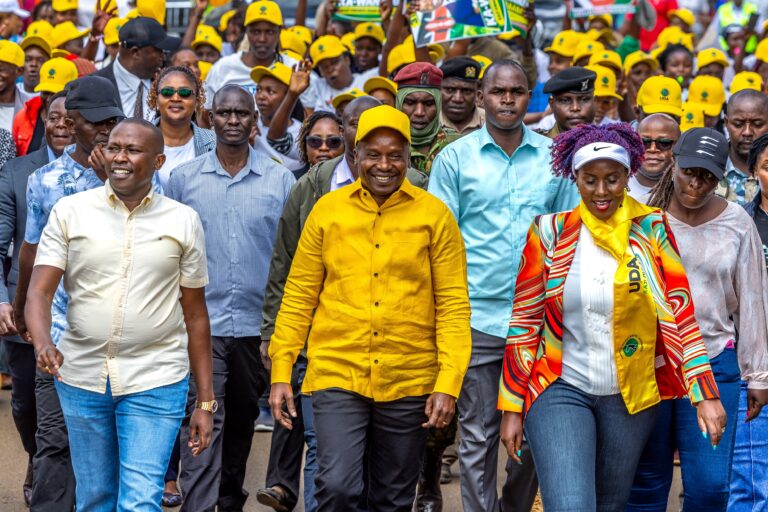
Prime Cabinet Secretary Musalia Mudavadi. Photo/Handout
By Newsflash Team
Prime Cabinet Secretary and Foreign Affairs Minister Musalia Mudavadi, once an undisputed political heavyweight in Western Kenya, finds himself in a precarious position ahead of the 2027 general election.
Once hailed as the region’s kingpin, Mudavadi’s influence has waned, and the dynamics that once guaranteed his dominance are shifting rapidly.
Having enjoyed nearly two decades of clout built largely through the Amani National Congress (ANC) party — a Luhya stronghold — Mudavadi’s recent political choices have made him vulnerable. Chief among them is the dissolution of ANC and its merger with President William Ruto’s United Democratic Alliance (UDA).
The move was aimed at consolidating Kenya Kwanza’s influence, but it stripped Mudavadi of his personal political vehicle, effectively binding him to the whims of the UDA structure.
His situation stands in contrast to National Assembly Speaker Moses Wetang’ula, who still commands the Ford-Kenya party. According to Tongaren MP John Chikati, dissolving a party erodes bargaining power. “When you are absorbed into another party, you become weak. The stake is not the same,” Chikati said. Wetang’ula’s continued grip on Ford-K offers him not just leverage in government negotiations but also grassroots muscle.
Rise of rivals
Adding to Mudavadi’s woes is the growing influence of Trans Nzoia Governor George Natembeya. A populist with a security background as former Rift Valley regional commissioner, Natembeya has rapidly built momentum in Western Kenya, positioning himself as the voice of a new political era. Promising unity and development, he resonates with voters disenchanted by traditional power brokers.
Ford-Kenya loyalists dismiss Natembeya as a self-serving demagogue, but his increasing popularity — especially among the Bukusu community — is undeniable. Political analysts argue that Mudavadi’s decision to dissolve ANC left him politically exposed, unable to independently strategize or project his ambitions. As part of the Kenya Kwanza government, his fate now hinges on Ruto’s political calculus.
Furthermore, Mudavadi’s demanding role in Foreign Affairs limits his presence on the ground. The diplomatic responsibilities keep him largely away from the Western region, allowing rivals to fill the void. According to Ben Ombima, a local political figure, “The demands of international diplomacy limit his ability to regularly engage with constituents in Western Kenya.”
Read more:Revealed: Why Mudavadi, Weta skipped Ruto, Raila event
Political analyst Mukhwana Wekesa believes that Mudavadi’s influence has declined nationally and even locally, making space for younger leaders like Vihiga Senator Godfrey Osotsi, Saboti MP Caleb Amisi, and even Wycliffe Oparanya, former Kakamega Governor and now Cooperatives Cabinet Secretary.
“Mudavadi is increasingly seen as detached, especially after his handling of the Tanzania border spat,” said Wekesa. “He’s lost touch with his core support base.”
Ruto’s alliance with Raila and the Natembeya threat
President Ruto’s warming ties with opposition leader Raila Odinga have further complicated Mudavadi’s standing. Raila enjoys deep-rooted support in Kakamega, Busia, and Vihiga — areas Mudavadi also counts as home turf. The possibility of Ruto and Raila forging a more formal alliance could significantly undercut Mudavadi’s standing in the Kenya Kwanza hierarchy.
Meanwhile, Natembeya’s emergence is not just about rhetoric. His bold challenge to established figures is reshaping political alignments in the region. Political commentators warn that if Mudavadi doesn’t respond assertively, Natembeya could dominate in areas previously loyal to the Prime Cabinet Secretary.
Mukhwana suggests that Mudavadi’s earlier achievements — like establishing healthcare and microcredit programs in Sabatia — are being forgotten as younger politicians step into the vacuum he has left behind.
Still, some allies believe Mudavadi should not be counted out. Ken Omulo Jr., a former ANC official, insists that Mudavadi’s national leadership role distances him from parochial ethnic politics. “His alignment with Ruto is calculated,” Omulo said. “It strengthens Ruto’s 2027 run and sets the foundation for a possible 2032 presidential bid.”
Possible path forward
With 2027 drawing near, political analysts agree that Mudavadi is at a crossroads. According to commentator Herman Manyora, while his options are narrowing, they are not exhausted. Rebuilding grassroots networks and reasserting presence in the region will be essential. That includes regular tours and directly engaging voters.
Nyambuga echoes this sentiment: “If he doesn’t return to Western and reengage, others will fill the space permanently.”
Strategically, Mudavadi could lobby for greater representation of his allies within UDA’s top ranks. By carving out influence within the party, he could maintain some organizational structure even without his own party. Omulo also suggests Mudavadi could emerge as a compromise figure in any future succession equation, particularly if Kenya Kwanza’s internal unity begins to fray.
Behind the scenes, meetings among Western Kenya leaders have reportedly taken place, possibly signaling new alliances or attempts to counter Mudavadi’s perceived decline. While details remain sketchy, such caucuses — including bipartisan groups led by Sirisia MP John Waluke — hint at looming realignments that could either aid or further marginalize Mudavadi.
Read more:Mudavadi allies’ new party sparks exit rumours from Kenya Kwanza
Moreover, there is speculation that Ruto might consider promoting Oparanya, a seasoned politician and Raila ally, as an alternative point man in the region — a move that would further dilute Mudavadi’s influence.
Even more disruptive could be the emerging coalition involving Wiper’s Kalonzo Musyoka, former Deputy President Rigathi Gachagua, and DAP-K’s Eugene Wamalwa. Such a lineup could fracture votes in key regions, indirectly sidelining Mudavadi from national relevance.
In this complex web of alliances, regional contests, and national ambitions, Mudavadi must navigate with surgical precision. His next moves will be critical — not just for his political survival, but for his ability to redefine himself as a national leader with grassroots legitimacy.
Whether the man once dubbed the “earthquake” can shake up the political scene once more, or whether he fades into the shadows of power politics, will depend on how boldly and swiftly he adapts to the realities now confronting him.


About the Author