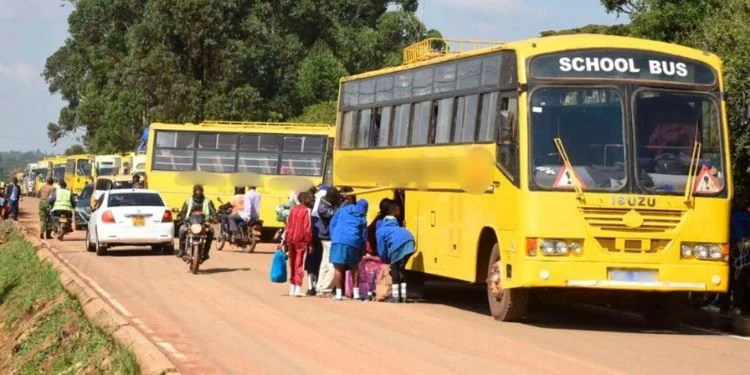
School buses at a social function. Photo/Kenya Times
By Newsflash Writer
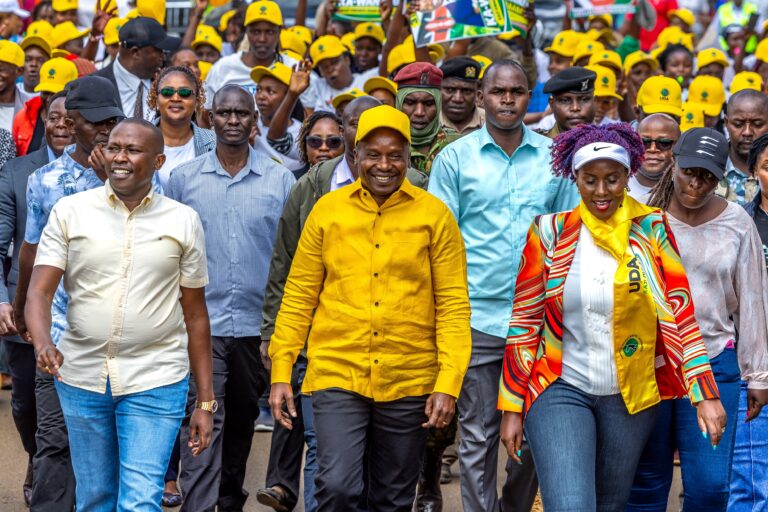
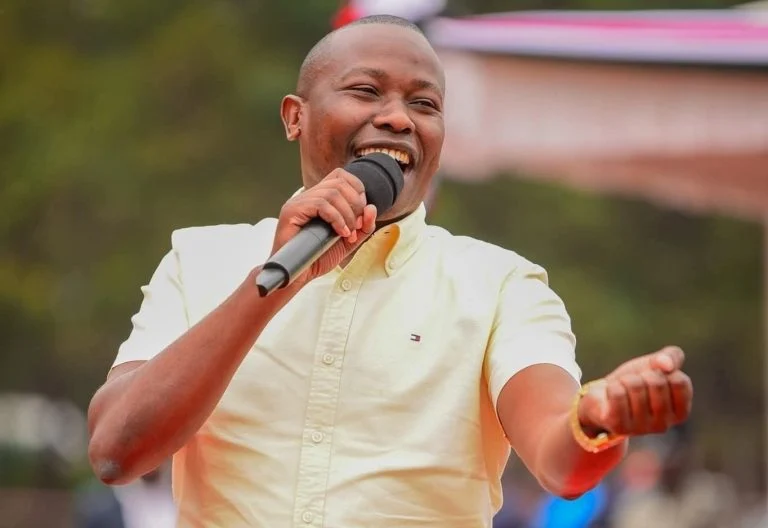
Kiambaa MP John Njuguna, popularly known as Kawanjiku, has lifted the lid on the often murky world of political mobilization, revealing how Members of Parliament use school buses to ferry supporters to rallies, meetings, and rival political events.
Speaking on Thursday, January 14, during an interview with Inooro TV, the outspoken MP said mobilization is central to modern Kenyan politics and has been key to his own electoral success.
Kawanjiku, who was first elected on a United Democratic Alliance (UDA) ticket in a by-election in July 2021 before retaining the seat in the 2022 General Election, made it clear that political organization—not chance—keeps leaders in office.
“Mobilization is my winning formula”
According to the Kiambaa lawmaker, effective mobilization is not accidental and requires significant financial investment. He openly admitted that transporting supporters, commonly referred to as “mobilizers,” is a deliberate political strategy.
“I am usually elected for mobilizing people effectively,” Kawanjiku said. “There is a lot of money used in mobilization.”
He explained that MPs often rely on school buses—many of which are purchased using the National Government Constituencies Development Fund (NG-CDF)—to move supporters from one venue to another.
Read more: IG Kanja snubs MPs over police payroll
On days when schools are not in session, the buses are sometimes repurposed for political activities.
“We usually have school buses which we use for politics,” he said. “For instance, as an MP, you may have bought several school buses. If it is not a working day, you may borrow those buses for politics.”
Kawanjiku noted that schools rarely object to the arrangement, saying the only requirement is fuel. “What the school requests is fuel for the bus, because you may have been the one who bought the bus through the NG-CDF,” he explained.
School buses for political battles
The MP said the buses are then used to transport mobilized supporters to political functions, including events where leaders seek to dominate the narrative or drown out opponents. He framed the practice as commonplace and widely understood within political circles.
“The buses later transport the mobilized people to our functions,” Kawanjiku said, suggesting that crowd control and public perception often hinge on who can mobilize more people, faster.
Read more: How greedy MPs plan to fleece the taxpayer
His remarks have reignited debate about the blurred lines between public resources and political activity, particularly the use of NG-CDF-funded assets for partisan purposes, with critics warning that such practices undermine accountability and fairness in electoral competition.
Gatundu chaos
At the same time, Kawanjiku strongly denied allegations that he organized goons who disrupted a church service attended by former Deputy President Rigathi Gachagua on Sunday, January 11, in Gatundu South, Kiambu County.
The MP dismissed the claims as politically motivated, arguing that he had no interest in Gatundu politics. “How could I transport people from Kiambaa to Gatundu, yet I have no interest in the area?” he posed.
Instead, Kawanjiku blamed the violence on the escalating political rivalry between Gachagua and former Public Service Cabinet Secretary Moses Kuria, describing the incident as a spillover from their ongoing cold war, as tensions continue to rise within Mt Kenya’s increasingly fractured political landscape.


About the Author