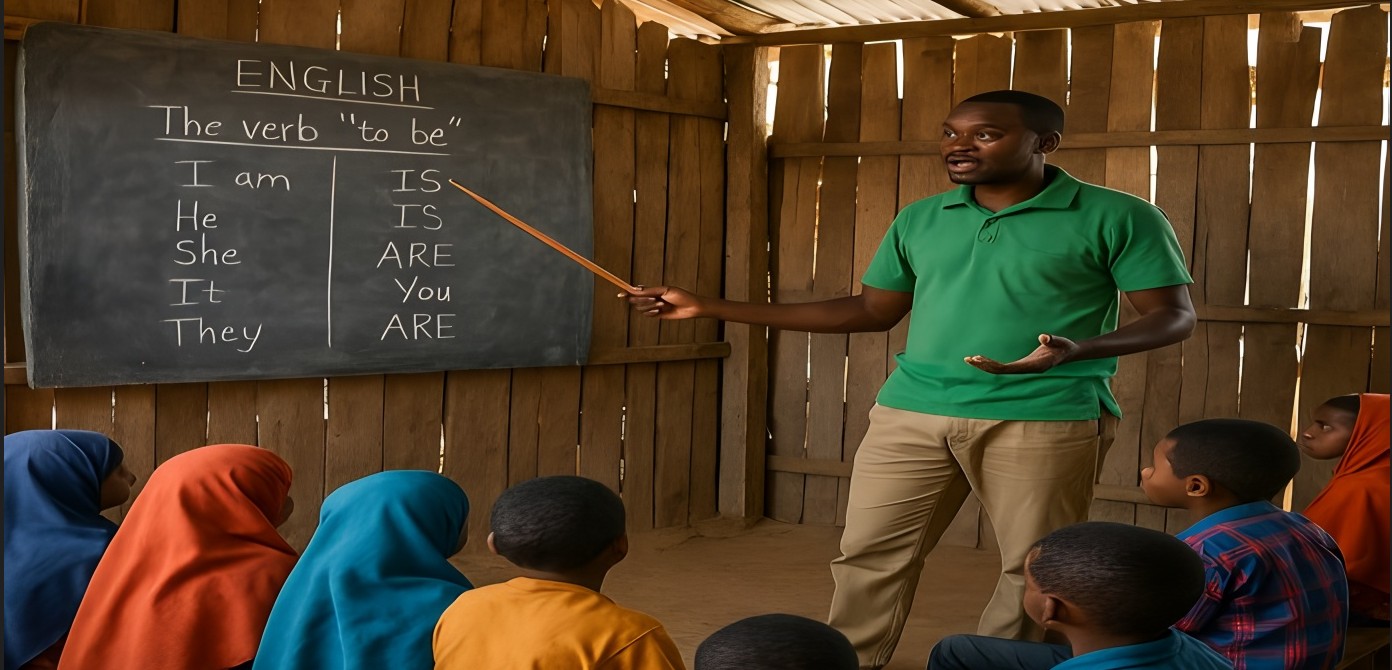
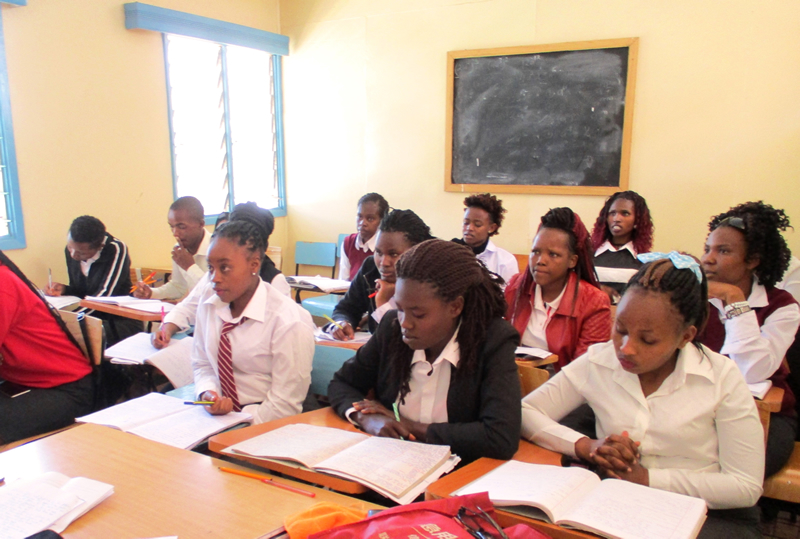
Students at a junior secondary school in Nairobi attend a STEM class with limited teaching staff. Photo/Courtesy
By Daisy Okiring
Kenya’s transition of the first cohort of Competency-Based Education (CBE) learners to senior school in January 2026 is facing serious risks due to critical teacher shortages in specialized subjects, education officials have warned.
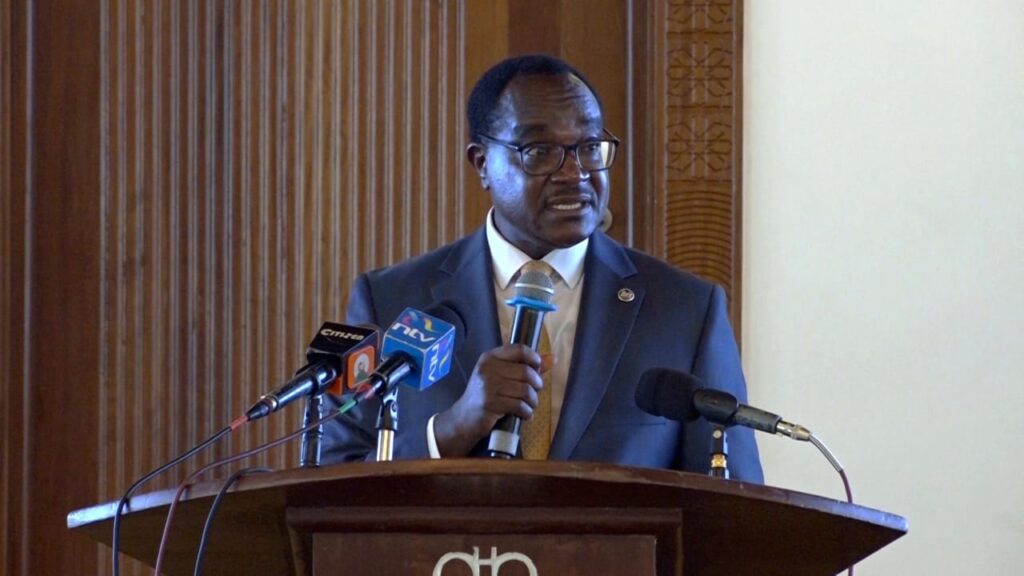
Education Cabinet Secretary Julius Migos Ogamba said despite large-scale recruitment over the past three years, the country still requires 137,500 teachers across basic education institutions to fully support the shift.
“The shortage is acute in specialised subjects such as social studies, integrated science, pre-technical studies and various vocational and STEM fields,” Ogamba said at an education conference in Mombasa. “This underscores the urgent need for expanded and targeted training programmes to fill the gaps and sustain Kenya’s curriculum reforms.”
Massive gaps in junior and senior schools
Data from the Teachers Service Commission (TSC) shows junior schools are short of 72,422 teachers, while senior schools lack 65,070.
TSC currently manages 431,831 teachers on the payroll, but another 369,430 registered educators remain unemployed, creating a paradox where thousands of qualified teachers are out of work even as schools face severe shortages.
“The figures point to both a resource and policy challenge,” said Dr. Jane Mwangi, an education policy analyst. “The government has recruited more teachers than ever, yet demand continues to outstrip supply, especially in technical and creative subjects that are central to the CBE framework.”
Read More: Kenya among 6 IGAD nations where 42 Million face severe food crisis
Training pipeline under strain
Although teacher training enrolment is rising, it has not kept pace with the growing demand. Public diploma colleges can collectively train about 49,000 students for primary and secondary teaching, while universities have enrolled over 183,000 in bachelor’s programmes.
However, most of these students pursue degrees in arts (57.1 per cent) or sciences (29.3 per cent), leaving gaps in technical, vocational and creative fields. Postgraduate enrolment remains low, limiting opportunities for advanced specialisation.
Education stakeholders say the imbalance is already being felt in classrooms, where learners are often taught by non-specialists or rotated teachers. “We cannot afford to have CBE reduced to theory when it was designed to emphasize practical, skills-based learning,” said Kenya Secondary School Heads Association chairperson Indimuli Kahi.
Consequences for learners
Experts warn that without enough trained teachers in critical subjects, the CBE rollout risks undermining its own objectives. Learners preparing for senior school could miss out on core competencies in STEM, pre-technical skills, and vocational education.
“This gap could create long-term inequalities,” said Dr. Catherine Gichuhi, a Nairobi-based education researcher. “Urban schools may manage by hiring additional staff privately, but rural and public schools will be left behind, widening disparities.”
Already, junior secondary schools in remote counties have reported overcrowding, lack of laboratory facilities, and overreliance on generalist teachers. The Kenya Union of Post Primary Education Teachers (KUPPET) has urged the government to accelerate recruitment and training before January 2026.
Read More: Gen Z workers face toughest job market in decades, study shows
Balancing numbers with funding
The shortages persist despite record government recruitment drives. In the past three years, tens of thousands of teachers have been hired under permanent and contract terms. But budgetary constraints have slowed down efforts to close the deficit.
The National Treasury has allocated more funds for education, yet competing priorities—such as infrastructure, free primary education, and teacher allowances—limit the room for new hires.
“We need a sustainable financing model for teacher recruitment,” said KUPPET Secretary-General Akello Misori. “Otherwise, every year we will be playing catch-up, especially with new reforms like CBE that require more specialized personnel.”
Calls for urgent reforms
Stakeholders are now calling for targeted interventions. Proposals include increasing capacity in teacher training colleges, revising university intakes to align with national needs, and offering incentives for specialization in STEM and vocational fields.
Some suggest re-engaging the pool of unemployed registered teachers by offering refresher courses and deploying them to underserved schools. Others advocate for public-private partnerships to train and fund additional staff in technical subjects.
“The transition to senior school is too important to be undermined by staffing gaps,” said CS Ogamba. “The government is committed to working with stakeholders to ensure every learner has access to quality education under CBE.”
What lies ahead
As January 2026 approaches, pressure is mounting on the Ministry of Education and TSC to demonstrate concrete measures to address the shortages. Parents and teachers alike are anxious about the preparedness of schools.
Analysts warn that without urgent reforms, Kenya risks replicating the challenges of previous education transitions, where rapid reforms were implemented without adequate staffing or resources.
“The lesson from history is clear: curriculum changes succeed only when supported by strong systems,” Dr. Mwangi said. “CBE is Kenya’s most ambitious reform in decades, and its future hinges on whether the teacher gap can be closed in time.”


About the Author