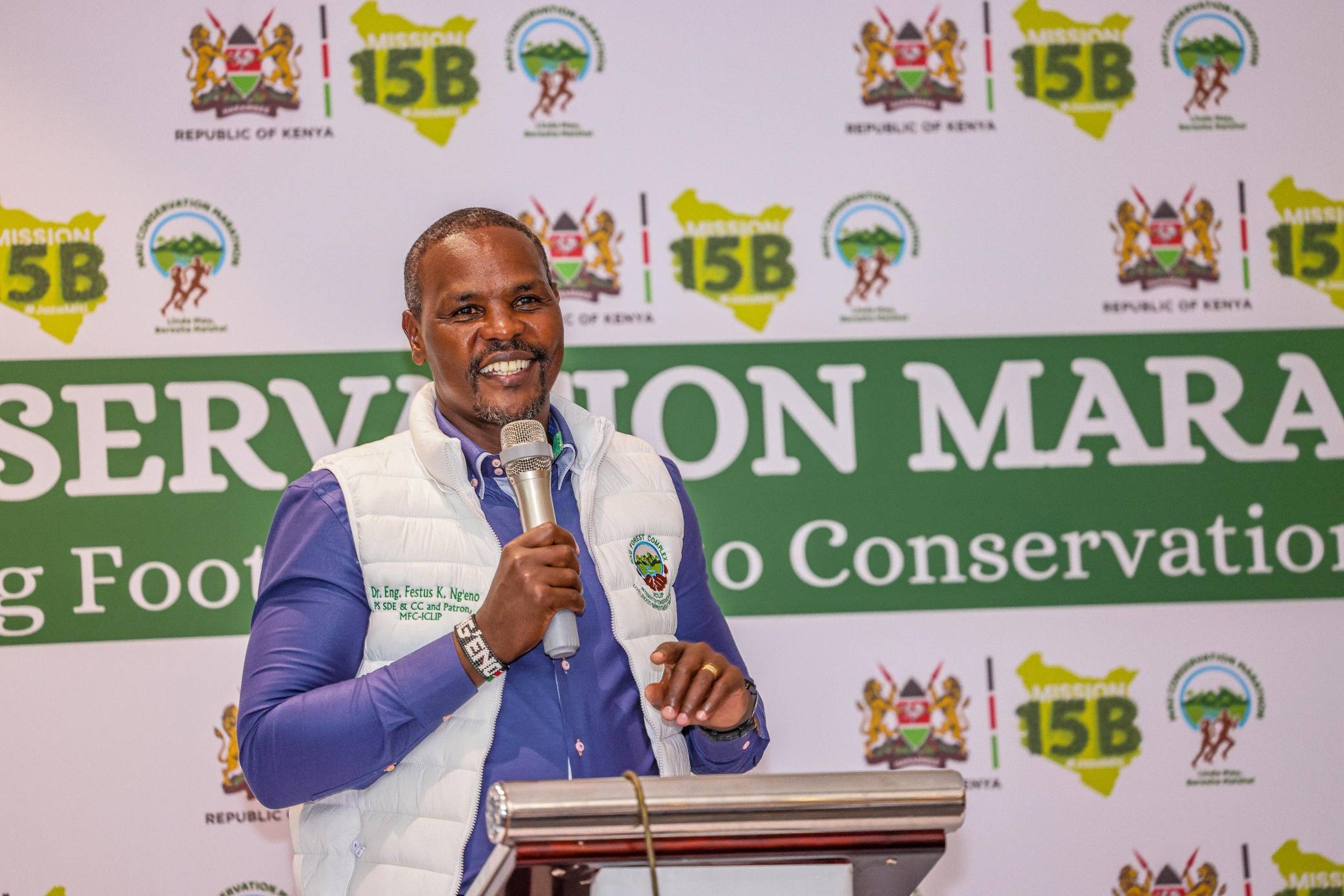
Festus Ng’eno, the Principal Secretary (PS) for the State Department for Environment and Climate Change. Photo/Cecilia Muthoni
By Cecilia Muthoni
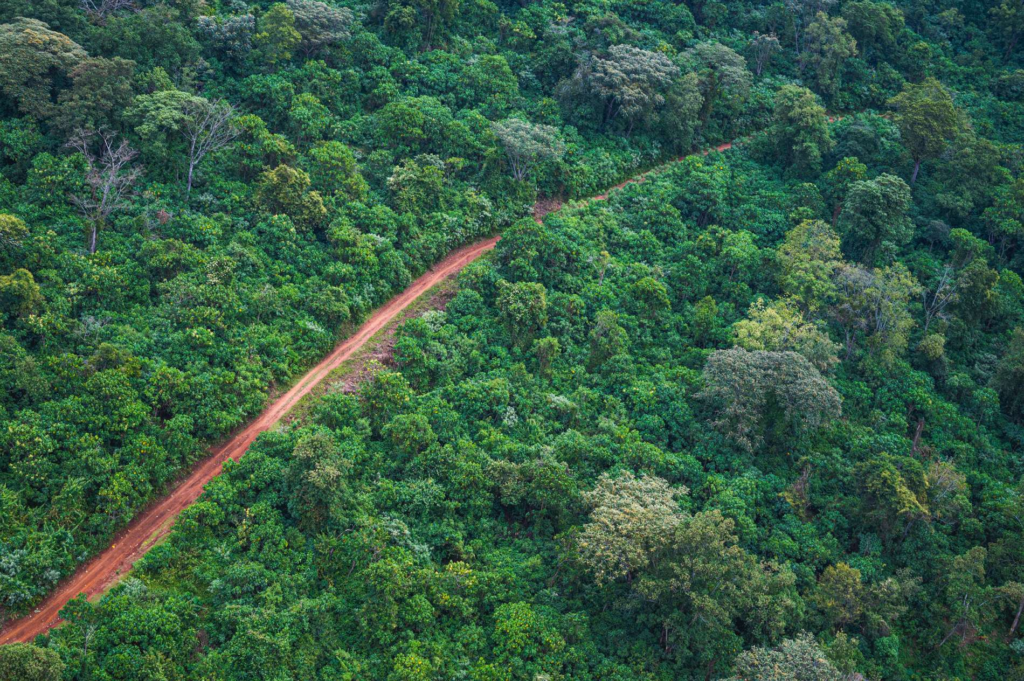
Thousands of livelihoods tied to Kenya’s largest water tower stand to benefit as the government expands restoration efforts in the Mau Forest Complex, coupling environmental recovery with income generation and youth empowerment through a growing conservation marathon initiative.
The expansion, anchored under the Mau Forest Complex Integrated Conservation and Livelihood Improvement Programme, targets degraded landscapes while improving household incomes, positioning conservation as both an ecological necessity and an economic opportunity for surrounding communities.
Officials report measurable progress, including restoration of 1,500 hectares and mapping of over 3,300 hectares for rehabilitation, alongside infrastructure such as boreholes, fencing, and ranger posts aimed at strengthening ecosystem protection and community resilience.
Linking conservation with community livelihoods
The initiative also integrates livelihood support, with more than 3,100 farmers receiving dairy equipment, certified seeds, beehives, and tree seedlings, reinforcing agroforestry adoption while reducing pressure on forest resources through sustainable income alternatives.
“This event is not just the commencement of a race, it is a powerful platform for environmental education, conservation awareness, and community empowerment,” said Principal Secretary Festus Ng’eno during the launch of the marathon’s second edition.
Read more: Mau Mau Children want their inherent rights from the British
The Mau Conservation Marathon has emerged as a central mobilisation tool, linking sport with conservation messaging while creating income streams for youth, athletes, and local businesses operating within the Mau ecosystem and surrounding counties.
The inaugural marathon held in October 2025 attracted over 1,000 participants and distributed more than KES 3.3 million in prize money, with additional government incentives raising total earnings for top performers and boosting youth participation.
Organisers say the event has evolved beyond competition into a structured economic platform that supports talent development while aligning with national goals of environmental restoration and grassroots economic empowerment within forest-adjacent communities.
“Indeed, as you have heard from the athletes’ testimonies, the platform became an excellent opportunity to showcase their talent and position participants for more opportunities and platforms,” Ng’eno said, highlighting the event’s growing national relevance.
Marathon drives youth empowerment and global ambition
The second edition, scheduled from July 2026, introduces a full 42 kilometre race and increases prize allocations to KES 7.8 million, signaling expanded ambition to attract international participation and elevate the marathon’s global profile.
Government officials emphasise that the marathon supports broader conservation objectives by fostering partnerships among communities, private sector actors, and development agencies, while reinforcing awareness of the Mau Forest’s role in water security and climate stability.
Read more: Illegal logging syndicates: Who’s profiting from Mau’s destruction?
“As we launch the second edition of the Mau Conservation Marathon today therefore, I invite our communities around the Mau Forest Complex to participate fully, this is your race, this is your run,” Ng’eno said, urging wider community ownership.
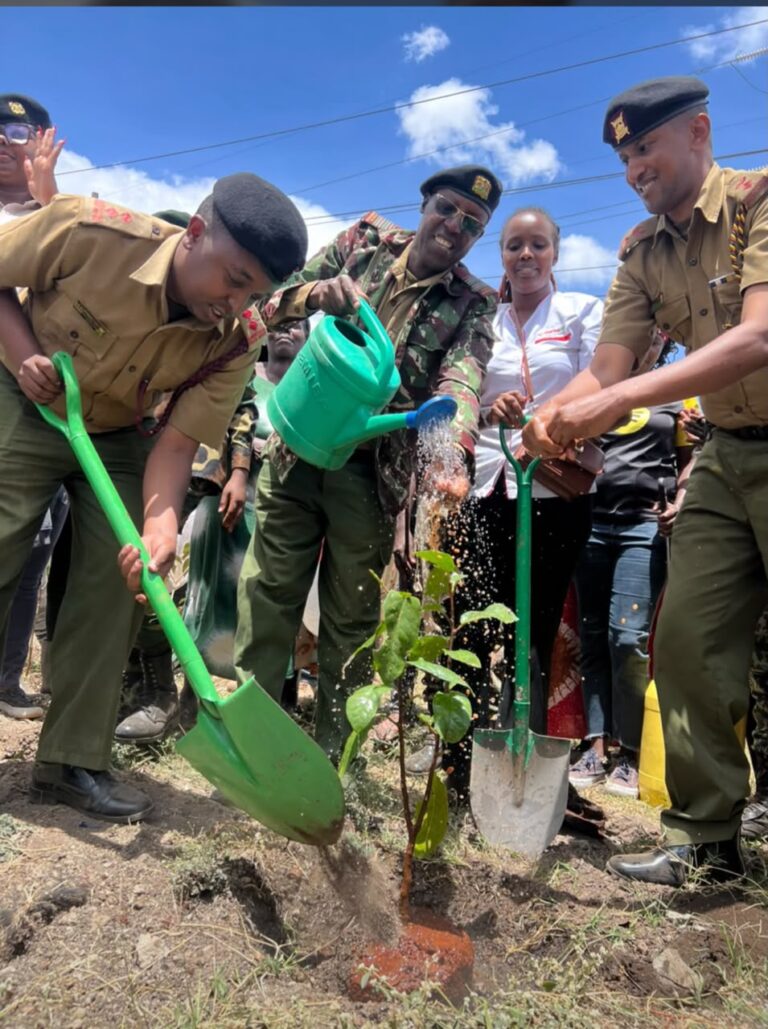
Governor Susan Kihika confirmed the renewed conservation efforts in the Mau Forest Complex are delivering a measurable impact in Nakuru County, restoring degraded land, enhancing biodiversity, and providing sustainable income alternatives for local communities.
Through targeted livelihood programmes, households are receiving dairy support, certified seeds, and training in high-value crops such as avocado, coffee, and pyrethrum, alongside expanded opportunities in beekeeping enterprises.
The interventions are helping diversify incomes while reducing reliance on forest resources, with authorities noting that sustainable agriculture and enterprise development are central to long-term conservation success across affected communities.
Additional measures including tree nursery development, agroforestry expansion, and improved land management practices are strengthening resilience, with increased participation from youth and women in emerging green economy opportunities.
“This initiative continues to prove, in very practical terms, that conservation and community progress can move forward together,” said Governor Susan Kihika, in a speech read on her behalf by Deputy Governor David Kones during the marathon launch event in Nakuru.


About the Author