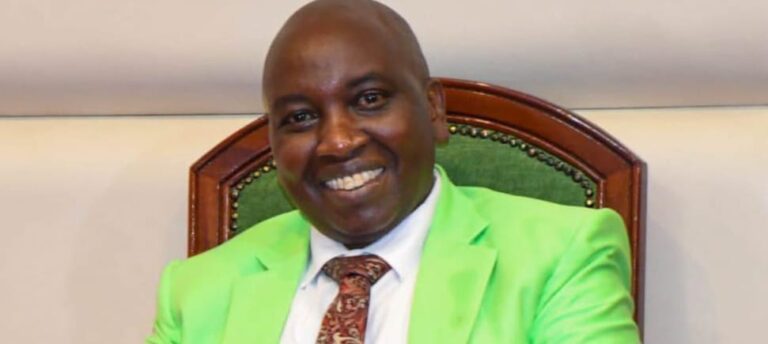
Hon Muriuki Karue, the former Ol Kalou MP and Nyandarua Senator. Photo/Handout
By Wanjohi Nderitu
Today, Kenya boasts a vibrant record of development milestones—improved roads, better healthcare facilities, expanded educational opportunities, and more resilient communities.
Behind much of this progress stands a historic figure whose visionary efforts laid the foundation for these achievements: Hon. Muriuki Karue, the former Ol Kalou Member of Parliament whose dedication and selfless service sparked transformative change at the grassroots level.
His legislative efforts, particularly around the introduction of the Constituencies Development Bill that he crafted in 2002 but was passed in 2003, have left a lasting impact on the fabric of Kenyan society.
Karue had first moved the CDF Motion in 2000, asking for 5% of government revenue be devoted to constituency-based projects including bursaries. The Bill was passed in 2003 with a government-sponsored Amendment that honed the amount to 2.5%, which has been applied across the country since 2004.
His relentless advocacy for development at the grassroots level underscores the notion that being elected to Parliament is a calling to serve the people—not merely about holding office but answering a calling to serve selflessly. It is a sacred duty to empower the people. Being elected is not merely a privilege; it is a selfless calling to advocate for the people’s needs, to listen to their challenges, and to take action for their benefit.
Humility and vision
His work reminds current and future leaders that development should stem from a genuine desire to uplift their constituencies, not personal gain. He demonstrated that elected office is a sacred duty—an opportunity to serve with integrity and selflessness. Leaders must answer the call to uplift their communities, prioritize people’s needs, and ensure that development is not just a promise but a reality, and that true leadership requires humility, vision, and a steadfast commitment to serve the people without seeking personal gain.
Read more: Family thanks ex-MP Karue for son’s education
Karue, who served for two consecutive terms (1997–2007) having been elected the first term on Democratic Party of Kenya (DP) and National Alliance Rainbow Coalition (NARC) tickets, challenged the notion of dependency on government handouts or voluntary contributions—urging instead for structured, sustainable development financing directly from national resources. His call for transparency, efficiency, and community participation remains relevant today.

He also served as Senator for Nyandarua from 11th March 2013 to 16th July 2017 (Jubilee Party), where he also sponsored several Bills, including the County Industrial Development Bill.
Karue’s mission as MP was clear: to operationalize a resolution passed in November 2000, which had recommended allocating 2.5 percent of the country’s government revenue to constituency-based development projects. This move was more than legislative; it was a call for decentralization, community empowerment, and genuine grassroots development.
The birth of NG-CDF
Hon. Karue’s journey began with a vision: to redirect a portion of the government’s revenue towards constituency-based development projects.
Inspired by his relentless advocacy, the CDF was created—a groundbreaking initiative that introduced decentralization of development resources. This fund empowered local communities to decide on projects most relevant to their needs. He emphasized that local communities, being closest to their problems, are best positioned to identify priorities. In later years, Parliament in its wisdom changed the name of the Fund to NG-CDF.
People-driven
Over two decades down the line, CDF has become a catalyst for transforming countless localities. The legacies of the CDF and NG-CDF stand testament to the power of community-driven development. They represent a shift away from traditional top-down models towards a more egalitarian approach, where local voices matter, and resources are allocated based on the unique challenges and aspirations of different constituencies.
Karue articulated his case with profound conviction, challenging his fellow parliamentarians to rethink Kenya’s status as a developing nation. He questioned: “Until when is our country going to be described as a developing country?” His words resonated across the political divide, demanding a shift from top-down approaches to a more inclusive model where local communities had the power to determine their developmental priorities.
Impact on community
One of the most significant outcomes of the CDF has been its transformative effect on education in Kenyan constituencies. Thousands of students have benefited from bursary schemes financed by the fund, allowing families who once struggled to afford secondary, tertiary, and university education to realize their dreams. This has elevated aspirations, reduced school dropout rates, and cultivated an educated workforce that is vital for national progress.
Roads board
By empowering communities to make decisions that directly affect their lives, Karue’s initiatives have not only uplifted individual families but have contributed to the growth and development of the nation as a whole.
Muriuki Karue understood that development is about people. He emphasized the need for localized governance, where the specific needs of each constituency could be addressed effectively. For instance, while his constituents might prioritize funding for a milk processing plant, another constituency might lean toward securing resources for a police station or healthcare facilities. Such tailored solutions, he argued, were essential in addressing the unique challenges faced by diverse communities.

Hon. Karue’s influence extended beyond the CDF; he also played a crucial role in establishing the Kenya Roads Board and the District Roads Committees, facilitating funding for critical infrastructure projects in rural areas.
His initiative to propose that funds be allocated directly to constituencies rather than funneled through various ministries was revolutionary, highlighting the inefficiencies that often plagued governmental aid.
Read more: Robert Makokha: The fiery Bunge leader targeting Arama in 2027
His emphasis on small but impactful projects—such as building roads, schools, water schemes, and health facilities—has revolutionized local infrastructure. He crafted and successfully moved the Motion that created the fund for constituency roads under the then District Roads Committees, that the Kenya Rural Roads Authority (KeRRA) was later set up to manage. This has, in many areas, been the first-ever resources to introduce graders, culverts, and basic utilities.
Emergency funds
Recognizing the urgency of emergencies, Hon. Karue proposed that a portion of the 2.5% revenue be channeled into a national emergency fund. This ensures rapid response during disasters—whether school roofs blown away or bridges washed out—without relying solely on ad hoc contributions or harambees. His vision was for a system where resources are readily available for urgent needs.
MPs Diary: A must-read
Twenty years later, his words—and his work—remain alive in every classroom built, every scholarship awarded, and every community that now shapes its own destiny.
Karue’s contribution is a shining example of how a single act of legislative courage can ignite widespread positive change. As current and future leaders face new challenges, they should be inspired to follow this example of putting the nation’s welfare above personal gain.

And as Kenya continues its devolution journey under the 2010 Constitution, the principles embodied in the CDF will remain a cornerstone of the nation’s development strategy, thanks to the foresight and dedication of Hon. Muriuki Karue.
Read more: Ol Kalou counts the cost as protests leave trail of destruction
NG-CDF stands as proof that progress begins when leaders listen, trust, and invest in their people. Its continued success depends on leaders who champion community engagement, transparency, and effective resource management.
By honouring Karue’s legacy, Kenya can build even stronger, more resilient communities for generations to come. As Karue once declared: “We must work with what we have to build the Kenya we deserve.”
A sample of his day-to-day experience as an MP are well documented in his book, MP’s Diary, which is available in most bookshops across the country. Excerpts of this great book will be highlighted in The Home News, with the author’s permission.


About the Author