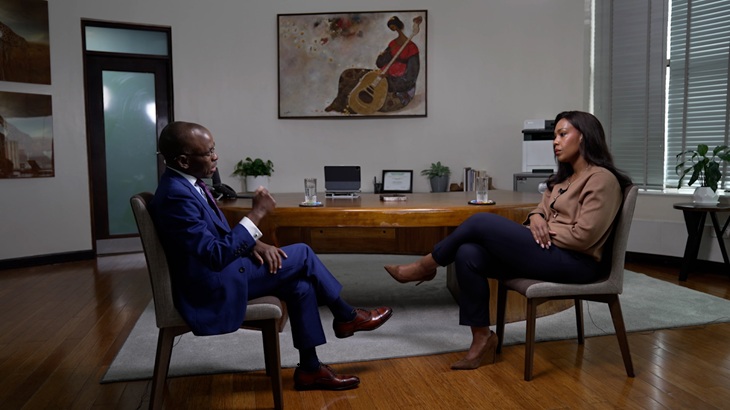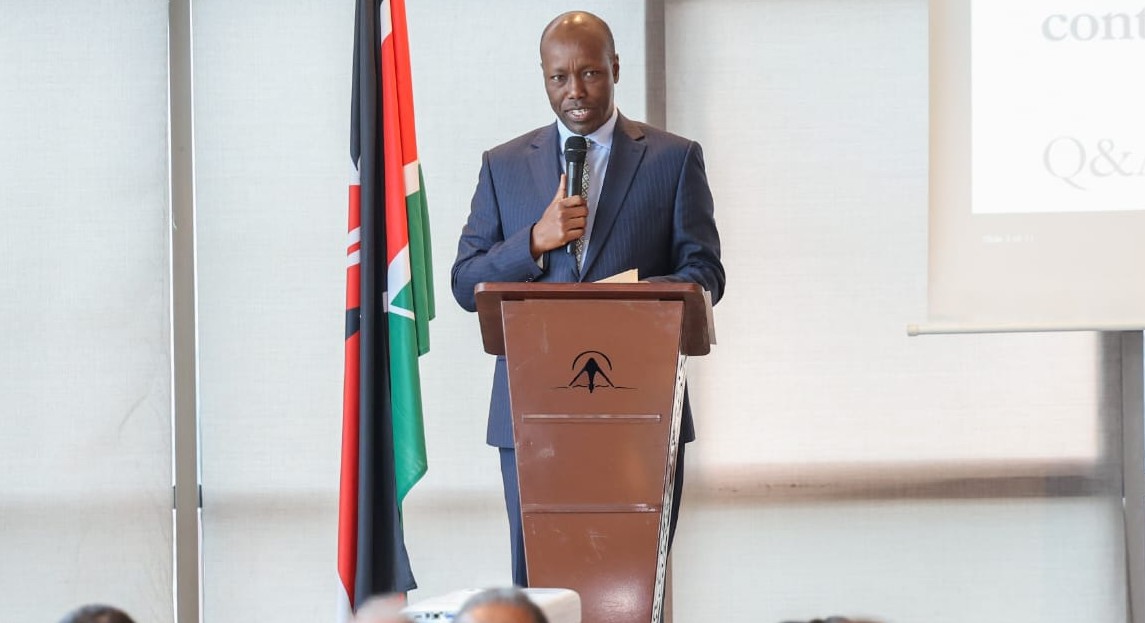
Trade and Investment Cabinet Secretary, Lee Kinyanjui. Photo/Lee Kinyanjui/X
By Newsflash Team
Kenya has announced it will restart negotiations with the United States on a bilateral Free Trade Agreement (FTA) first initiated by President Donald Trump during his earlier term in office.
Trade Cabinet Secretary Lee Kinyanjui will lead a Kenyan delegation to Washington, DC, next week to meet the US Trade Representative and other senior officials to explore reviving the FTA.
The move comes as Nairobi mounts a public relations push to counter perceptions that Washington is preparing sanctions over Kenya’s growing ties with China.
Earlier this week, the US proposed legislation to review trade and defence relations with Kenya. Republican Senator James Risch introduced an amendment to the 2026 National Defence Authorisation Act seeking a 90-day reassessment of Kenya’s Nato-aligned status due to its Beijing links. If passed, the measure would require Secretary of State Marco Rubio to submit a report within 180 days on Kenya’s foreign policy alignments, defence partnerships, and human rights record.
President William Ruto has defended Kenya’s cooperation with China, citing reciprocal trade benefits, including the removal of tariffs on tea, coffee, avocados, and other agricultural exports. “Some of our friends complain we trade too much with China, but it’s in Kenya’s best interest,” he told a private sector forum in Nairobi. “We’ve secured a major breakthrough for our exports.” As the US adopts a more protectionist stance under Trump, many African nations, including Kenya, have expanded ties with China, the EU, and Gulf states to hedge against Western disengagement. The African Continental Free Trade Area (AfCFTA) is also helping states diversify away from dependence on US trade preferences.
From stip to full FTA
The Trump administration has preferred bilateral deals over broad agreements like the African Growth and Opportunity Act (Agoa), set to expire on September 30. Agoa’s end would reimpose a 10 per cent tariff on Kenyan exports to the US, which were valued at $737.3 million in 2024.
Kinyanjui has said both countries are committed to a stronger trade platform, with Trump likely to revive the FTA negotiations. Talks began in 2020 under Trump and then-President Uhuru Kenyatta but stalled when Joe Biden took office. His administration instead launched the US-Kenya Strategic Trade and Investment Partnership (Stip) in 2022, focusing on reducing non-tariff barriers rather than eliminating tariffs.
Read more: Samia draws praise and criticism over new trade rules
Although Stip aimed to cut costs for US businesses and maintain their competitiveness in Kenya—particularly after Nairobi ratified new trade pacts with the UK and EU—both governments see a full FTA as more advantageous. The US agriculture sector, for instance, wants tariff removal to improve access to the Kenyan market. Agoa and the Generalised System of Preferences (GSP) have offered duty-free treatment for most Kenyan exports, but both require periodic reauthorisation. Exporters prefer a permanent agreement under an FTA. Analysts caution that benefits may not surpass those enjoyed under Agoa, but stakeholders still see value in securing long-term tariff-free access.
Securing Kenya’s textile edge
Kenya enjoys Agoa’s third-country fabric rule, allowing duty-free export of apparel made from imported fabrics. Nearly all apparel exported to the US under Agoa in 2023 used this rule. While US FTAs typically require local or US sourcing of yarn and fabrics, such conditions could still benefit Kenya’s textile sector. Securing an FTA is seen as vital for safeguarding Kenya’s position as a leading apparel exporter when Agoa ends, although Washington has yet to make it a priority.
Read more: How Trump’s tariffs could reshape Africa’s trade future
Apparel exports to the US under Agoa earned Kenya $470 million in 2024, up 19.2 per cent from $392 million in 2023, according to the Kenya National Bureau of Statistics. Export volumes rose from 97.3 million pieces to 116 million pieces over the same period.
Kinyanjui warned that Trump’s proposed 10 per cent tariff would hurt US consumers more than Kenya. “They don’t produce textiles and cotton locally, so tariffs only raise costs,” he said. An FTA, by contrast, eliminates or reduces such trade barriers, promoting economic cooperation between signatories. Agoa, enacted in 2000, has been a cornerstone of US-Africa trade relations, but with its expiry looming, Kenya is racing to secure a lasting deal.


About the Author