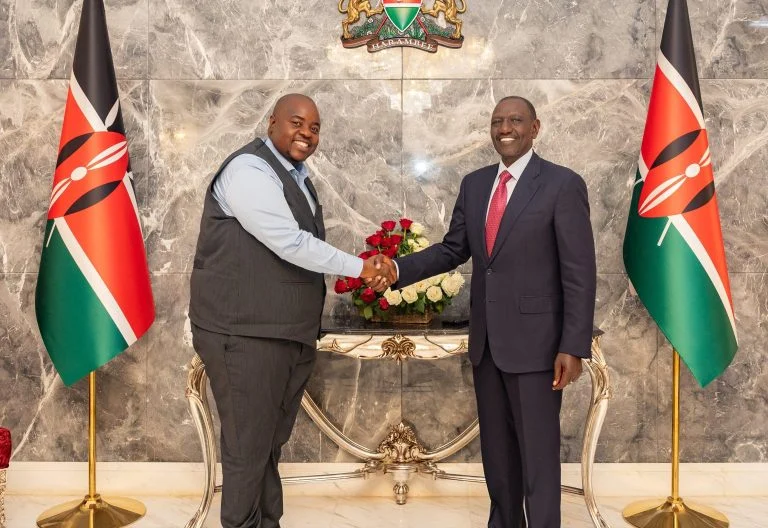
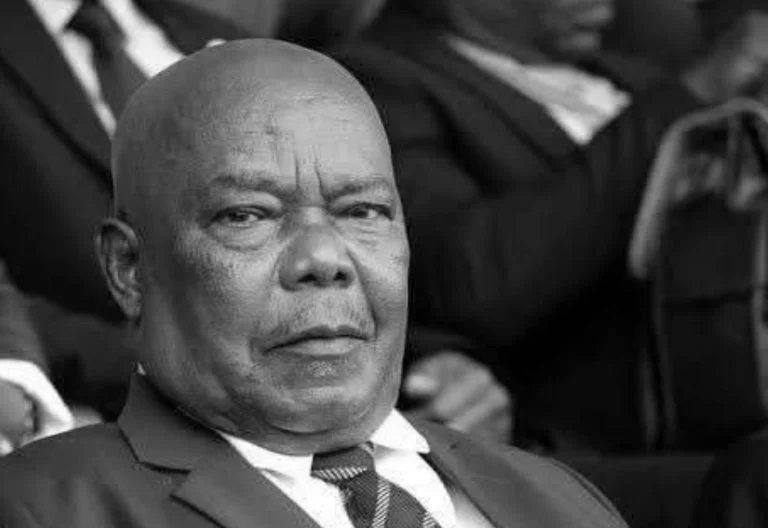
IGAD Executive Secretary Dr Workneh Gebeyehu. Photo/IGAD
By Newsflash Writer
IGAD Executive Secretary Dr Workneh Gebeyehu has issued a stark warning that Sudan is hurtling toward “de facto disintegration” unless regional and international actors urgently harmonise their mediation efforts and mount a credible peace initiative capable of altering the calculations of the warring parties.
Speaking in Djibouti on Tuesday during the 2nd Forum of Special Envoys and Representatives on Harmonising Mediation Efforts for the Sudan Peace Process, Dr. Workneh said the fall of al-Fasher—one of the most devastating episodes of the war—had laid bare both the magnitude of Sudan’s tragedy and the failure of the international community to prevent predictable escalations.
“We meet today with heavy hearts,” he told envoys, diplomats and mediation experts. “The horror of the fall of al-Fasher was neither unexpected nor inevitable. It was foreseen. We understood the risks. And yet, despite that knowledge, we were unable to prevent it.”
Dr. Workneh described al-Fasher as a painful reminder of the war’s third year of “accumulated brutality,” a conflict that has shredded Sudan’s social fabric, destroyed institutions, and pushed millions into despair. But he also warned that the tragedy had exposed a deeper and uncomfortable reality: Sudan’s fate is increasingly shaped by external forces that are “deeply entangled and fueling the war,” leaving Sudanese civilians to pay the price with their lives.
More than two-and-a-half years since fighting erupted, the IGAD chief said, Sudan still lacks a credible peace process. “There is still no peace effort underway that is commensurate with the scale of the crisis,” he said. “Not one capable of altering the calculations of the warring parties. Not one that reflects the urgency demanded by a collapsing nation.”
Call for coordinated peace architecture
Dr. Workneh acknowledged that mediation efforts by regional bodies, multilaterals and international partners—including IGAD—had fallen short. While numerous declarations, commitments and communiqués have been issued, he said, their cumulative impact has been insufficient in the face of a war driven by fragmentation, militarisation and foreign sponsorship.
“The horror of al-Fasher will not shame the warring parties into restraint,” he said. “Left to its own momentum, Sudan is on a trajectory toward de facto disintegration.”
Read more: IGAD urges institutionalised youth role in peace processes
Despite this grim outlook, he noted that the past months have produced encouraging signs—including an expanding consensus among Sudanese civic and political formations, regional organisations and international partners. This consensus rests on five principles: that there is no military solution; that Sudan’s unity and territorial integrity are non-negotiable; that an inclusive political process is essential; that humanitarian access and civilian protection must be secured immediately; and that stopping the war is the entry point to any durable future.
Dr. Workneh also highlighted the significance of the Quad Statement issued in September, which affirmed the Quad’s leadership in brokering a humanitarian truce. IGAD and its Member States, he said, “support such an undertaking,” urging renewed urgency in securing a cessation of hostilities.
But while the Quad focuses on the truce, Dr. Workneh stressed that multilaterals must simultaneously escalate the political track. What is needed, he said, is “a coordinated, synchronized peace architecture” anchored by IGAD, the African Union, the European Union and the League of Arab States.
Preparations for Luanda consultations
Dr. Workneh revealed that IGAD, in partnership with the African Union, is preparing to convene a Preparatory Consultation in Luanda, Angola, bringing together key Sudanese political and civic formations. He outlined three objectives of the meeting.
First, the consultation will serve to consolidate and harmonise the growing alignment among the AU Peace and Security Council, the IGAD Ministerial Committee, the UN Security Council, the League of Arab States, the European Union and the Quad. Collectively, he said, these positions now form “the most widely accepted and legitimate framework” for both Sudanese actors and the international community.
Second, by convening Sudanese political actors, IGAD hopes to strengthen a structured, civilian-led platform capable of refining, enriching and “Sudanising” international frameworks while ensuring national ownership of the peace trajectory.
Read more: IGAD calls for urgent support to stabilise Somalia
Third, the meeting aims to embed the Quad’s roadmap into a coherent sequence: humanitarian cooperation; political and security de-escalation arrangements; and an inclusive intra-Sudanese dialogue.
“These objectives,” he said, “reflect both practical imperatives and our strategic commitment to anchoring a Sudanese-owned political trajectory capable of stabilizing the country.”
Dr. Workneh closed with a firm warning that the region can no longer afford to repeat past mistakes. “The stakes—Sudan’s survival, regional stability, and Africa’s credibility—are too high,” he said. “This forum is an opportunity to re-energise, re-organise and recommit ourselves with a renewed sense of purpose.”


About the Author