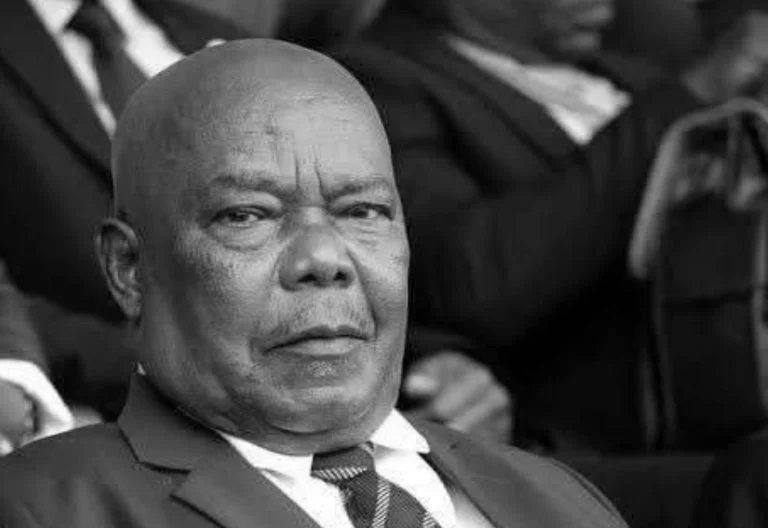
The late Saif al-Islam Gaddafi. Photo/Reuters
By Newsflash and Agencies
Saif al-Islam Gaddafi, a son of Libya’s former ruler Col Muammar Gaddafi, has reportedly been killed by gunfire.
The death of the 53-year-old — long regarded as the most likely successor to his father — was confirmed on Tuesday by the head of his political office, according to the Libyan News Agency.
His lawyer told journalists that a “four-man commando” squad carried out a targeted killing at his residence in the city of Zintan, although the identity of those responsible remains unknown.
In a conflicting account, his sister told Libyan television that he died in an area near Libya’s border with Algeria.
Powerful figure in Gaddafi’s Libya
Saif al-Islam Gaddafi was widely considered the most powerful and intimidating figure in Libya after his father, who ruled the country from 1969 until he was toppled and killed during the 2011 uprising.
Born in 1972, he became a central player in Libya’s efforts to rebuild relations with Western nations between 2000 and the eventual collapse of the Gaddafi government.
Read more: Trump imposes tougher US travel curbs on 12 African nations
Following the fall of his father’s regime, Saif al-Islam — accused of having a major role in the violent suppression of anti-government demonstrations — was detained by a rival militia in Zintan, where he was held for nearly six years.
The International Criminal Court sought to prosecute him on charges of crimes against humanity over his alleged involvement in crushing protests in 2011.
Legal battles and release
In 2015, a court in Tripoli, in western Libya under the authority of the UN-backed administration, sentenced him to death in absentia for his part in the crackdown.
However, two years later he was freed by a militia aligned with authorities in Tobruk, eastern Libya, under a broad amnesty law.
Since the overthrow of Muammar Gaddafi, Libya has remained fractured, with territories controlled by rival armed groups and a continuing political split between two competing governments.
Diplomatic role and political ambitions
During his father’s rule, Saif al-Islam wielded considerable influence and led major diplomatic initiatives despite holding no formal government post. He played a prominent role in negotiations that resulted in Libya abandoning its nuclear weapons programme.
Those deals paved the way for the lifting of international sanctions on the North African nation, and some observers portrayed him as a reform-minded figure and a more acceptable face of a changing Libya.
Read more: Kenya seeks urgent repatriation of 64 citizens stranded at Thai-Myanmar border
He consistently denied seeking to inherit leadership from his father, once remarking that power was “not a farm to be passed on”.
Nevertheless, in 2021 he declared his intention to run for president in elections that were later postponed indefinitely.


About the Author