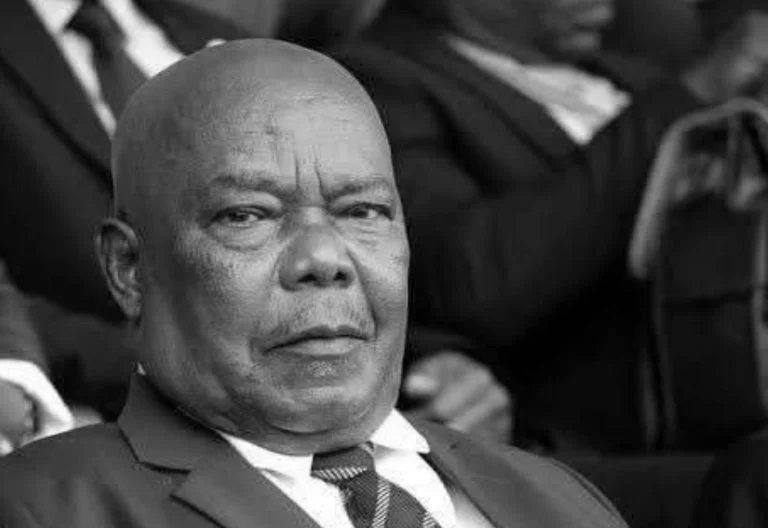
IGAD Executive Secretary, Dr Workneh Gebeyehu, speaking at the IGAD Youth Peace and Security Conference in Nairobi on Wednesday, August 13, 2025. Photo//@DrWorkneh/X
By Newsflash Writer
The Intergovernmental Authority on Development (IGAD) has called for the institutionalisation of youth participation in peace processes, saying young people must be recognised as equal partners rather than passive beneficiaries in efforts to build sustainable stability in the Horn of Africa.
Speaking at the IGAD Youth Peace and Security Conference in Nairobi on Wednesday, August 13, IGAD Executive Secretary Dr Workneh Gebeyehu said the region’s youth have proven themselves as credible voices for peace, resilience and countering violent extremism.
“The age of youth as passive beneficiaries is over. The age of youth as partners in peace has begun,” Dr Gebeyehu declared.
The two-day forum, themed Institutionalising Participation of Youth in Peace Processes, brings together policymakers, government officials, civil society groups and young leaders from across the eight IGAD member states. It aims to translate political will into concrete structures that ensure young people’s voices shape decision-making on peace and security.
Youth at the heart of early warning systems
Gebeyehu highlighted IGAD’s achievements in integrating youth into conflict prevention and peacebuilding through its Conflict Early Warning and Response Mechanism (CEWARN).
From urban centres like Addis Ababa to remote villages along the Sudan–South Sudan border, young peace monitors trained by CEWARN are relaying real-time information to prevent violence before it erupts.
Read more: IGAD calls for urgent support to stabilise Somalia
Similarly, the IGAD Centre of Excellence for Preventing and Countering Violent Extremism (ICEPCVE), established in 2018, has trained more than 500 young community leaders in counter-messaging, alternative narrative creation and community resilience building.
“These young champions are not just recipients of our programmes; they are architects of innovative solutions,” he said.
Turning demographic pressure into peace dividend
With over 60% of the IGAD region’s population under the age of 30, Dr Gebeyehu warned that the youth bulge could either fuel peace and prosperity or become a source of instability if not harnessed constructively.
He cited examples of young people in Sudan continuing to push for peace despite conflict, Kenyan youth speaking truth to power, and displaced youth in refugee camps maintaining hope of rebuilding their societies.
“You are not waiting for permission to be agents of change. You are demanding your rightful place at the table,” he told delegates.
Policy commitment to the future
The IGAD Youth Policy Framework 2021–2030, adopted unanimously by member states, serves as the region’s blueprint for embedding youth voices in governance and peace initiatives. The policy commits to ensuring no young person will be excluded from processes that determine their destiny.
Dr Gebeyehu urged governments to move from rhetoric to action, ensuring youth engagement is not treated as a favour but as “a fundamental requirement for sustainable peace.”
Read more: AU, IGAD and Kenya call for calm in South Sudan
“As we stand at this crossroads, let us ensure the hands of our young people are empowered to build the peaceful, prosperous IGAD region we all envision,” he said.
The conference, attended by Kenya’s Cabinet Secretary for Youth Affairs, Salim Mvurya, is expected to produce actionable recommendations to strengthen youth inclusion in peace structures across the Horn of Africa.


About the Author