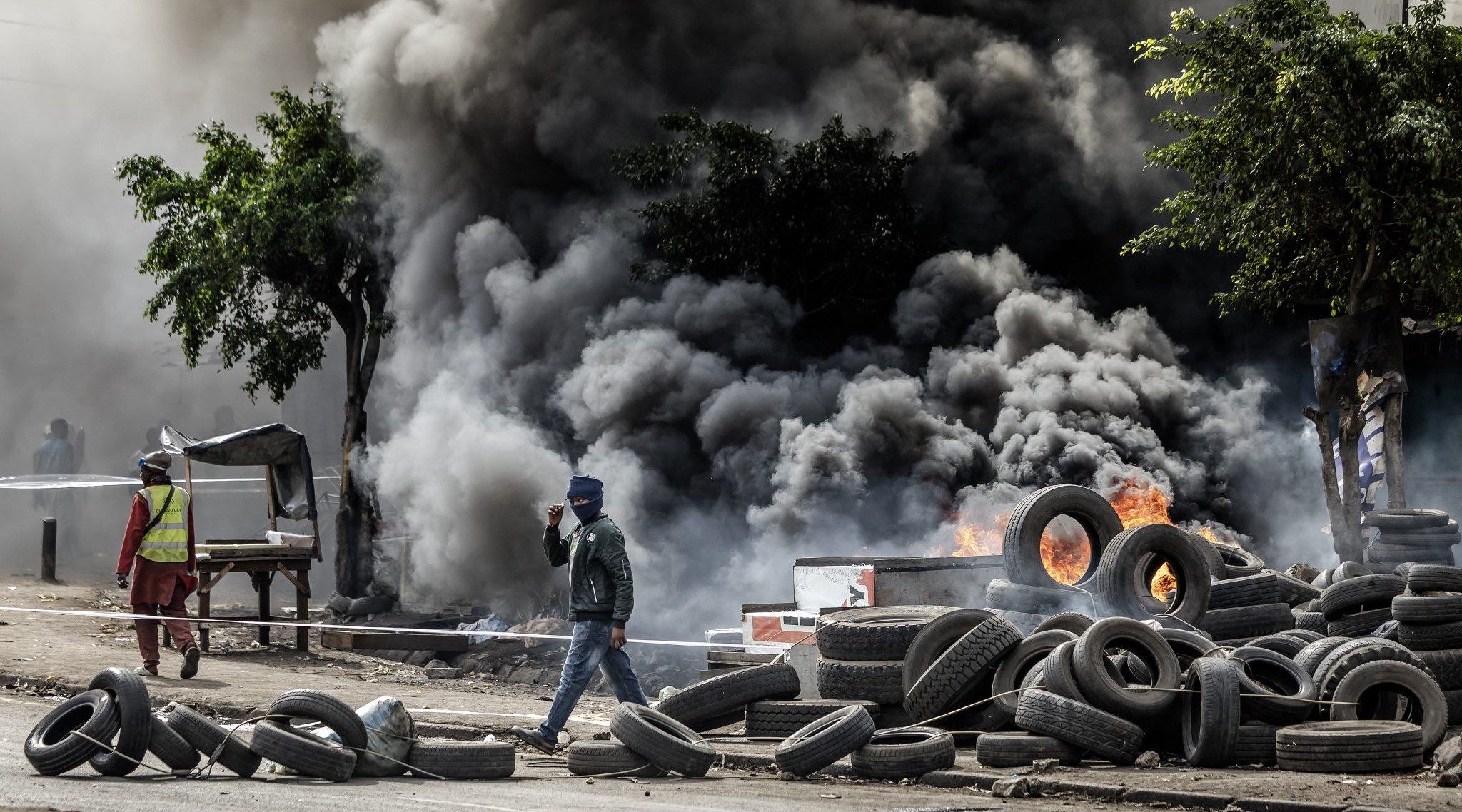
A demonstrator passes by a barricade of burning tyres during clashes with Kenyan police at the Saba Saba Day protests in Nairobi on July 7, 2025. (Photo: Luis Tato/AFP
By Newsflash Writer
Kenya’s human rights situation worsened last year, marked by unlawful killings, torture, abductions, and arbitrary detentions as authorities intensified crackdowns on anti-government protests, a new US report reveals.
While some steps were taken to hold perpetrators accountable, impunity persisted across all levels of government, according to the US Department of State’s 2024 Country Reports on Human Rights Practices. The report notes a clear deterioration in the rights environment throughout the year.
This assessment comes as President William Ruto has been seeking Western backing to lead a multinational security mission in Haiti and mediate conflicts involving armed groups in Sudan.
Widespread abuses and restrictions
The US report cites credible evidence of arbitrary or unlawful killings, enforced disappearances, torture, arbitrary arrests, and cross-border repression. It also highlights restrictions on free expression and media freedoms, threats and violence against journalists, censorship, and the persistence of severe human trafficking.
The findings underscore that impunity remained entrenched, with security forces implicated in killings during June and July’s Gen Z protests against proposed tax hikes. Human rights groups said police transferred implicated officers to conceal their identities and obstruct investigations.
Read more:Ten dead, 29 injured in Saba Saba protest chaos – KNCHR
On extrajudicial killings, the report details “numerous” cases linked to security forces during the youth-led demonstrations. The Kenya National Commission on Human Rights (KNCHR) recorded 60 deaths, though rights groups believe actual numbers were higher.
Authorities allegedly sought to restrict media coverage of the protests, with President Ruto urging “responsible reporting” and accusing some outlets of “glorifying anarchy” through selective live broadcasts.
Enforced disappearances
The Independent Medico Legal Unit reported 69 enforced disappearances during the protests, with KNCHR documenting 32 cases since June. By December, 29 people were still missing. In August, individuals identifying as police reportedly detained activist Bob Njagi and brothers Jamil and Aslam Longton in Kajiado County for protest planning, holding them incommunicado for 32 days.
The Defenders Coalition said 105 human rights defenders were abducted or disappeared after posting police brutality content or attending protests. Those released were allegedly warned against sharing protest-related material online.
Although the law forbids arbitrary arrest and detention, the report states the government often ignored these provisions, with police making warrantless arrests on broad suspicion. The Constitution mandates court appearances or release within 24 hours, but many cases exceeded this limit.
Pretrial detention was a significant contributor to prison overcrowding, with more than 39 per cent of inmates awaiting trial — some for longer than the maximum sentence for their alleged offences.
Read more: Ojwang: Protests erupt in Nairobi as KNCHR, IPOA demand action
Access to lawyers and family was often delayed until bribes were paid. The Law Society of Kenya reported cases where legal counsel was denied or detainees’ whereabouts concealed. The government claimed an average pretrial detention of 14 days, but some detainees spent years in custody due to delays in transportation to court.
Torture and labour rights violations
Despite constitutional prohibitions, the report documents torture by security forces, including beatings, painful restraint, and electric shocks — most prevalent in informal settlements and targeting young men profiled as criminals.
Other concerns include weak enforcement of labour rights. While unions operated without overt interference, penalties for violations were inconsistent and often inadequate, with some employers defying court-ordered reinstatements.
Read more: US on Ruto’s neck over RSF link
Separately, the Kenya Human Rights Commission (KHRC) raised alarm over shrinking civic space and increased harassment of activists. Its latest review, “The Right to Defend Rights: An Assessment of the Protection of Human Rights Defenders in Kenya (2020–2022)”, records seven defenders killed or disappeared, and 134 arbitrary detention cases, largely uninvestigated.
Activists working on sensitive issues such as land rights, corruption, sexual orientation, and minority protections were disproportionately subjected to intimidation, surveillance, and violent reprisals. The KHRC concludes that state mechanisms are failing to provide consistent or proactive protection for human rights defenders.


About the Author