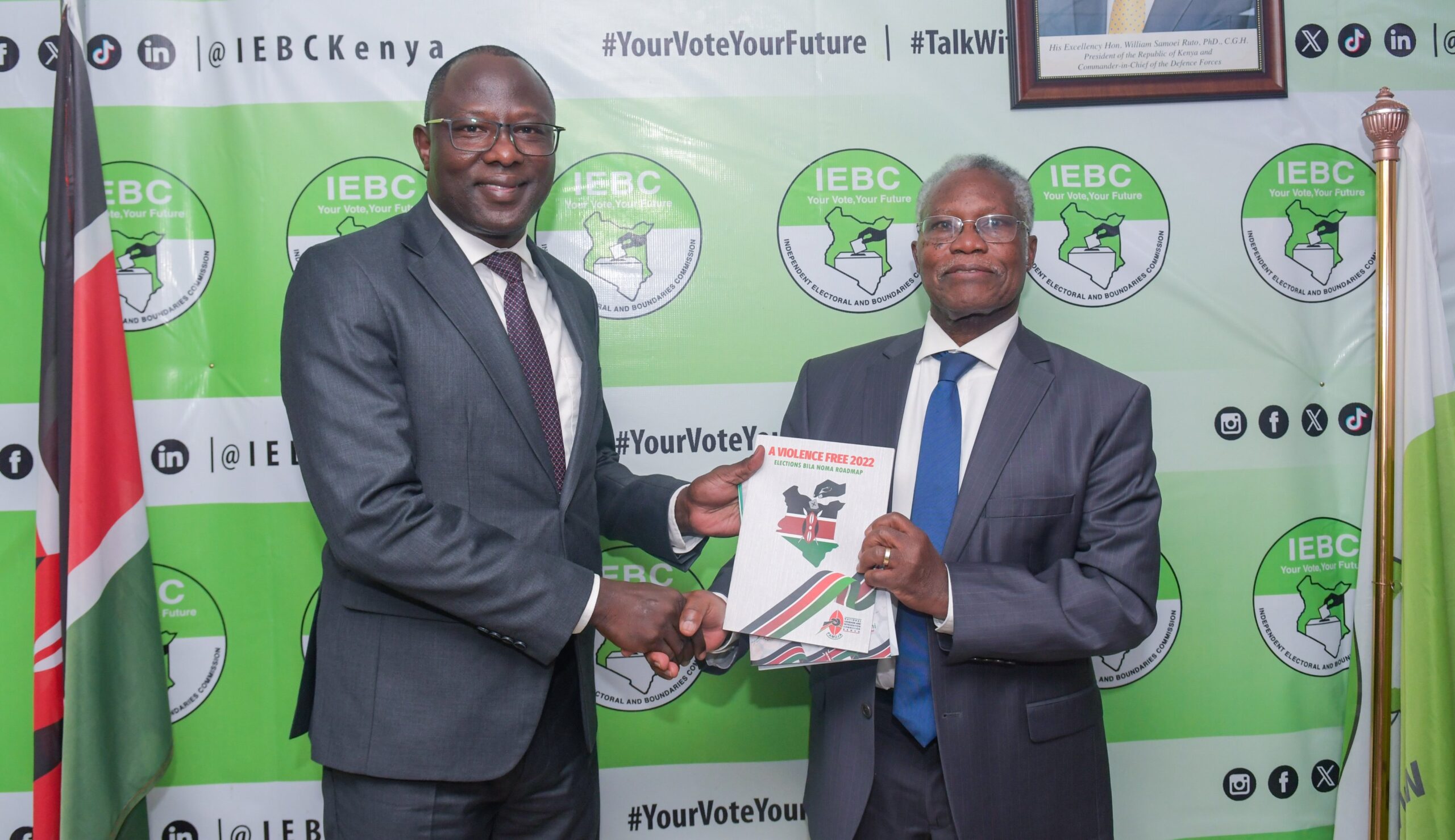
IEBC Chairperson Erastus Ethekon (left) and National Cohesion and Integration Commission (NCIC) chairperson, Rev Samuel Kobia. Photo/X/IEBC
By Newsflash Writer
The Independent Electoral and Boundaries Commission (IEBC) has moved to dismiss as false a press release circulating on social media alleging its involvement in the dissolution of Parliament.
The commission termed the document “fake and untrue,” warning the public against falling for misinformation designed to undermine confidence in the electoral body.
In a press statement issued on Wednesday, August 20, 2025, the commission clarified that it had not released any communication on the matter, describing the document as fraudulent, misleading, and intended to cause public confusion.
“That the document fashioned as ‘Press Release,’ bearing resemblance to the IEBC brand, circulating in social media is absolutely FAKE and UNTRUE,” the commission said.
Public urged to ignore fake statement
The electoral agency urged Kenyans to disregard the fake press release in its entirety and treat it with “utmost disregard, disdain, and contempt.” According to IEBC, such fake publications were not only misleading but also dangerous to the stability of the nation.
The commission emphasized that the alleged statement was part of a growing wave of misinformation targeting its operations. It reassured the public that investigations were underway to identify and hold accountable those responsible for fabricating and circulating the false communication.
“Like similar fraudulent and misleading posts seen lately, we will investigate the source(s) of this misleading post to uncover the authors so as to prefer necessary legal action against those found culpable,” IEBC noted.
Warning against undermining trust in IEBC
The commission further cautioned individuals behind such fake publications to desist, noting that they were breaking the law. IEBC observed that these actions were calculated to undermine trust in the election management body and could potentially endanger Kenya’s democratic processes.
“Such messages are intended to undermine trust and confidence in the election management body and its processes. This poses grave danger to our democratic election processes and risks the stability of our nation. It must stop,” the statement read.
Read more:Profiles of new IEBC nominees
The electoral body reiterated that any attempts to spread disinformation regarding its mandate not only eroded public trust but also threatened the integrity of elections in the country.
To counter the rising wave of misinformation, IEBC urged Kenyans to be more vigilant and to seek verification of any information associated with the commission through official channels. It encouraged the public to use its social media platforms, website, email, telephone, or physical offices to confirm the authenticity of communications purportedly originating from the electoral body.
“Meanwhile, and so as to help prevent this emerging national threat, the Commission invites members of the public to seek clarity on any information associated with IEBC by contacting us through publicly known and available channels including our social media platforms, email, telephone or by walking into any of our offices,” the commission advised.
Upholding democracy and transparency
Chairperson Erastus Edung Ethekon, who signed the statement, reaffirmed the commission’s commitment to upholding democracy in Kenya. He assured the public that IEBC remained steadfast in delivering fair, credible, and transparent elections despite attempts to tarnish its image through disinformation campaigns.
Read more: Parliament clears IEBC nominees amid political ties
“The Commission remains steadfast in its commitment in strengthening Kenya’s democracy and reassures the nation of its stoic determination to deliver fair, credible and transparent elections,” he said.
The latest incident adds to a growing trend of fake news and forged statements targeting key institutions in the country. Analysts warn that such disinformation campaigns could escalate as Kenya prepares for future elections, with malicious actors seeking to sway public opinion or discredit independent institutions.


About the Author