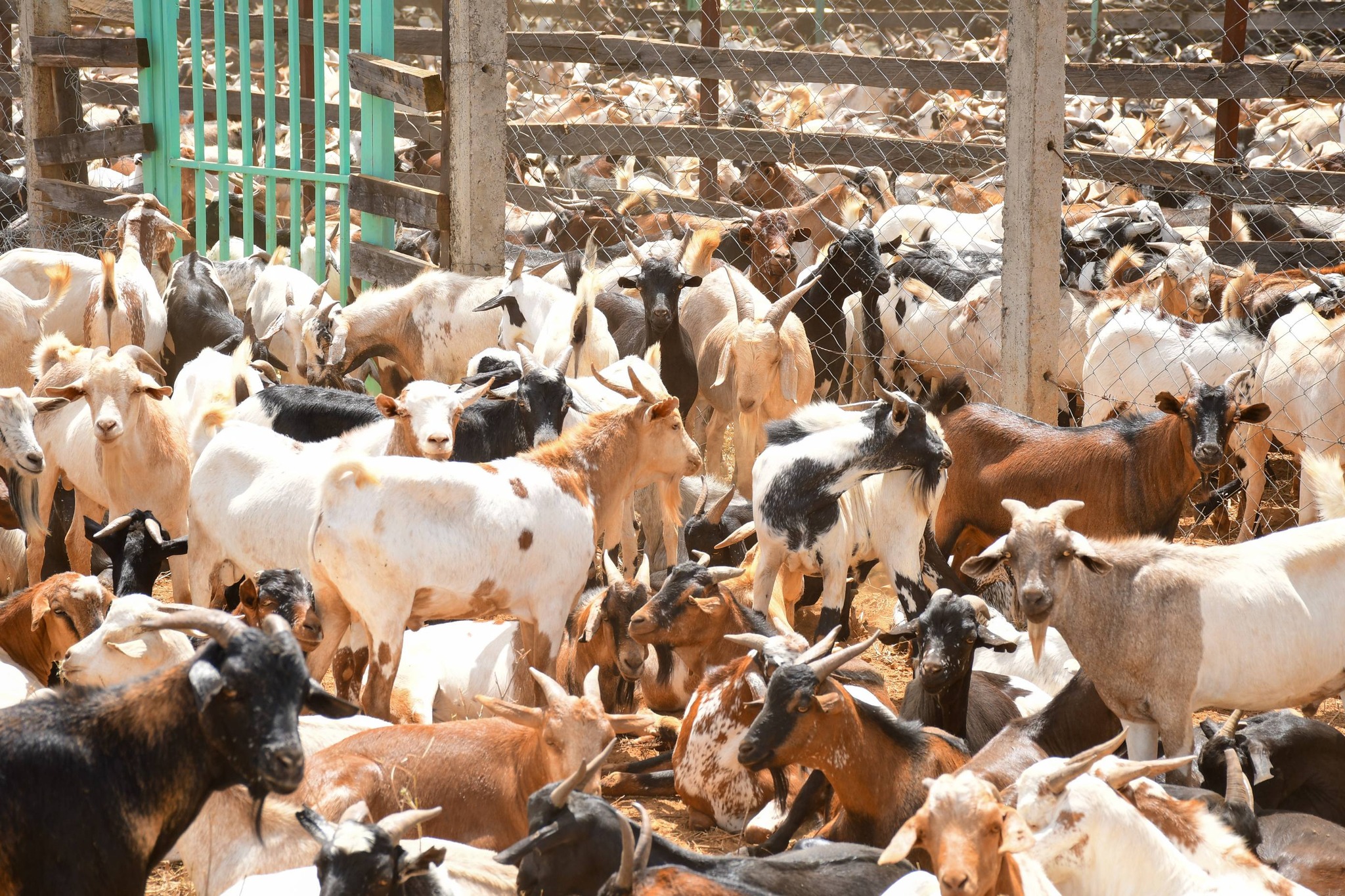
Some of the goats that were brought at the Kimalel goat auction. Photo/Handout
By Newsflash Team
Several leaders in Baringo County and senior county government officials are facing accusations of deceiving and short-changing local farmers during the annual Kimalel goat auction, triggering anger among pastoralists who say the exercise was taken over by cartels and politically connected elites.
Farmers claim the county administration procured goats from politicians, business people and their associates, sidelining the long-held tradition that prioritised animals supplied by local pastoralists.
One farmer from Kimalel narrated his ordeal after two of his goats were rejected during the vetting process. “I have been selling my goats at this auction since the Moi era, and the money has helped me educate my children. This year, everything changed. Two of my goats were rejected and only one was accepted,” he said.
Disappointed, he said he was forced to take back his goat after a county official ruled it unqualified. On seeking clarification, he claimed he learned that politicians and cartel-linked individuals had been allowed to sell their goats. “We want justice. Many farmers depended on this sale to raise school fees for their children,” he said.
Cornelius Sergon, the secretary of the Kimalel Goat Auction Committee, conceded that the event suffered from serious planning failures.
“Poor planning and weak coordination allowed cartels to take advantage of the auction. The county government worsened the situation by failing to involve local stakeholders, which disrupted the entire process,” Sergon said.
Although farmers had been told that only healthy goats would be accepted, several large and mature goats belonging to locals were rejected during vetting.
He further said the county government introduced younger goats, a move that angered pastoralists and raised suspicion. On Sunday night, lorries streamed into the venue, prompting questions over the true ownership of the goats.
Inflated numbers raise questions
At the start, farmers were informed that only 5,000 goats would be auctioned. However, the figure later ballooned to 8,700, a move farmers say was driven by greed and done without consulting local pastoralists.
Pastoralists accused leaders of greed and selfishness, arguing that the auction was hijacked for personal gain instead of protecting community interests.
Another farmer said the auction had lost its original purpose, noting that cartels had infiltrated the market and pushed out genuine farmers.
Read more: Lake Baringo flooding submerges schools, displaces families
The Kimalel goat auction was launched in 1986 under the late President Moi as a development initiative meant to uplift the livelihoods of Baringo residents.
The annual event traditionally attracts the president and other dignitaries who purchase goats, with proceeds helping families in arid and semi-arid areas pay school fees and meet basic needs.
This year, however, many residents described the auction as a sham, accusing the county government of failing to involve the local administration in sourcing goats, thereby undermining the event’s original objective.
Investigations revealed that elected leaders, senior county officials and their associates were among those who benefited from the auction.
Presidential intervention and fallout
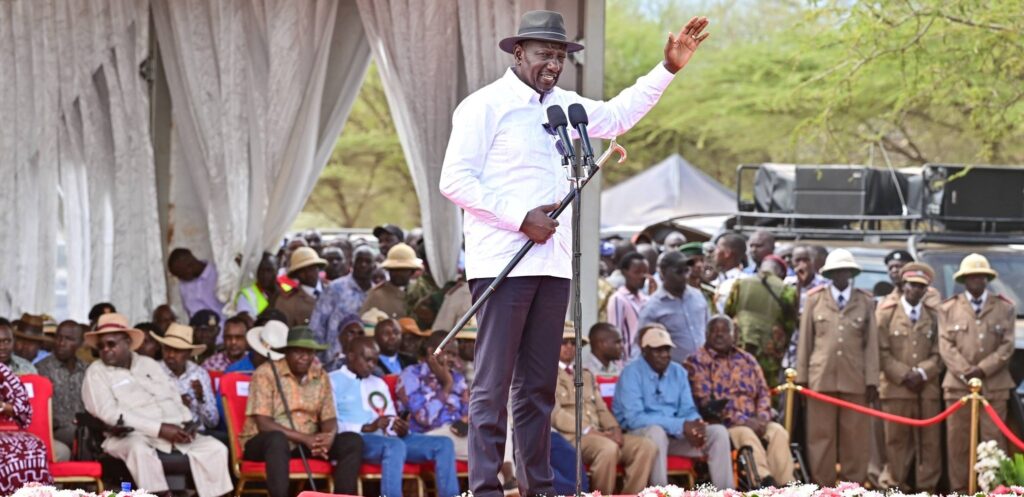
The revelations reportedly angered President William Ruto, the chief guest at the event, after he learned of alleged manipulation by the organisers.
Sources said the president was displeased after discovering that some of the goats presented for sale belonged to senior county officials and politicians. He reportedly questioned why cartel-linked goats were being prioritised and whether the organisers understood the purpose of the auction.
Concerns deepened after it emerged that county funds had already been released for the event, even as additional sponsors contributed money. Chiefs, who traditionally help identify eligible farmers, were excluded from the selection process.
Read more: Who is the deceased Baringo Senator William Cheptumo?
Instead, county officials reportedly dealt directly with a small group of selected farmers, leaving some sub-counties without any slots to sell their goats.
Following the controversy, goats were sold at Sh13,000 each on a presidential directive, down from the Sh18,000 initially proposed by local leaders.
On Monday, angry residents brought their goats to the venue after spotting more animals being offloaded, but authorities managed to restore calm.
Baringo Senator Vincent Chemetei said the original plan was to sell 4,000 goats, but the continued inflow of additional animals disrupted pricing.
He said farmers were misled and restricted to selling only one goat each, while cartels were allowed to present unlimited numbers for their own benefit.
“I apologise to the people of Baringo; this should never happen again. We will put safeguards in place to ensure that only genuine farmers benefit,” he said.
Chemetei added that a stricter vetting process would be introduced next year to protect legitimate farmers.
By the time of publication, senior Baringo County officials had not responded to requests for comment.


About the Author