
Attorney-General Dorcas Oduor. Photo/State Law Office
BY CHARLES WASONGA
Attorney-General Dorcas Oduor has said she will present to Parliament a report with proposals to amend, repeal or align statutes and statutory provisions on Kenya’s law books that have since been invalidated by Kenyan courts before it adjourns sine die to pave the way for the 2027 General Election.
The AG made the announcement on Wednesday, July 22, 2026, when she unveiled a multi-sectoral committee tasked with auditing unconstitutional, obsolete and redundant laws that remain in force despite court rulings rendering them null and void.
The committee, chaired by Kenya Law Reform Commission (KLRC) Chairperson Christine Agimba, will also identify outdated legislation for repeal, bridge legislative gaps and recommend reforms to align Kenya’s legal framework with the 2010 Constitution.
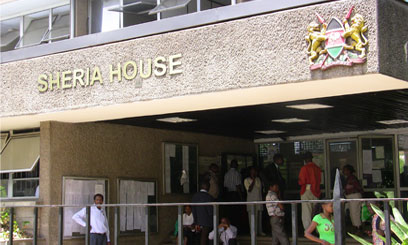
“I think in six months, we can go to Parliament with a report produced by this committee with recommendations to amend, repeal and align various laws and statutory provisions that have been invalidated by our courts in the past but unfortunately still remain in our law books,” Ms Oduor told journalists at her office in Sheria House, Nairobi.
Preparatory work to begin
However, Ms Agimba said her team will spend the first three months undertaking preparatory work and collecting views and proposals from the public before embarking on the actual audit of unconstitutional or outdated laws.
“I think the preliminary review and collection of public views will take three months before the real work begins,” she said.
The committee will draw its membership from virtually all government ministries, Parliament and the Judiciary, with the AG’s office and the KLRC providing the core expertise.
Ms Oduor said that when the High Court, Court of Appeal or Supreme Court declares a statute or a section unconstitutional under Article 2(4) of the Constitution, that provision becomes null and void to the extent of its inconsistency.
Read more: Kabogo, Oduor, Kinyanjui get State Honours from Ruto
However, she noted that court decisions alone do not automatically remove such provisions from Kenya’s statute books.
“That responsibility falls on the Executive and Parliament, hence the move by my office to jump-start that work by coming up with this multi-sectoral committee,” said Ms Oduor.
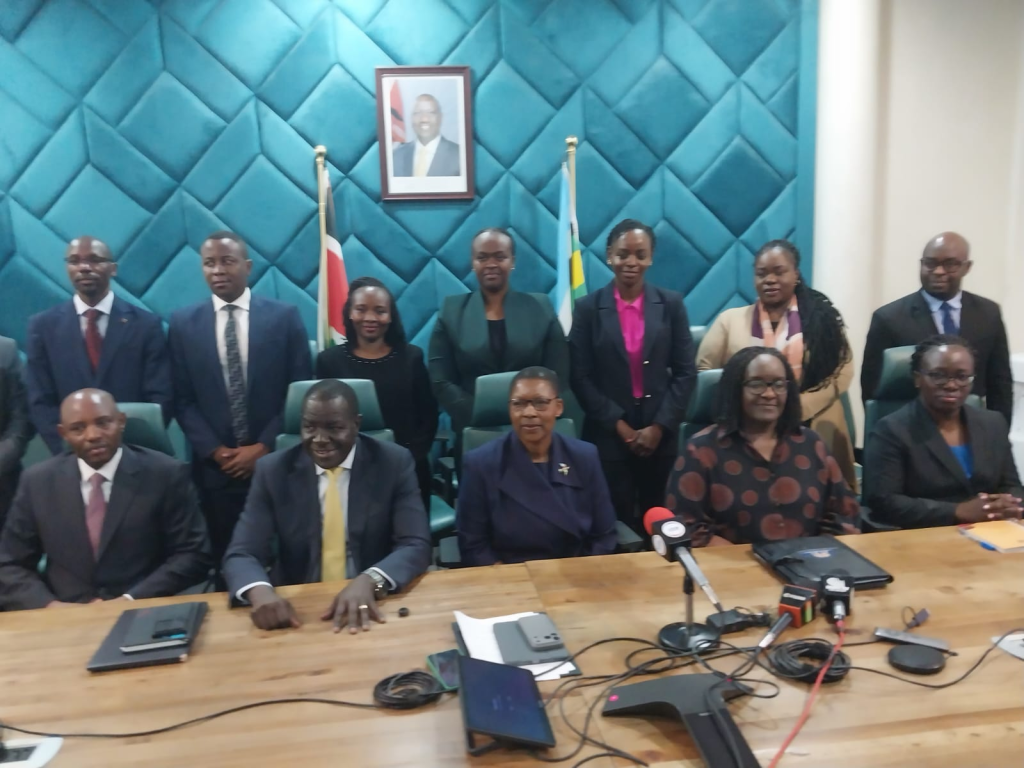
The AG observed that an audit of court decisions had revealed a concerning trend, with a significant portion of Kenya’s statutes and regulations failing to keep pace with the transformation brought about by the Constitution of Kenya, 2010.
“It’s unfortunate that dozens of provisions struck down by our Judiciary remain intact in our legislative texts because follow-up legislative action was never completed,” Ms Oduor explained.
According to the AG, the mismatch has created legal uncertainty, generated implementation bottlenecks for government institutions and fragmented the country’s legal framework.
“Most importantly, it has exposed the government to costly and avoidable constitutional disputes and ultimately hindered the seamless delivery of justice to citizens of Kenya,” she added.
She called on stakeholders and Kenyans in general to submit their views and recommendations to the multi-sectoral committee.
Landmark court decisions
Kenyan courts have invalidated numerous laws, regulations and executive actions for violating the 2010 Constitution, mainly due to lack of public participation, failure to involve the Senate or infringement of fundamental rights.
For instance, in a landmark February 2015 ruling, a five-judge bench of the High Court declared eight sections of the controversial Security Laws (Amendment) Act, 2014 unconstitutional.
Read more:Oduor names panel to select Waqf Commission members
The annulled provisions were struck down for violating fundamental rights, particularly press freedom, freedom of expression and the right to a fair trial.
The nullified sections included:
- Section 12 (amending the Penal Code – Section 66A): Nullified for violating freedom of expression and media freedom. It criminalised the publication or broadcast of material “likely to cause fear and alarm”, imposing severe fines or imprisonment on journalists and social media users.
- Section 16 (amending the Criminal Procedure Code): Struck down for infringing on fair trial rights by allowing prosecutors to withhold crucial evidence from the defence.
- Section 20 (amending the Evidence Act): Declared unconstitutional for expanding the use of improperly obtained evidence in criminal trials.
- Section 26 (amending the Criminal Procedure Code): Overturned for limiting the right of an accused person to be released on bail or bond under reasonable conditions.
- Section 34 (amending the Prevention of Terrorism Act): Annulled for granting the Cabinet Secretary unchecked powers to declare certain gatherings and locations illegal, thereby infringing on freedom of assembly.
- Section 48 (amending the Refugees Act): Nullified for violating Kenya’s international obligations by seeking to cap the number of refugees and asylum seekers allowed in the country.
- Section 64 (amending the Penal Code – Sections 30A and 30F): Struck down for curtailing media freedom by prohibiting the publication or broadcast of images of dead or injured persons or information on ongoing security operations without prior police approval.
- Section 95 (amending the Witness Protection Act): Declared unconstitutional because it contained provisions that could compromise an accused person’s right to confront witnesses and be fully informed of the evidence against them.


About the Author