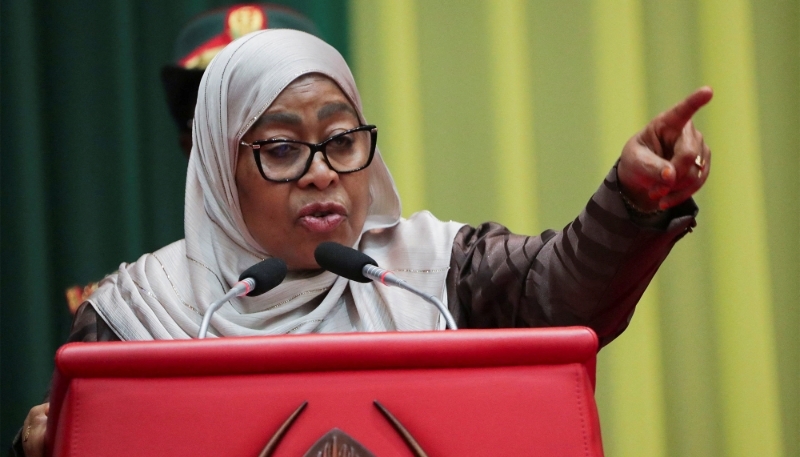
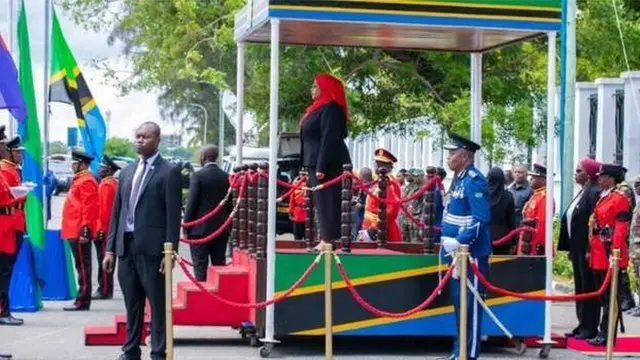
Tanzania's President Samia Suluhu Hassan in Dar es-Salam, on 2 December 2025. Photo/ Emmanuel Herman/Reuter
By Newsflash Writer
The Tanzanian government has intensified a round of shuttle diplomacy in a bid to contain reputational fallout following post-election unrest, which has left President Samia Suluhu Hassan’s administration exposed to possible sanctions and reductions in development assistance.
In a marked change of approach, Dodoma has shifted from dismissing allegations of human rights violations to actively engaging foreign partners. Foreign Affairs and East African Community Cooperation Minister Mahmoud Thabit Kombo has been at the centre of the effort, travelling between Tanzania and Western capitals to defuse diplomatic tensions. Over the past week, he visited Washington and New York, where he underscored Tanzania’s commitment to stability, peace and constitutional order. He was also expected to proceed to European capitals to portray the country as having faced a serious setback but one from which lessons had been learned. At home, President Samia met US diplomats in Dodoma to reaffirm Tanzania’s willingness to maintain economic and diplomatic ties.
Notably, the President has not travelled abroad since the disputed elections, instead dispatching special envoys and Vice-President Emmanuel Nchimbi to represent her internationally.
Diplomatic push amid mounting pressure
The situation escalated rapidly. This week, Tanzania was listed among 39 countries whose nationals will face new US visa restrictions, citing high overstay rates. According to the US Overstay Report, Tanzania recorded a B-1/B-2 visa overstay rate of 8.3 per cent and an F, M and J visa overstay rate of 13.97 per cent. Although the figures predate the elections, their release coincided with Tanzania’s diplomatic campaign to explain the post-election turmoil.
During his US visit, Mr Kombo also engaged officials at the United Nations and held meetings with US government representatives and members of Congress.
Read more: Tanzania ‘reviewing’ CNN documentary on alleged electoral killings
On December 14, his ministry said he had delivered a special message from President Samia to UN Secretary-General António Guterres, who reportedly expressed hope that Tanzania would continue to serve as “a reference point for peace and social cohesion in Africa and the world.”
Sending envoys to brief the UN Secretary-General on domestic political developments is unusual, but the move appeared to be part of a wider effort to repair Tanzania’s bruised international standing. While the UN did not issue an official statement, Tanzania quoted Guterres as stressing the need for “a meaningful and inclusive national dialogue” to address the root causes of the October 29, 2025 violence and to prevent a recurrence. Mr Kombo later described his December 17 meeting with US officials, including Congressman Dr Ronny L. Jackson, as “constructive and high-level.”
Rights concerns cloud engagement efforts
Despite the diplomatic outreach, Washington’s visa decision underscored growing differences in perspective. While Dodoma continues to emphasise calm and a return to normalcy, critics abroad are demanding accountability for alleged abuses during the elections. In November, Mr Kombo told diplomats that Tanzania had gone through “an unprecedented and difficult period,” adding that authorities had been forced to restore order, protect lives and property, and safeguard public services and economic activity. He said a commission of inquiry would investigate the unrest and recommend reforms to prevent future violence.
Read more: Samia adopts motherly touch, rolls out special plan for Gen Z
Human rights groups have remained unconvinced. Amnesty International accused Tanzanian security forces of using excessive force to quell protests between October 29 and November 3, alleging beatings, denial of medical care, arrests of the injured and removal of bodies from mortuaries to unknown locations. “The violence inflicted on protesters and ordinary citizens was shocking and unacceptable, and yet another sign of growing intolerance in Tanzania,” said Amnesty Secretary-General Agnès Callamard.
Tanzania has rejected claims of mass killings, accusing rights organisations of relying on “remote” reporting. Amnesty, however, says it gathered photographic and digital evidence from survivors and witnesses, based on interviews with 35 people conducted between November 3 and 28.


About the Author