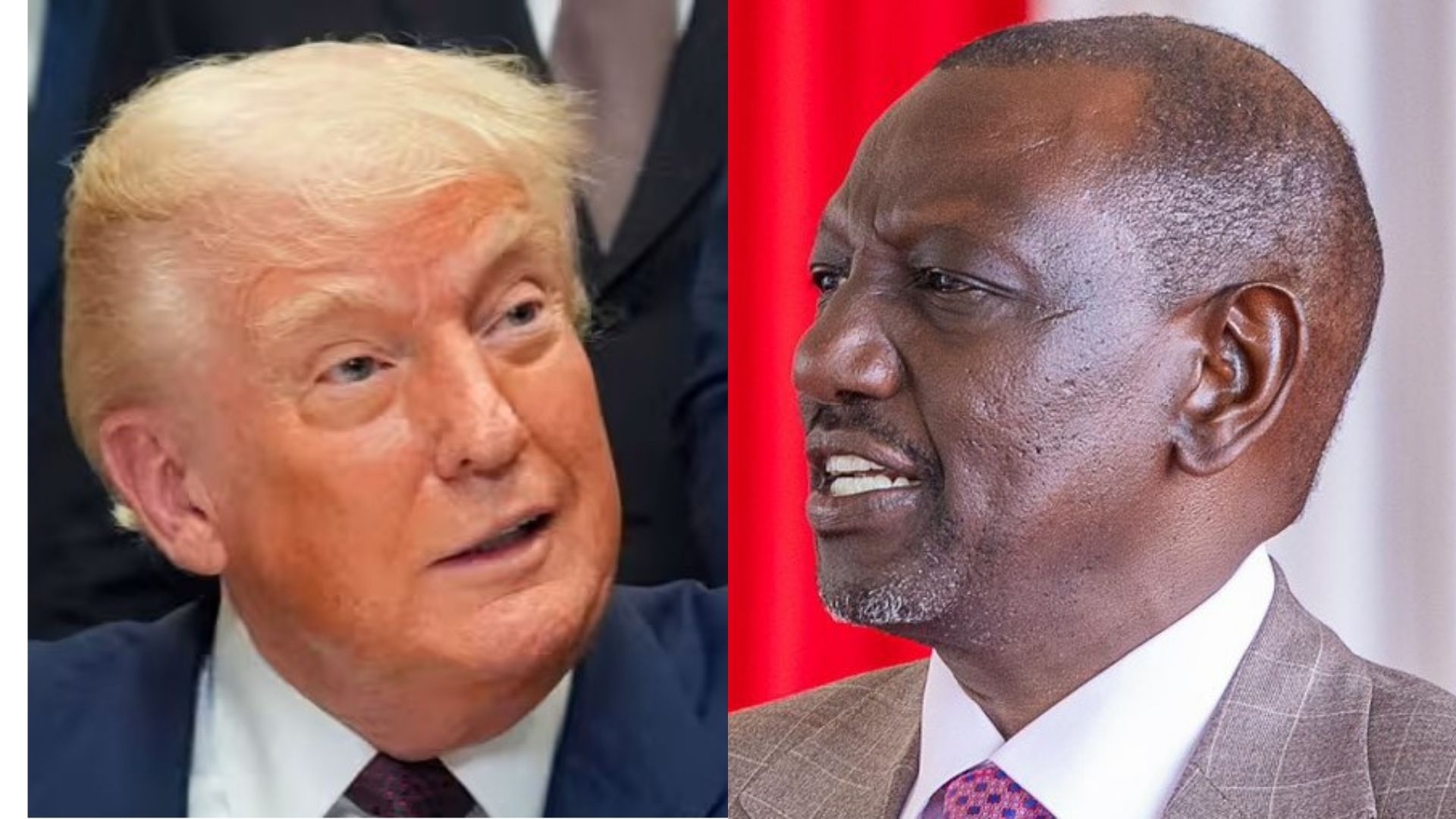
US President Donald Trump and Kenya’s William Ruto. Photo/Handout
By Newsflash Writer
Lawmakers in the United States are demanding a thorough investigation into President William Ruto’s administration over allegations of human rights violations, suspected ties with Sudan’s Rapid Support Forces (RSF) and Somalia’s Al-Shabaab militant group.
These calls, if acted upon, could jeopardize Kenya’s recently acquired Major Non-NATO Ally (MNNA) status. Leading the push is Senator Jim Risch of Idaho, a senior Republican and chair of the Senate Foreign Relations Committee, who is proposing changes to the US National Defence Authorisation Act for the 2026 fiscal year.
Risch, endorsed by former President Donald Trump for his 2026 re-election bid, has urged Congress to reassess the strategic partnership with Kenya. He alleges that the Ruto administration may have misused US-provided intelligence and security support to orchestrate abductions, torture, and renditions. Although the congressional proposal does not name specific victims, it implies that Kenyan authorities may have exploited American assistance in targeting civilians.
Killings, abductions and deportations under scrutiny
The proposed probe highlights a period of increasing concern over Kenya’s human rights record. Since receiving MNNA status on June 24, 2024, Ruto’s government has faced backlash for the violent suppression of protests, with at least 128 demonstrators reported dead, hundreds injured, and numerous cases of arbitrary arrests and abductions.
Among the controversial incidents is the October 2024 abduction of seven Turkish nationals in Nairobi—Mustafa Genç, Abdullah Genç, Huseyin Yesilsu, Necdet Seyitoglu, Oztürk Uzun, Alparslan Tasci and Saadet—allegedly by Turkish intelligence with Kenyan assistance.
Read more:Sudan protests to Kenya over Ruto-RSF link
The men, who were critics of President Recep Tayyip Erdogan and affiliated with the Gulen movement, had refugee status in Kenya and were awaiting asylum in third countries. Four of them were later deported to Turkiye to face prosecution.
The US congressional amendment demands an investigation into how American support might have enabled such actions. It requires the Secretaries of State (Marco Rubio), Defence (Pete Hegseth), and Treasury (Scott Bessent), in collaboration with National Intelligence Director Tulsi Gabbard, to initiate inquiries within 90 days and report to Congress within six months.
China, Russia and Iran relationships face US scrutiny
Senator Risch has also raised flags over Kenya’s expanding relationship with China. In a May 2025 Senate address, he cited President Ruto’s remarks in Beijing calling China and Kenya “co-architects of a new world order” as evidence of Kenya’s troubling foreign alignments. He warned that relying on countries leaning toward China could be strategically harmful to the US.
Read more: Tensions rise as Kenya plans second RSF meeting
Risch has additionally proposed a probe into Kenya’s economic ties with China, especially in the roads sector, where public and private Chinese firms such as Wu Yi and Sinohydro have dominated major infrastructure projects since the Kibaki era. Kenya’s debt to China stands at $5.4 billion (Sh700.9 billion), with Sh129.35 billion paid to Beijing in the 2024/25 fiscal year alone.
Beyond China, Risch wants Kenya’s dealings with Russia and Iran reviewed, citing rising global tensions. Any deepening of those ties could prompt a reassessment of US–Kenya relations.
RSF hosting and financial links
The hosting of RSF officials in Nairobi has triggered diplomatic friction. In February 2025, RSF leader Mohamed Hamdan Daglo announced intentions to establish a rival government while at the Kenyatta International Convention Centre. Sudan’s government, led by Gen Abdel Fattah Al-Burhan, has since twice recalled its ambassador to Kenya, accusing Nairobi of siding with RSF in the ongoing civil conflict.
As chair of the IGAD sub-committee mediating peace in Sudan, President Ruto’s engagement with RSF has attracted international scrutiny. According to US congressional documents, Kenyan officials may have helped RSF leaders—some of whom are under US sanctions—hide illicit wealth. The documents call for an inquiry into whether Kenya is acting as a financial haven for sanctioned individuals and entities, including from Sudan, South Sudan, Somalia, and Uganda.
Read more: Obstacles mount for RSF’s parallel government in Sudan
Additionally, the documents raise concerns about suspected links between Kenyan officials and Al-Shabaab, which has previously launched deadly attacks in Nairobi, including the Westgate Mall (2013) and 14 Riverside Drive (2019) assaults.
Records from the Kenya National Commission on Human Rights show over 1,400 people were detained during the 2024–2025 protests, with nearly 100 abductions reported—many unresolved. A formal US investigation could politically destabilize President Ruto’s government by shedding light on the contested security crackdowns and foreign entanglements.
Foreign Affairs Principal Secretary Korir Sing’oei promised to respond to the congressional proposal but had not done so by the time of going to press.


About the Author