
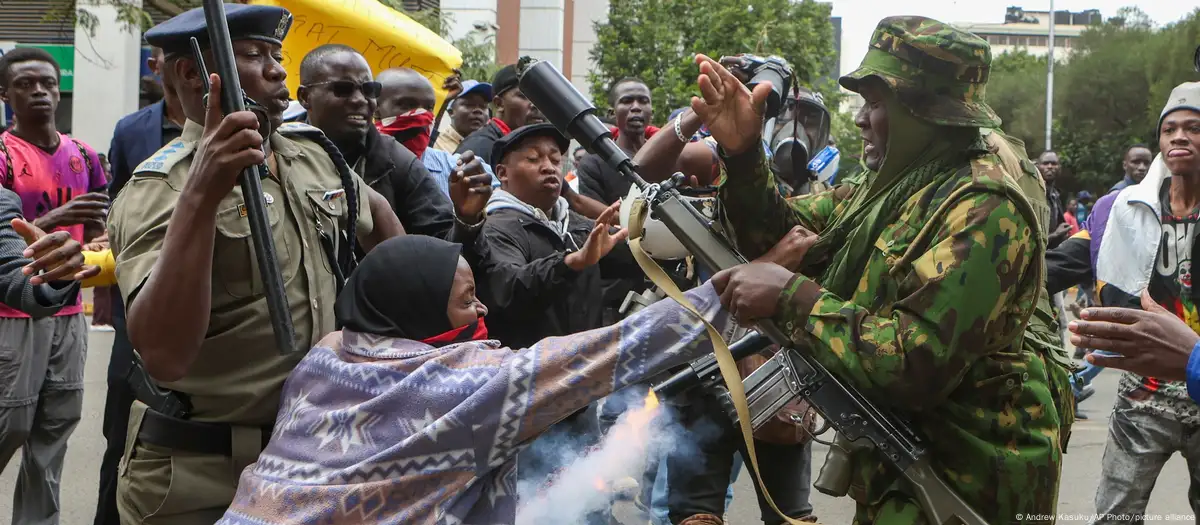
Kenyan protesters face-off with police in Nairobi streets on Thursday, 12 June, 2025. Photo/AP
By Newsflash Writer
Mounting pressure to arrest those responsible for the death of a teacher in police custody escalated into a full-blown national crisis on Thursday, throwing Nairobi’s city centre into hours of violent chaos.
Two vehicles were set ablaze during protests sparked by public outrage over the killing of Albert Ojwang. The unrest erupted as security chiefs appeared before Parliament for the second consecutive day to address the incident. Simultaneously, Treasury Cabinet Secretary John Mbadi delivered his first budget speech in a highly tense and distracted Parliament. As he spoke, sporadic gunfire rang through the capital, and plumes of tear gas rose against the grey skyline.
Many MPs skipped the session, likely recalling the terrifying scenes of last year’s June riots that forced them to flee through Parliament’s underground tunnel.
Mr Mbadi is one of five opposition leaders who joined Cabinet last year, following a power-sharing deal between President William Ruto and former opposition chief Raila Odinga. That pact was prompted by nationwide protests led by young people, culminating in the dramatic breach of Parliament.
With just two weeks to the anniversary of that invasion—and almost a year since protests forced the withdrawal of the controversial 2025 Finance Bill—demonstrators flooded the streets again Thursday, demanding accountability for Ojwang’s death. The morning started with a strange hush. Ojwang, a young, soft-spoken educator, had become a symbol of national mourning. His death ignited an online uproar that quickly spilled into the streets, disrupting even the traditionally solemn budget reading.
By 12:20 p.m., a small group of demonstrators gathered along Haile Selassie Avenue and confronted police as they tried to march towards government buildings. Their numbers swelled rapidly, and they redirected their march toward the Treasury headquarters, hoping to block Mbadi’s route to Parliament.
But police moved in, launching multiple tear gas canisters to disperse them. Protesters retreated through Moi Avenue, with some detouring via Aga Khan Walk toward Kencom along City Hall Way.
At 1:30 p.m., with tear gas still lingering in the air, Mr Mbadi left his office accompanied by a marching band and his entourage. As television stations split their screens between the ceremony and the disorder, protesters made an attempt to reach Jogoo House, the symbolic centre of police authority and home to Deputy Inspector-General Eliud Lagat—now a focal point of public anger.
Clashes intensified. Riot police stood firm, sirens blared, tear gas hissed through the air, and the tension snapped. Frustrated by their inability to block Mbadi earlier, demonstrators surged toward Kenyatta Avenue.
Streets erupt in violence
They hoped to force their way into Parliament and halt the budget speech. By 2 p.m., chaos had engulfed the downtown areas around the National Archives, Moi Avenue, Tom Mboya Street, and Ronald Ngala Street.
Water cannons roared. Tear gas burned eyes and throats. Near Kenya Cinema, two cars—KAR 936D and KBR 954G—were set alight. Investigations revealed the white Toyota station wagon (KBR) belonged to security firm Wells Fargo, while the other vehicle was privately owned. Shops in the affected areas remained shuttered, with some suffering broken windows and doors. Nairobi Region Police Commander George Seda confirmed one officer had been injured.
Read more: Gachagua condemns Ojwang killing as Kanja interdicts top cops
“No civilians have been hurt. We’ve used only water and tear gas,” he claimed. But video footage suggested otherwise. “The bullet’s been removed, but I’m still in pain,” said Lucy Nelima, who was wounded around 1:30 p.m. near Harambee Avenue. Social media was awash with scenes of bloodied civilians.
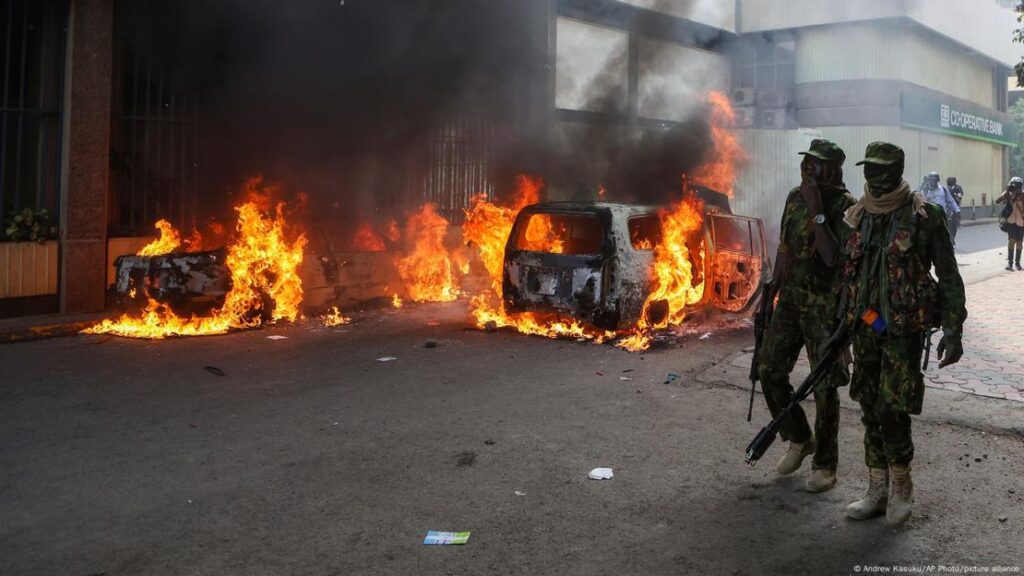
The rallying cry of the day was unmistakable: “No justice, no budget.”
“How can we accept a budget that will give more money to the police who kill us?” one protester asked. “We don’t want the budget read; we want justice. No justice, no budget.”
By 1:51 p.m., protesters had blocked Kenyatta Avenue using paving blocks to disrupt traffic. They pressed forward toward the junction with Koinange Street. Here, chants of “Lagat must go!” erupted before being replaced by solemn renditions of the national anthem. The marchers moved on through Koinange, then Kaunda Street, stopping briefly at Cardinal Otunga Plaza before turning onto Parliament Road. Previously unopposed, the group—numbering several hundred—met stiff resistance from riot police.
Police launched a barrage of tear gas, but the demonstrators retaliated by hurling stones. Forced back to Kenyatta Avenue and Standard Street, they regrouped and reappeared on Mama Ngina Street, before circling back to City Hall Way.
At around 3 p.m., the police, appearing to have lost patience, responded with overwhelming force, flooding the streets with tear gas. Protesters scattered. By evening, bursts of tear gas were still heard across the city as cries of “no justice, no budget, no peace” rang out. Nairobi’s usual evening rush came to a standstill.
“I’ve tried to get to the bus terminus, but it’s impossible. I’m going back to the office to wait it out,” said Lynn Mwendwa, stranded downtown. At Kencom, Railways, and Commercial—usually bustling hubs for evening commuters—silence prevailed. Public transport had ground to a halt. Buses were scarce, matatus missing. Many drivers had parked their vehicles, unwilling to risk the volatile streets. Others fled the moment unrest erupted, speeding away with doors still swinging open.
Thousands of commuters were left stranded. Many began the long walk home, some trudging for miles to reach their neighbourhoods.


About the Author



1 thought on “Protesters demand justice for Albert Ojwang’”
Comments are closed.