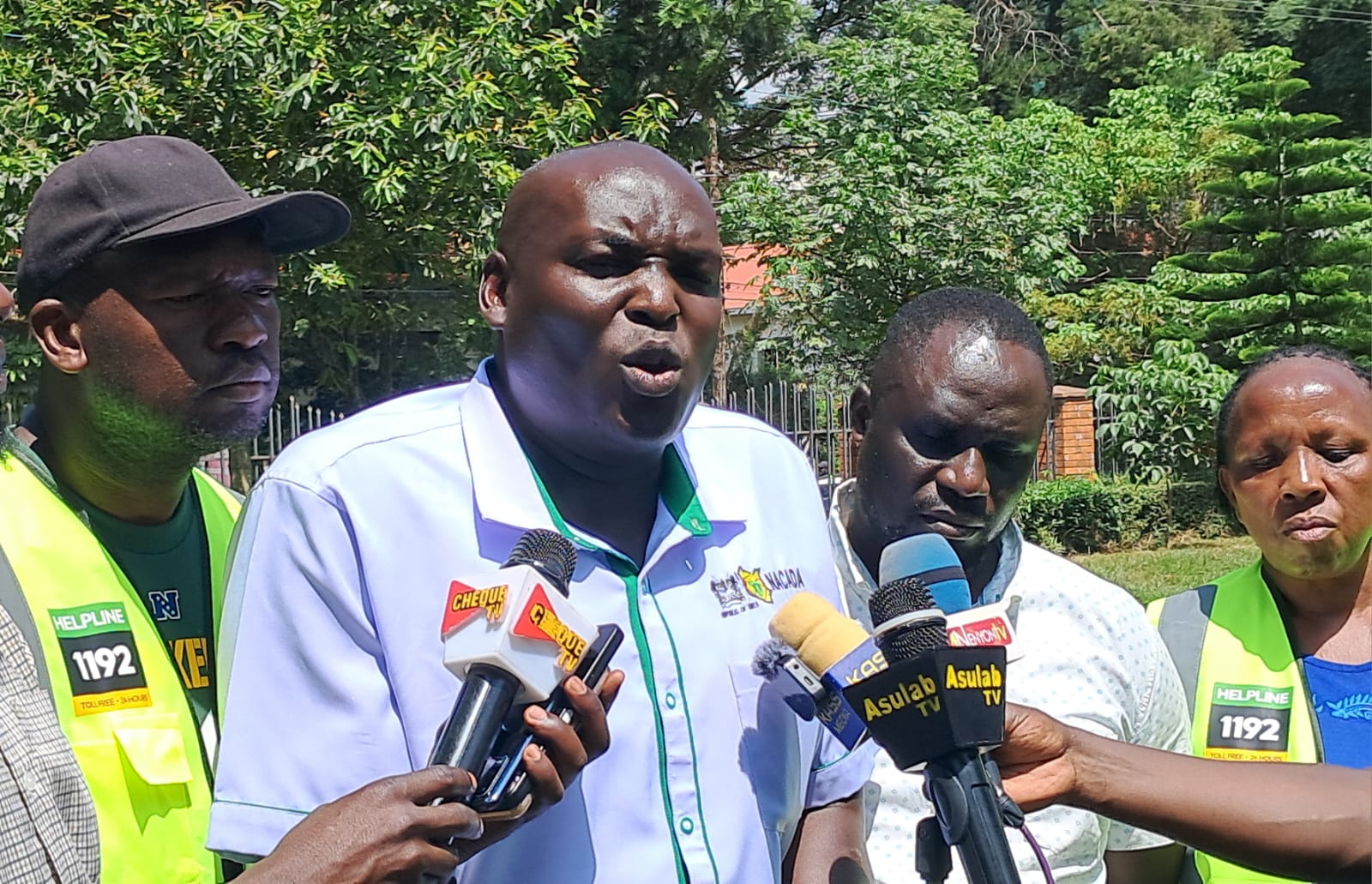
NACADA Coordinator for Nakuru Mr. Robert Olweny addressing the media during International Drug Abuse and Illicit Traficking Day-Photo/Ruth Ng’ang’a
By Ruth Nganga
At Nyayo Gardens in Nakuru on Friday, June 26, 2026, the air buzzed with resolve as hundreds gathered to mark the International Day Against Drug Abuse and Illicit Trafficking (IDADA).
Government officials, students, recovering addicts, rehabilitation providers and community leaders stood together, turning reflection into action against a scourge that continues to claim futures across Kenya.
Established by the United Nations General Assembly in 1987, the day serves as both a reminder of the global commitment to a drug-free society and a platform to assess progress. This year’s theme, “World Drug Problem: Persisting Issues, New Challenges, Innovative Responses,” captured the dual reality of long-standing battles and evolving threats.
Speaking to the media during the event, NACADA Nakuru County Coordinator Robert Olweny described the day as significant, noting that while the national celebrations were taking place in Mombasa, all 47 counties were simultaneously holding commemorative events.
“As we join hands with all stakeholders, we will be able to curb the drug menace and save lives through awareness,” said Olweny.
He highlighted stark national statistics, noting that approximately 4.7 million Kenyans use drugs and alcohol, representing a prevalence rate of 11.8 per cent. In Nakuru, he said, multi-agency teams have intensified crackdowns on illicit brews, yet new challenges continue to emerge.
Read more: The expired drugs crisis in Kenyan public hospitals
“Young people are reporting emerging drugs like SGR, a kind of liquor mixed with ethanol and water. The effect is so strong that one can end up in a blackout,” he said.
The event brought together diverse stakeholders—including county government departments, learning institutions, civil society organisations and members of the public—to raise awareness and promote collective responsibility. Rehabilitation centre operators were also present to showcase their services, with NACADA playing its regulatory role in accrediting facilities that offer hope to people struggling with addiction.
A powerful testimony
One of the most moving voices of the day was that of Godffrey Otieno, a recovering addict who has turned personal ruin into public advocacy. Otieno battled drug addiction for 23 years before achieving eight years of sobriety.
“Today I am a beacon of hope to someone out there. Though it’s not easy to get out of drugs, I am living testimony that it is possible,” said Otieno.
Born into a stable family with a father who was a church pastor, his descent into addiction began innocently. While in high school and living within the church compound, he started stealing communion wine. What began as a joke, he recalled, gradually turned into a life-consuming addiction.
Read more:NACADA receives UN test kits to boost Kenya’s war on drugs
After high school, a promising academic journey took him to college, but he was expelled because of drunkenness. Addiction soon consumed every aspect of his life. He became a thief in his own home, lost the respect of his family and community, and spiralled into depression.
“After losing hope of living, I approached the NACADA office in Kisumu. They took me to rehab, and my life was transformed. Sharing my story publicly now serves as both ongoing therapy and advocacy,” Otieno said.
Olweny urged parents to remain vigilant, especially during school holidays when many young people are vulnerable to substance abuse. With the growing influence of social media, he said, children need guidance, supportive home environments, close monitoring of their peer groups and quality time with their parents.
“Parents should be responsive and communicate with their children,” he said.
He also emphasized proactive measures, including the introduction of life skills training in high schools to equip students with decision-making skills, the ability to resist peer pressure and greater awareness of the dangers of drug abuse.
“Teachers have been trained to pass this knowledge on to students about drugs and self-awareness,” he said.
The Nakuru commemoration blended solemn acknowledgement of the drug abuse crisis with practical pathways forward—from cracking down on dangerous illicit brews to supporting accredited rehabilitation centres, and from school-based prevention programmes to strengthening families.
As Godffrey Otieno’s journey illustrates, recovery is possible. His transformation from a young man who stole communion wine to a sober advocate standing before his county offers living proof that persistence, strong support systems and personal resolve can break the chains of addiction.


About the Author