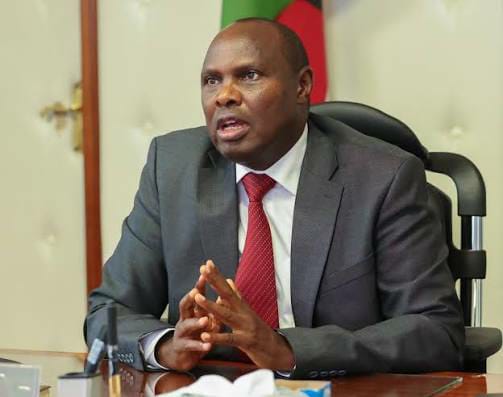
The Council of Governors (CoG) addressing journalists at a past press conference. Photo/CoG
By Newsflash Reporter
Kenya has lost at least 934 newborns in hospitals since the start of the year, raising concerns over maternal and neonatal care.
Governors have warned that the Ministry of Health’s decision not to fund deliveries at level-two facilities and dispensaries could reverse gains made in reducing maternal and newborn deaths nationwide.
The Council of Governors (CoG) yesterday threatened to pull out of the Social Health Authority (SHA) if service delivery is not streamlined and grassroots health facilities funded.
“We are going to pull out of SHA if it continues not reimbursing claims for level-two and level-three hospitals. Between January and July, 1,000 deliveries went unclaimed in our facilities. This must be addressed urgently,” said Mandera Governor Adan Khalif.
He added: “A dispensary in Mandera, at the Ethiopian border, is like the Aga Khan or Nairobi Hospital. Denying deliveries at dispensaries and health centres is retrogressive.”
The issue emerged during a meeting between CoG, Ministry of Health, and Ministry of Lands, Public Works and Housing in Naivasha, Nakuru County, on Wednesday. Governors said the SHA decision has already led to a drop in facility-based deliveries, undermining efforts to curb maternal and newborn deaths. They also expressed concern over unilateral decisions by Health CS Aden Duale without stakeholder consultation.
Read more: SHA: Teachers, police in fresh dilemma
“SHA should immediately fund level-two facilities. Pregnancy cannot be faked—the result is a baby and a happy mother,” said newly elected CoG Vice-Chairman and Tharaka Nithi Governor Muthomi Njuki.
Records indicate Kenya’s neonatal mortality rate stood at 21 deaths per 1,000 live births last year. Governors argue that dispensaries remain the only accessible facilities for many mothers, particularly in rural and remote areas. They warned that underfunding grassroots facilities could derail ongoing initiatives such as the inter-county maternal and perinatal death surveillance and response (MPDSR) programme.
Urgent funding needed for maternal and neonatal care
The Ministry of Health maintains there is no directive to stop reimbursing deliveries at any facility. “Level-two facilities must upgrade infrastructure, human resources, and obtain licences. The Ministry is working with SHA and KMPDC to define provisions allowing deliveries where necessary, especially in counties with low facility density,” said a senior MoH official.
Latest statistics show Kenya loses about 5,680 mothers and 33,600 newborns annually. Maternal deaths stand at roughly 355 per 100,000 live births, translating to 16 preventable deaths every day.
The Kenya Women Parliamentary Association (Kewopa) highlighted persistently high maternal and neonatal mortality, particularly in rural and marginalised areas. While skilled birth attendance and postnatal care improved between 2008 and 2014, neonatal mortality reduction has largely stalled. The Kenya Demographic and Health Survey (KDHS) reports a current neonatal mortality rate of 21 per 1,000 live births, far from the 2030 Sustainable Development Goal target of 12 per 1,000.
Read more: Teachers split over new SHA medical deal
Kewopa Chairperson Leah Sankaire called for urgent investments in healthcare infrastructure, skilled personnel, and essential maternal and neonatal care. “We need immediate funding to reduce maternal and newborn deaths nationwide,” she said.
The association also emphasised the SHA’s pivotal role in expanding healthcare coverage and ensuring quality care. Sankaire urged the Ministry of Health, National Treasury, and county governments to fund Neonatal Intensive Care Units (NICUs) in all 47 counties, noting current coverage is only 37 per cent. She further called for SHA coverage to include postnatal care for up to 28 days, including phototherapy, oxygen, and IV fluids.
The association also commended government investments in oxygen infrastructure, which have improved emergency care for children with pneumonia.


About the Author