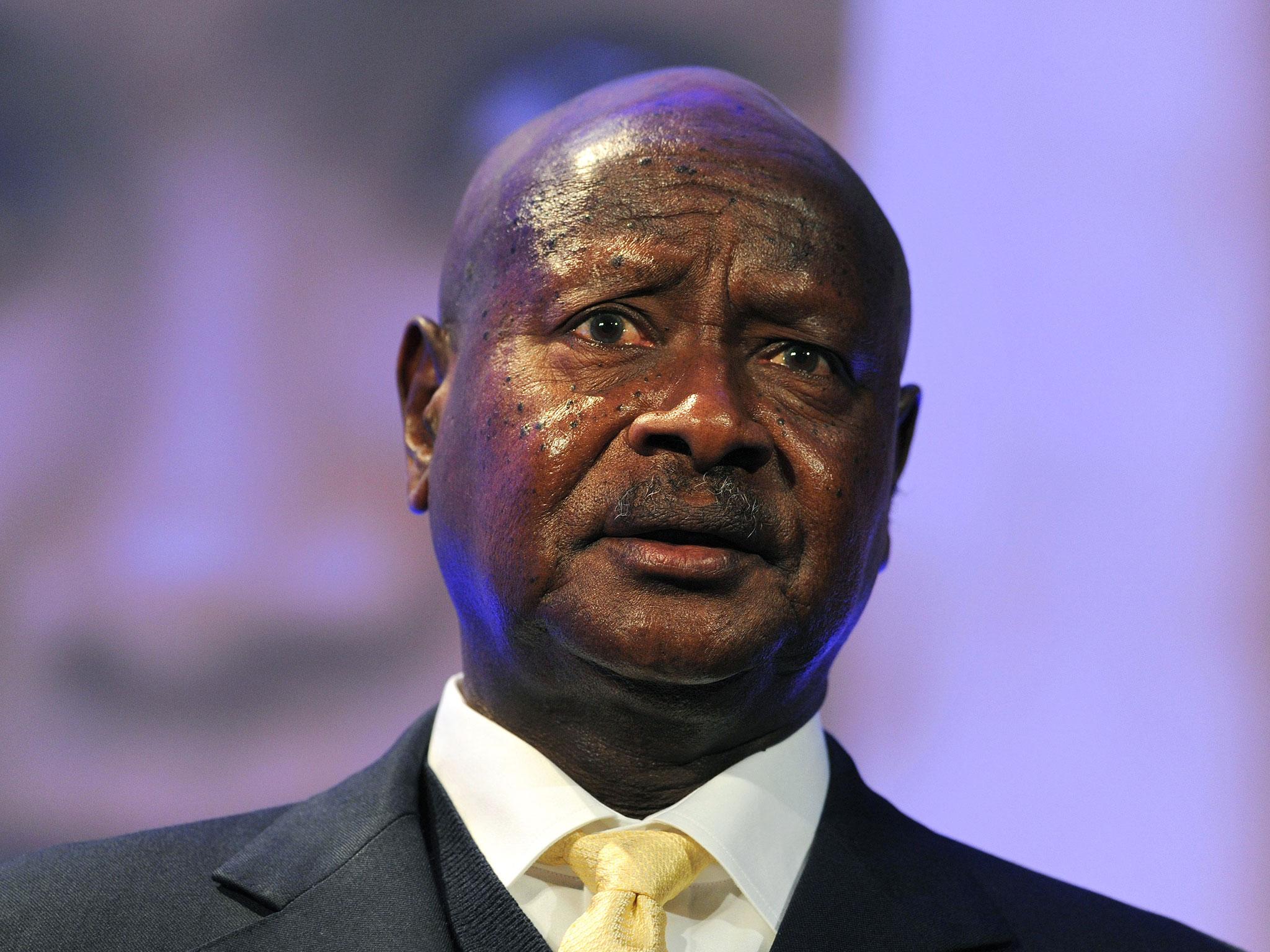
Ugandan President Yoweri Museveni. Photo/ICIR
By Newsflash Reporter
The Uganda Communications Commission (UCC) has directed a temporary shutdown of public internet access and selected mobile services beginning 6pm on January 13, 2026, as the country heads into the critical phase of the election period.
The order, issued on Tuesday, January 13, affects public internet usage, SIM card sales and registration, as well as outbound data roaming, while exempting essential services such as healthcare, banking, and government operations.
“Following a strong recommendation from the Inter-Agency Security Committee, the Uganda Communications Commission directs all licensed Mobile Network Operators (MNOs) and Internet Service Providers (ISPs) to implement a temporary suspension of the following services,” the directive stated, noting that the move is intended to curb the spread of misinformation, disinformation, and electoral fraud, and to prevent incitement that could threaten public confidence and national security during the polls.
Scope of the suspension
Under the directive, all non-essential public internet traffic will be blocked, including access to social media platforms, web browsing, video streaming, personal email services, and messaging applications. The suspension covers mobile broadband services, fibre optic connections, leased lines, fixed wireless access, microwave radio links, and satellite internet services.
Read more: Uganda drafts legislation to revive military trials for civilians
However, a limited number of critical systems have been permitted to remain operational to safeguard network stability and security, with UCC warning that these exclusions are strictly confined to essential monitoring and management functions. Ordinary mobile and public internet access will remain inaccessible, and operators have been instructed to immediately disable any excluded systems found to be misused to circumvent the shutdown.
Elections and public holidays
Separately, on January 9, President Yoweri Museveni declared January 15 and 16, 2026, as public holidays to give citizens time to participate in the presidential and parliamentary elections scheduled for Thursday, January 15.
The declaration was made through a Legal Notice issued under the Public Holidays Act, Cap. 174, and formally gazetted ahead of the polls, applying to both public and private institutions nationwide.
Read more: “Fifth Floor” Folly: Nyanzi Luther defends Uganda’s ocean claim
Museveni, who has ruled Uganda since 1986, is seeking another term in a contest that will also shape the composition of Parliament, with the country’s 21.6 million registered voters taking part in three elections: the presidential race, the election of 353 constituency
Members of Parliament, and the selection of 146 women representatives, one from each district. Museveni and opposition leader Bobi Wine are the main presidential contenders in their second electoral showdown, following the 2021 vote in which Museveni, now 81, won with 58 per cent against Wine’s 35 per cent, an election marred by allegations of rigging and a heavy crackdown on the opposition.


About the Author