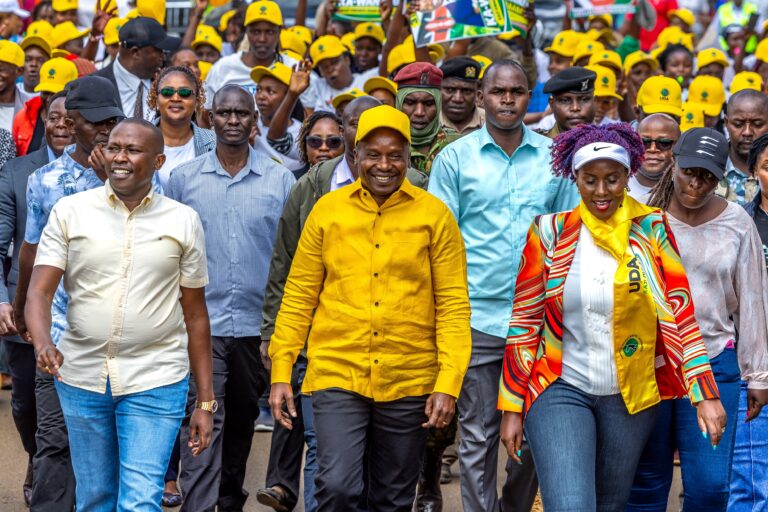
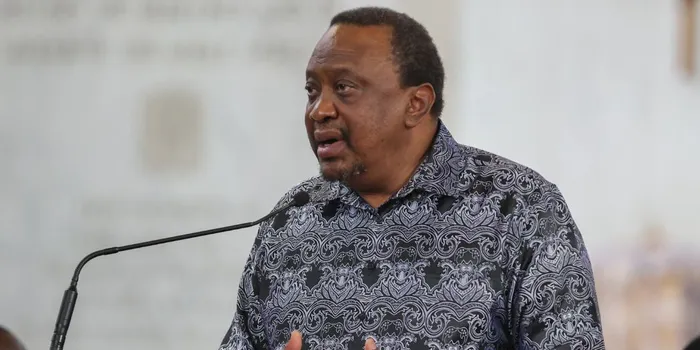
R to L: Deputy President Kithure Kindiki, President William Ruto and ODM leader Raila Odinga attending the historic UDA-ODM Prliamentary Group meeting at KCB Leadership Institute on Monday, August 18, 2025. Photo/PCS
By Newsflash Writer
President William Ruto and ODM leader Raila Odinga on Monday set aside years of fierce rivalry to preside over a historic joint Parliamentary Group (PG) meeting that analysts say could redefine Kenya’s political trajectory ahead of the 2027 elections.
The rare gathering, held on August 18, 2025, at the KCB Leadership Institute, brought together lawmakers from the United Democratic Alliance (UDA)-led Kenya Kwanza Coalition and the Orange Democratic Movement (ODM).
It was the first time the two camps met under a formal parliamentary framework to chart a common legislative and development agenda.
The resolutions adopted at the meeting committed both sides to unity, a shared 10-point agenda, and joint parliamentary cooperation—cementing what many observers are already calling the Ruto–Raila deal.
A strategic unity pact
The resolution placed emphasis on reconciliation and national cohesion, with lawmakers pledging to put aside political divisions to pursue peace, stability, and progress.
“This is not about UDA or ODM—it is about Kenya,” President Ruto told MPs and senators. “Our citizens demand unity and solutions. The time has come to rise above rivalry and focus on building a nation that works for everyone.”
Raila Odinga, who has faced Ruto in three successive presidential contests, echoed the sentiment, saying it was time to look beyond past battles.
Read more:Raila: I’ll support Ruto until 2027

“We have clashed before, sometimes bitterly. But the people want answers to their struggles, not endless fights. This partnership is about Kenya’s future,” he said.
By projecting bipartisan unity, the two leaders sought to calm a polarized political environment and present themselves as statesmen ahead of the next election cycle.
The 10-point agenda: Blueprint for 2027
At the heart of the agreement is a 10-point agenda that will anchor the joint parliamentary program. The priorities include economic growth, job creation, healthcare, education, agriculture, infrastructure development, good governance, social justice, and empowerment of women and youth.
Both coalitions pledged to pass legislation and allocate resources toward these pillars, while jointly combating corruption across government.
Read more:Police brutality: Cracks emerge in Ruto-Raila alliance
“This is a blueprint for delivering tangible results before 2027,” political analyst Dr. Lydia Wekesa observed. “By aligning on development priorities, Ruto and Raila are positioning themselves to claim credit for national progress when Kenyans return to the ballot.”
Another significant commitment was the establishment of a mechanism for compensating victims of political violence. A coordinating committee appointed by the President will oversee the process, which many see as a move to address long-standing grievances that could otherwise be exploited in campaigns.
Restoring faith in Parliament
The joint PG also sought to reframe Parliament as the people’s house, with lawmakers pledging to work together on matters of national concern guided by transparency, accountability, and service.
“Our people must trust that Parliament serves them and not partisan politics,” Ruto said. “This bipartisan cooperation is how we rebuild that confidence.”
Read more: The Ruto, Raila link in new IEBC team
Raila added: “Parliament cannot be a theater of obstruction. It must be a place of consensus, where the needs of Kenyans come first.”
By binding both coalitions to cooperation in the legislature and even in County Assemblies, the deal expands the scope of unity beyond Nairobi, creating a ripple effect at local levels where political rivalry has often bred tension.
Political realignment ahead of 2027
The UDA-ODM pact is already being described as the most consequential realignment since Raila’s 2018 handshake with former President Uhuru Kenyatta. The difference this time, analysts note, is that the partnership is not a gentleman’s agreement but one backed by a formal parliamentary resolution.
“This is a political masterstroke,” said analyst David Muriithi. “Ruto secures stability in Parliament to push his agenda, while Raila ensures ODM remains central to governance ahead of 2027. Both sides walk away stronger.”
Still, questions linger about whether the cooperation will endure once succession politics intensify. ODM MPs may face grassroots pressure over aligning with Ruto, while UDA hardliners could resist sharing credit with Raila.
“The 2027 elections will be the ultimate test,” said Dr. Wekesa. “This alliance will either consolidate into a formidable force or collapse under the weight of political competition.”


About the Author