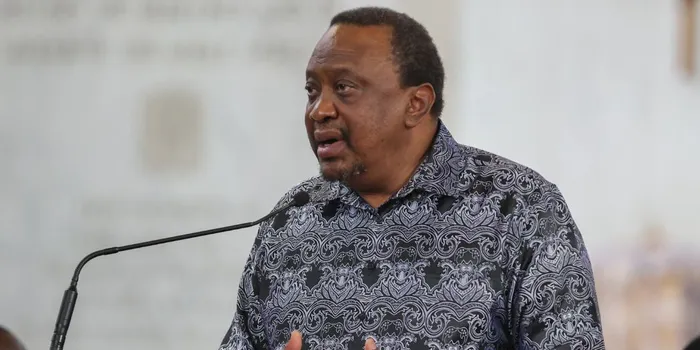
ODM leader Raila Odinga. Photo/Africa News Agency
By Newsflash Writer
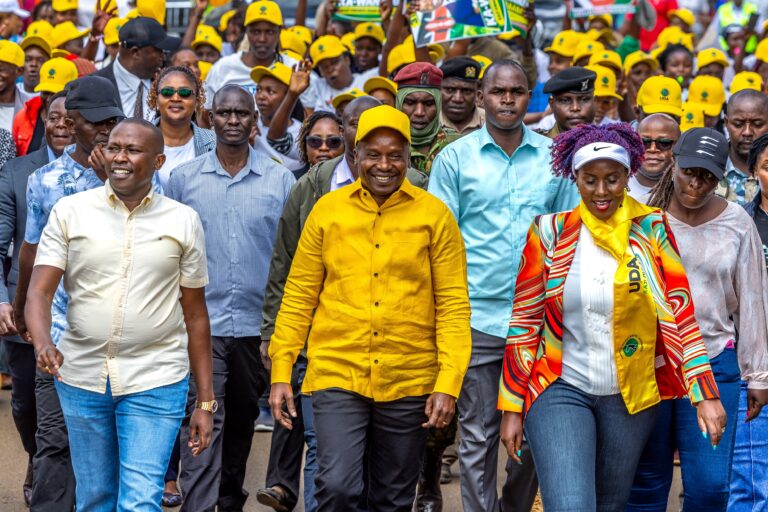
ODM leader Raila Odinga has publicly ruled out any premature withdrawal from the broad-based government, affirming his support for President William Ruto until the 2027 General Election.
The former Prime Minister said he intends to continue working with the President under the current cooperation framework until the next polls and will avoid engaging in early succession debates.
At the same time, Mr Odinga made a bold political proposal that could spark significant discussion—calling for electoral reforms that include abolishing the voter register and allowing citizens to vote using only their national IDs.
He urged the newly reconstituted Independent Electoral and Boundaries Commission (IEBC) to urgently clean up the electoral roll to restore credibility ahead of the next election cycle.
In an interview with NTV on Sunday night, Raila xplained that the ODM’s collaboration with President Ruto was based solely on national stability concerns.
“We agreed that we are part of this broad-based government until 2027. We never committed to working with UDA beyond that. Those are matters to be deliberated by the party—not by Raila Odinga alone,” he stated.
Response to youth protests
He described the ongoing political cooperation as a direct response to last year’s youth-led anti-government protests, which nearly pushed the country into chaos. According to him, Kenya was on the verge of descending into instability like Somalia, Haiti, or Sudan, had action not been taken.
“In 2023, we took to the streets to protest issues like electoral injustice, the high cost of living, and rampant corruption. The government retaliated violently, and around 70 people died. When we tried to hold memorials, no judge allowed us. Eventually, we commemorated them quietly,” he recounted.
Read more: Police brutality: Cracks emerge in Ruto-Raila alliance
He said the Gen Z uprising in June 2024, which followed the earlier protests, exposed deeper governance failures and prompted international intervention, including mediation by Tanzanian President Samia Suluhu and former Nigerian President Olusegun Obasanjo. The talks led to the National Dialogue Committee (Nadco) report, which was eventually tabled in Parliament.
“Had the Nadco report been acted upon sooner, the Gen Z protests wouldn’t have happened. The youth went further than us — they stormed Parliament, the Judiciary, and were heading to State House before being stopped,” he said.
Uhuru’s role and internal party deliberations
Mr Odinga revealed that former President Uhuru Kenyatta, then in the U.S., persuaded him to reach out to President Ruto in order to protect national peace.
“Even though I had ruled out talks with Ruto, the crisis changed my mind. I told him the Gen Z protests stemmed from Nadco being ignored. We then agreed on broader consultations,” he said.
He added that the decision to let ODM members take part in government was made after extensive consultations within the party and the Azimio coalition. “Initially, I opposed the idea. But my colleagues believed we needed to steady the ship. So, we allowed some of our experts to join the government.
Read more:The Ruto, Raila link in new IEBC team
However, ODM has not officially joined the government. That would require structured talks and a formal agenda—what we defined in our 10-point agreement,” he said.
He noted that the 10-point plan was a continuation of Nadco’s proposals and that ODM has created a task force to monitor its implementation. Mr Odinga warned that if key issues remain unresolved, the party may reassess its role in the government.
“There’s a red line. If it’s crossed, we’ll reevaluate. Some of our concerns have been addressed, others haven’t. We’ll make a decision collectively,” he asserted.
Focus on peace, not 2027
Responding to critics who claim he has softened his opposition stance, Mr Odinga said his actions are driven by patriotism.
“I’m not concerned with those who don’t understand. Being Raila Odinga comes with a cost, but I have always acted in Kenya’s best interest,” he said.
On the question of whether he will contest the presidency in 2027, Mr Odinga said no decision has been made, emphasizing it’s too early for such discussions. “I haven’t said I’ll run. I don’t have to. I could support someone else—or run if I choose to. For now, I’m focused on strengthening ODM,” he said.
Read more: Raila’s hidden hand in Sifuna Ruto attack
He added that ODM will hold party elections next month and a National Delegates Convention (NDC) in October, where the party will chart its next course.
Asked if he would support Wiper leader Kalonzo Musyoka, who backed him in three consecutive elections, Mr Odinga replied: “Steve is a friend, and I respect him. But he hasn’t asked for my support. When the time comes, the party will assess who is best suited to carry the flag.”
He dismissed speculation of a Ruto-Kalonzo alliance as “total rubbish,” stating any coalitions must come through structured talks.
Legacy
On claims that working with former rivals has eroded his values, Mr Odinga stood his ground. “I have always stood for justice. We demanded change. Lives were lost. We didn’t compromise; we acted in the interest of peace,” he said.
He reiterated his opposition to extra-judicial killings, including President Ruto’s order to police to “shoot the legs” of protesters. “I condemned it openly. That’s lawlessness. Police are meant to arrest, not kill,” he said.
Read more: ODM divided on Raila’s ‘marriage’ with Ruto
He disclosed that a task force is overseeing compensation for victims of police violence. “There’s a contingency fund in the national budget. Compensation will happen soon,” he said.
Mr Odinga also proposed radical changes to the electoral process, including scrapping the voter register. He criticised the IEBC’s procurement model, calling it a breeding ground for corruption. He suggested that voting should require only a national ID, removing the need for a separate voter registration process.
“Why are Kenyan elections among the most expensive globally? The system is bloated to allow theft. If you have an ID, you should vote. There are places where people lack voter cards, and that skews the register,” he concluded.


About the Author